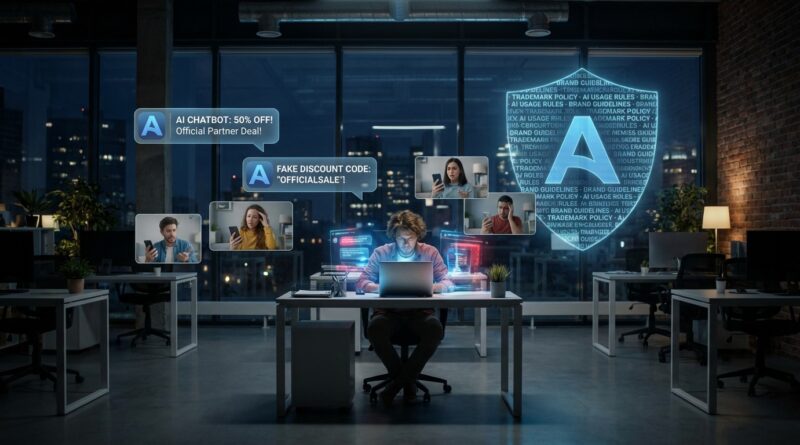
New AI Chatbot Rules Are Quietly Rewriting Trademark Risk: How To Stop ‘Hallucinated’ Brand Deals Before They Hurt You
You can do everything right with your brand and still end up cleaning up a mess you never made. That is the frustrating part. A customer asks for a discount your company never offered. Another insists your business announced an “official” partnership that does not exist. A third found a chatbot claiming to be your support desk. Increasingly, those mix-ups are not coming from scammers alone. They are coming from AI tools that sound confident, use real trademarks, and make things up.
That matters because AI chatbot trademark infringement is no longer being brushed off as a weird tech glitch. Regulators, courts, and large companies are starting to treat it as a real brand, legal, and consumer protection problem. If you run a small business, you are often the first to feel the damage. Angry emails arrive before you even know the false claim is out there. The good news is you do not need a huge legal team to lower the risk. You need a few plain rules, better vendor instructions, and a clear record of what your brand is actually allowed to say.
⚡ In a Hurry? Key Takeaways
- AI chatbot trademark infringement happens when a bot uses your brand name, logo, offers, or partnerships in ways you never approved.
- Start this week by giving every chatbot and vendor a written list of approved claims, banned claims, and official support channels.
- If a bot invents deals or partnerships, save screenshots right away. Good records help with takedowns, refunds, vendor disputes, and legal follow-up.
Why this problem is suddenly getting serious
For years, trademark risk mostly meant copycat websites, fake social media accounts, and old-fashioned ad confusion. Now there is a new layer. AI chatbots can generate answers on the fly, and they often do it with a tone that sounds certain, even when the answer is wrong.
That creates a very specific business problem. A chatbot may tell a customer:
- Your brand is running a 30 percent discount.
- Your company is an official partner of another business.
- A random number or link is your customer support line.
- A reseller is “authorized” when it is not.
None of that has to be malicious to hurt you. If customers rely on it, the damage is real anyway. You can lose sales, trust, and time. You may also get pulled into refund fights or consumer complaints for promises you never made.
What counts as AI chatbot trademark infringement?
At a basic level, it is when an AI system uses your trademark in a way that confuses people about source, approval, affiliation, sponsorship, or official status. In plain English, the bot makes it sound like something is yours, approved by you, or connected to you when it is not.
Common examples
Here are the ones founders are seeing most often:
- Fake sponsorships. The bot says your brand sponsors an event, creator, or product line.
- Fake discounts. The bot invents coupon codes, loyalty perks, or special pricing.
- Fake “official partner” claims. The bot labels another company as authorized without permission.
- Fake support channels. The bot sends customers to the wrong number, email, or website.
- Fake product availability. The bot claims a product is sold through a marketplace seller that has no approved relationship with you.
Not every bad answer becomes a trademark lawsuit. But once your name is being used in a way that confuses consumers, you are firmly in the risk zone.
Why small brands get hit first
Big companies have legal teams, monitoring tools, and vendor review processes. Smaller businesses often have one founder, one marketer, and a support inbox that is already full. That makes them easier to ignore and slower to respond.
There is another issue. Small brands often adopt AI tools quickly because they save time. That is understandable. But if the chatbot is connected to your site, product catalog, or customer service flow without tight limits, it can say far more than you intended.
The hard truth is this. Customers do not care whether the bad claim came from your employee, your vendor, or a chatbot. If your name was on it, they think it came from you.
The four-step playbook to stop bad brand claims
1. Write down what your brand is allowed to say
This sounds boring. It is also the fastest fix.
Create a simple “authorized brand speech” sheet. One page is enough to start. Include:
- Your official company name and trademark spelling
- Approved product names
- Current promotions and end dates
- Authorized partners and resellers
- Official support channels
- Claims that are never allowed without human approval
That last part is important. Put clear red lines in writing. For example:
- No chatbot may announce discounts unless pulled from the live promotions database.
- No chatbot may describe any business as an “official partner” unless listed in the approved partner file.
- No chatbot may provide support contact details except the verified numbers and emails on the official site.
If you use outside developers or chatbot vendors, give them this sheet. If they never received clear rules, they will often fall back on broad prompts and generic model behavior. That is where trouble starts.
2. Tighten permissions so the bot can only answer from approved sources
Many founders focus on the bot’s personality and forget the plumbing. The plumbing matters more.
Your chatbot should not be free to guess about legal, promotional, or partnership topics. It should answer from approved, current sources. If the information is missing, it should say so and hand the person to a human or a safe fallback page.
In practice, that means:
- Use a verified promotions list, not open text guessing.
- Use a current partner directory, not broad web results.
- Use one locked support contact source.
- Turn off or limit answers on sponsorships, endorsements, and reseller authorization if data is weak.
A good safe response is not flashy. It is simple. “I can only confirm offers shown on our official promotions page.” That kind of answer protects you.
3. Add a “high-risk claims” review layer
Some topics should never be fully automated. Period.
Flag these for human review or a hard stop:
- Partnerships
- Sponsorships
- Discounts and refunds
- Warranty statements
- Authorized seller status
- Legal threats or policy statements
If the bot gets a question in one of those buckets, it should route the customer to a form, support agent, or official page. Yes, this adds a little friction. But it is much cheaper than cleaning up a fake offer that spread across screenshots and social posts.
4. Document mistakes the moment you see them
This is the step people skip when they are busy. Do not skip it.
If a bot makes a false brand claim, save:
- Screenshots
- Date and time
- URL or app location
- The exact prompt used
- The exact answer given
- Any customer complaint tied to it
This record helps in three ways. First, it lets your vendor reproduce and fix the issue. Second, it gives you evidence for takedown requests or platform complaints. Third, it helps if the problem turns into a trademark or consumer protection dispute later.
What to say to your chatbot vendor
If you work with a chatbot provider, agency, or freelance developer, do not settle for vague promises like “we have guardrails.” Ask direct questions.
Use these plain-English questions
- What sources can the bot use when it answers questions about discounts, partners, and support?
- Can the bot invent an answer if the source does not have the information?
- Which topics are blocked or routed to a human?
- Can we upload an approved claims list and a banned claims list?
- Do you keep logs so we can review bad outputs?
- How fast can you remove or patch a harmful answer?
- Who is responsible if the bot publishes unauthorized brand claims?
You want those answers in writing. Not just in a sales call. In the contract, statement of work, or support documentation.
Simple rules every founder can adopt this week
If you want a low-drama starting point, use these rules:
- Only official web pages can confirm promotions.
- Only one internal file can confirm authorized partners.
- No chatbot can create discount codes on its own.
- No chatbot can confirm a collaboration unless a human approved it.
- All support contact details must come from one locked source.
- Every chatbot answer should include an easy path to verify official information.
Think of it like childproofing a kitchen. You are not assuming the tool is evil. You are assuming it can make a mess if given too much freedom.
What if the false claim came from someone else’s AI?
This is where things get extra annoying. Sometimes the harmful answer is not from your own bot. It may come from a search assistant, shopping assistant, third-party support tool, or a marketplace chatbot.
You still have options:
- Capture evidence quickly.
- Send a correction request to the platform.
- Point to your official pages with the right information.
- Ask for removal of unauthorized trademark use or false affiliation claims.
- Track repeat errors so you can show a pattern, not a one-off glitch.
If customers are being misled at scale, talk to trademark counsel. Even a short consult can help you decide whether this is a customer service issue, a platform complaint, or a formal infringement matter.
Do not forget the customer side of the problem
Trademark harm is not just about the brand owner. It is also about confused buyers. That is one reason regulators are paying more attention. If people are spending money because a bot falsely claimed your company approved an offer or partner, that starts to look like more than a harmless bug.
So make verification easy for real humans. Put a simple notice on your site:
- List official support channels.
- List current offers.
- List approved partners if you have them.
- Tell customers where to report fake claims.
The easier you make it to check what is real, the less damage a bad bot answer can do.
At a Glance: Comparison
| Feature/Aspect | Details | Verdict |
|---|---|---|
| Open-ended chatbot answers | Bot can guess about discounts, partners, and support details from weak or mixed sources. | High risk. Fine for casual FAQs, bad for brand-sensitive claims. |
| Locked approved-source setup | Bot only answers from verified promotions, partner lists, and official support records. | Best option for most small brands. |
| Human review for high-risk topics | Partnerships, sponsorships, discounts, and legal statements are routed to a person. | Worth the extra step. It cuts expensive mistakes. |
Conclusion
This is one of those tech problems that sounds abstract until it lands in your inbox as a refund demand or an angry public post. The useful shift now is that regulators, courts, and big firms are starting to treat AI hallucinations that misuse trademarks as a real infringement and consumer protection issue, not a quirky side effect of new software. That is good news for smaller brands, because it means this risk is finally being named clearly. You do not need to wait for perfect law or perfect tools. Start with a short approved-claims list, tighten what your chatbot can access, block high-risk answers, and save evidence when something goes wrong. Those few steps can protect your goodwill, calm customer confusion, and give your brand a much better chance of staying in control of its own name.