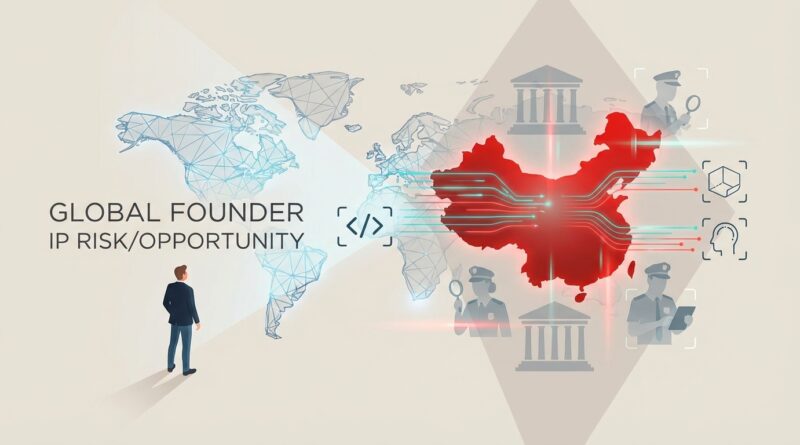
New China Trade Secret Rules: What They Quietly Mean For Your Brand’s Digital IP In 2026
You already have enough to worry about. Trademarks. Domain squatters. Knockoff listings. Stolen content. So hearing that China is tightening and modernizing its trade secret rules for a more digital economy may sound like one more legal headache. But this one matters more than many small brands realize. If you work with a factory, app developer, sourcing agent, cloud team, or design partner in China, these changes may affect who can control your source code, product specs, customer data, pricing files, training data, formulas, and internal workflows when a relationship goes bad. The quiet risk is simple. If ownership, secrecy steps, and access controls are fuzzy, the person holding your files may later argue that the know-how is shared, not secret, or even theirs to use. China trade secret protection digital economy 2026 is not just a big-company issue. It is a practical checklist issue for growing brands that outsource part of the business and assume a basic NDA covers everything.
⚡ In a Hurry? Key Takeaways
- China’s updated trade secret approach for 2026 makes digital business assets like code, data, designs, and platform know-how more central to enforcement, not less.
- Start now with China-ready contracts, clear ownership clauses, access logs, labeled confidential files, and strict supplier and contractor controls.
- If you can prove what was secret, who had access, and what rules they agreed to, you are in a much stronger position if something leaks or gets copied.
What is actually changing, in plain English?
China has been moving its trade secret system toward the realities of digital business. That means authorities and courts are looking more closely at information that lives in software tools, shared drives, factory systems, e-commerce back ends, platform operations, creative pipelines, and data-heavy workflows.
This is the key point for normal business owners. Trade secret protection is not just about a secret recipe or lab formula anymore. It can cover things like source code, UI logic, manufacturing tolerances, supplier pricing, product roadmaps, customer lists, recommendation rules, campaign data, and operational methods, if they are truly kept secret and have business value.
China is also signaling stronger, more practical enforcement in sectors tied to platforms, cultural and creative businesses, and other IP-heavy industries. So if your brand sells through online marketplaces, relies on contractors, or shares digital files across borders, this is your lane.
Why small brands should care
Big companies usually have legal teams, layered permissions, and regional contracts. Small brands often have a Google Drive folder, a freelance dev, a factory contact on WeChat, and a lot of trust. That works fine until someone leaves, a partner falls out, or a clone product shows up.
The weak spot is rarely the idea itself. It is the paperwork and the process around the idea.
If your files were casually shared, never marked confidential, copied into a supplier’s own systems, or built jointly without clear ownership language, your position gets weaker fast. Not hopeless. Just weaker.
The three questions a dispute will usually turn on
1. Was the information really secret?
If too many people had open access, or the same material was posted publicly, reused in marketing, or sent around without limits, it becomes harder to claim trade secret status.
2. Did it have commercial value because it was secret?
Can you show that the file, process, code, or data gave your business an edge? Lower costs, faster production, better targeting, improved conversion, a unique product feature, all of that helps.
3. Did you take reasonable steps to protect it?
This is the one many small businesses miss. Courts and enforcement bodies often look for practical protection steps. Not perfect steps. Reasonable ones. That includes contracts, restricted access, confidentiality labels, offboarding procedures, and records showing who got what.
What counts as “digital IP” here?
When people hear intellectual property, they often think patents and trademarks. Trade secrets are different. They often protect the stuff you do not register, but still need to control.
For 2026, think broadly:
- Source code and app architecture
- Training data, prompts, model tuning methods, and internal AI workflows
- Product CAD files, packaging dielines, and manufacturing instructions
- Supplier quotes, margins, forecasting sheets, and pricing formulas
- Creative assets before release, campaign plans, and audience targeting data
- Customer lists, channel strategies, and seller account methods
- Operational playbooks, QA standards, and defect analysis
If losing it would hurt your business or help a rival, you should at least ask whether it needs trade secret treatment.
Where brands get caught out
Factories and manufacturers
You send a factory your product specs, bill of materials, revisions, packaging files, and test data. Months later, a near-copy appears. If your manufacturing agreement did not clearly say that all designs, technical instructions, and production improvements belong to you, the argument gets messy.
App and software development teams
A contractor builds your app, website, plugin, or internal tool. If the contract says they are providing services, but does not clearly assign IP ownership, they may claim rights in the codebase, admin tools, or supporting documentation.
Sourcing agents and local operating partners
These partners often sit in the middle of sensitive flows. They may know your preferred suppliers, product mix, timing, target pricing, and launch plans. If the relationship breaks, they are often holding a lot more than a contact list.
Creative and platform businesses
Brands in gaming, media, design, streaming, e-commerce, and creator-led products often depend on assets that change daily and are easy to copy. Draft concepts, production files, metadata, and audience strategies may matter just as much as a formal trademark.
What to fix now, before 2026 becomes a crisis
Use contracts that do more than say “keep this secret”
A thin NDA is better than nothing, but it is rarely enough on its own. You want contracts that cover:
- Who owns pre-existing IP
- Who owns new work product, improvements, and derivative materials
- What is confidential, with examples
- What systems and people may access the information
- What happens at termination, including file return and deletion
- Audit rights, recordkeeping, and dispute terms
If you are working with parties in China, get local legal review. This is not the place for a recycled template from five years ago.
Label and organize sensitive information
This sounds boring because it is. It is also useful. Mark key files as confidential. Keep sensitive folders separate. Limit download rights. Use named accounts, not shared logins. Keep version history. If there is ever a dispute, this paper trail matters.
Control access by role
Not everyone needs everything. Your factory may need dimensions and tolerances, but not your full customer forecast model. Your freelance developer may need one repository, not your whole product roadmap.
Keep a disclosure log
Track what you shared, when, with whom, and for what purpose. This can be as simple as a spreadsheet if you are small. The point is to avoid the future argument that “everyone had it” or “we developed it ourselves.”
Handle offboarding like it matters
When a contractor, employee, or supplier relationship ends, shut off access quickly. Confirm return or deletion of materials. Change passwords, tokens, and admin rights. Save the evidence that you did it.
What “reasonable protection steps” can look like
You do not need spy-movie security. You need a sensible system.
- Confidentiality clauses in local-language and governing-language contracts
- File labels such as confidential, internal only, or restricted
- Access permissions based on role
- Repository logs and cloud audit logs
- Device and account controls
- Employee and contractor training
- Exit certificates or deletion confirmations
- Internal rules for copying, forwarding, and external storage
If this sounds like overkill, remember the goal. You are making it easier to prove that the information was treated like a secret because it was one.
If you use suppliers or dev teams in China, ask these questions this month
- Do our contracts clearly assign ownership of code, designs, specs, and improvements to us?
- Have we defined confidential information broadly enough to include data, workflows, and digital assets?
- Can we show who accessed our important files?
- Are any critical assets sitting only on a partner’s system?
- Do we have local-language versions of the key clauses where needed?
- When someone leaves, do we have a real offboarding checklist?
- Have we separated what each partner truly needs from what we casually shared?
What happens if you do nothing?
Usually nothing. Until something does.
Then it becomes expensive and distracting. A former contractor launches a lookalike app. A factory uses your drawings for a side client. A partner claims the optimization data was jointly developed and can still be used. You spend months trying to reconstruct who had access to what.
That is why this matters now. China trade secret protection digital economy 2026 is not mainly about learning new legal jargon. It is about reducing future panic.
At a Glance: Comparison
| Feature/Aspect | Details | Verdict |
|---|---|---|
| Old informal sharing habits | Specs, code, and data passed around by email, chat apps, or shared drives with weak records and vague ownership terms. | Risky. Harder to prove secrecy and ownership later. |
| China-ready contracts and access controls | Clear IP assignment, confidentiality definitions, limited access, deletion duties, and records of disclosure and use. | Strongest practical step for most small brands. |
| Waiting until a dispute starts | Trying to rebuild evidence after a leak, copycat product, or contractor breakup. | Costly and stressful. Prevention is much cheaper. |
Conclusion
There is no need to panic, but there is a need to get organized. China’s new trade secret provisions are being shaped for a digital economy where code, data, designs, platform methods, and creative workflows are central business assets. Enforcement powers on the ground are expanding, and courts are paying closer attention to platform, cultural, creative, and other IP-heavy sectors. That means your everyday operating files may matter more than you think. If you lock in clear ownership terms, confidentiality rules, access limits, and offboarding steps now, you give yourself a much better chance later. And if there is a leak, an ex-contractor copies your app, or a rival in your supply chain claims your product data is “theirs” under local law, you will not be starting from zero.