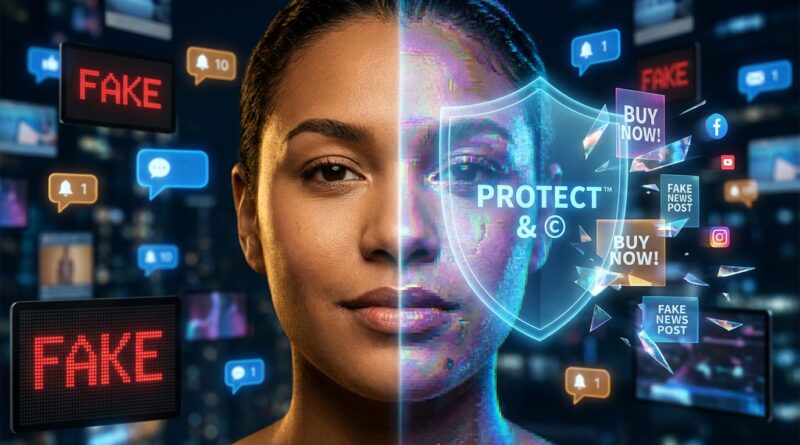
New Deepfake Laws Are Coming For Your Brand: How To ‘Trademark’ Your Face And Voice Before Someone Else Does
It is a weird feeling to see your own face, voice, or catchphrase used to sell something you never touched. For a lot of founders, creators, coaches, and small business owners, that is no longer some celebrity-only problem. Deepfake tools are cheap, fast, and good enough to fool customers for a few seconds. Sometimes that is all a scam needs. The law is trying to catch up, but right now the smartest move is not to wait for a perfect rulebook. It is to start building proof that your identity is part of your brand. That means thinking beyond logos and product names. If people know you by your voice, your look, your slogan, or your on-camera style, those may be business assets too. Deepfake trademark protection for face and voice is not a magic shield, but it can give you a stronger paper trail, faster takedown arguments, and a much clearer way to tell platforms, customers, and copycats what is real and what is fake.
⚡ In a Hurry? Key Takeaways
- Yes, you can start protecting parts of your public identity, but usually not by “trademarking your face” in the simple way people mean. You protect the brand elements tied to it, like your name, slogan, signature phrases, logos, and in some cases a distinctive voice or likeness used in commerce.
- Create a proof file now. Save headshots, audio samples, first-use dates, screenshots of your website, social handles, endorsements, and examples of how customers recognize you.
- Do not rely on one tool. Use trademarks, copyright where it fits, platform reporting tools, contracts, and fast documentation when a fake appears.
Why this got serious so fast
Not long ago, deepfakes felt like internet prank material. Creepy, yes, but easy to spot.
That has changed. A cloned voice can now sound close enough to you to fool a customer, a podcast listener, or even a staff member. A fake video ad can put your face on a product you have never endorsed. A synthetic version of your founder story can spread on social media before you even know it exists.
For a small brand, the damage is not just embarrassment. It can mean chargebacks, customer complaints, false endorsements, lost trust, and legal cleanup.
The tricky part is that the law does not package this into one neat button labeled “protect my identity.” Instead, you usually need a mix of rights.
Can you really “trademark” your face or voice?
Sort of. But not in the simple, movie-style way people talk about it.
A trademark protects source identifiers. In plain English, that means the stuff customers use to tell your brand apart from somebody else’s. Think names, logos, taglines, packaging, and sometimes distinctive sounds or other brand signals.
Your literal face, by itself, is not automatically a trademark. Your voice, by itself, is not automatically a trademark either. But if your likeness, name, phrase, or voice is used in a way that identifies your goods or services in the market, some parts of that identity may become protectable.
What usually can be protected
You may be able to register or strengthen rights around:
- Your brand name or personal name used in business
- Your company name
- Your logo
- Your slogan or catchphrase
- A distinctive sound mark, in some cases
- Stylized images or design elements tied to your brand
- Your product packaging or trade dress, if it is distinctive enough
What may be protected through other legal rights
Other parts of your identity may fall under different rules, such as:
- Right of publicity or personality rights
- False endorsement and unfair competition claims
- Copyright in original photos, videos, recordings, and scripts
- Defamation or consumer protection laws
- Platform impersonation policies
That is why deepfake trademark protection for face and voice is really about building layers. Trademark is one important layer, not the whole wall.
The practical checklist. What to protect before a fake shows up
1. Register the brand basics first
If you have been putting off trademark filings, this is the moment to stop procrastinating.
Start with the obvious pieces:
- Your business name
- Your personal name, if customers buy because of you
- Your podcast, channel, or show name
- Your signature slogan or recurring phrase
- Your logo or stylized brand mark
These are usually the easiest rights to explain to platforms and marketplaces. If someone makes a fake ad using your cloned voice and your registered brand name, your takedown case is stronger than if you just say, “That sounds like me.”
2. Document your public identity like it is evidence
Most people do this too late.
Create a folder now with:
- Professional headshots and dated profile photos
- Clear voice recordings from your podcast, videos, or ads
- Screenshots of your website and sales pages
- Social media profiles showing consistent branding
- Examples of customers referring to you by name, phrase, or recognizable style
- Press mentions and interviews
- Contracts showing authorized endorsements or sponsorships
- Dates when you first used a slogan, show intro, or branded sign-off
If a dispute happens, this file helps prove identity, prior use, and likely confusion.
3. Lock down your digital real estate
Deepfake scams often travel with lookalike domains, fake inboxes, and copycat social handles.
That is why brand protection is not just about content. It is also about where that content lives.
Claim the social handles you actually use. Grab obvious domain variations if they matter to your business. Set up verified profiles where possible. Make it easy for customers to find your real channels.
And stay alert for scam emails pretending to help you protect your brand. We have already seen plenty of fake “urgent notice” messages aimed at businesses, which is why New Wave Of Domain Trademark Scams: How To Spot Fake ‘Urgent’ Emails Before They Steal Your Brand is worth reading. A panicked founder is easy to trick.
4. Write an impersonation response plan before you need one
If a fake version of you appears tomorrow, who saves the evidence? Who files the report? Who tells customers? Who talks to your lawyer?
Write that down now.
Your plan should include:
- How to capture screenshots and screen recordings
- How to save URLs, timestamps, account names, and ad IDs
- Which platforms to report to first
- Who sends a cease-and-desist if needed
- What customer-facing statement you will post
- When to escalate to legal counsel
What to do the first time you find a deepfake using your brand
Do not just rage-post about it
I get the temptation. But start with evidence.
Take screenshots. Record the screen. Save the page source if you can. Note the username, domain, marketplace seller ID, and any payment links. If it is an ad, capture where it ran and what product it pushed.
If your team is involved, make sure everyone stores the same facts in one place.
Report through every available channel
Most major platforms now have some mix of:
- Trademark complaint forms
- Impersonation reports
- Copyright takedown tools
- Ad fraud reporting systems
- Consumer scam reporting tools
Use the one that best matches the abuse. If the fake uses your registered brand name, file that. If it copied your original video, file copyright too. If it is a fake endorsement or account, use impersonation tools.
Think in layers, not labels.
Tell your audience clearly and calmly
You do not need a dramatic thread.
A short statement is often enough:
“We are aware of fake videos and voice clips falsely claiming our endorsement. We did not create or approve them. Please use only our official site and verified accounts for genuine offers.”
That kind of message protects customers without spreading the fake further.
Escalate when money, safety, or reputation is on the line
If the content is tied to fraud, investment claims, health claims, or a major ad buy, get legal advice fast.
This area is moving quickly. Courts and lawmakers in different countries are treating AI impersonation in different ways. Some focus on publicity rights. Some focus on fraud. Some are starting to tackle synthetic voice misuse more directly. You want advice tied to your location, your audience, and the way your brand is used commercially.
How trademarks help, even when they are not the whole answer
Trademarks help because they turn a vague complaint into a specific one.
Compare these two reports:
- “Someone made an AI video that looks and sounds like me.”
- “This ad falsely uses my registered mark, my branded slogan, and my established likeness in a way likely to confuse customers into believing this product is affiliated with my business.”
The second one is simply easier to act on.
Platforms understand trademarks. Marketplace teams understand counterfeit and brand confusion. Judges understand documented use. That does not guarantee a fast win, but it usually gives you a stronger starting point.
Special advice for founders, creators, and local businesses
If your business is you, act like that identity is an asset
Many small business owners still think IP is only for giant companies with mascots and jingles.
Not true.
If you are a consultant, coach, real estate agent, course creator, dentist on TikTok, or local shop owner with a strong personal following, your face and voice may be part of why people buy. That means your personal brand deserves the same protection mindset as your logo.
If you have a team, set rules for approved content
Make it easy to prove what is real.
Use a standard intro, landing page, or verification link for promotions. Keep records of approved campaigns. Save final ad files. If someone later posts a fake endorsement, you can quickly show what authentic brand content looks like.
If you hire voice actors or creators, fix the contract language
This matters more than ever.
Spell out whether recordings may be edited, reused, or used to train synthetic systems. If your own voice is part of the product, make sure your agreements cover ownership, usage limits, and approval rights. A sloppy contract can create headaches even without a malicious deepfake.
What not to do
- Do not assume one trademark filing solves identity misuse everywhere.
- Do not wait until a fake goes viral to gather proof of first use.
- Do not hand sensitive documents to random “brand protection” emails.
- Do not rely only on platform reporting if serious fraud is involved.
- Do not forget to preserve evidence before the content disappears.
At a Glance: Comparison
| Feature/Aspect | Details | Verdict |
|---|---|---|
| Trademark registration | Best for names, logos, slogans, and brand signals used in commerce. Can strengthen takedowns when a deepfake also uses your brand identity. | Start here for core brand assets. |
| Face and voice evidence file | Includes dated photos, recordings, screenshots, customer recognition, and proof of first use. Helps show confusion and authenticity. | Essential backup. Cheap to create, very useful later. |
| Platform takedowns and legal rights mix | Uses trademark, copyright, impersonation policies, publicity rights, and fraud reports together depending on the abuse. | Most realistic approach for deepfake misuse. |
Conclusion
The rules around AI impersonation are changing fast, and yes, that is frustrating. Courts and lawmakers are still figuring out how to handle cloned voices, fake endorsements, and synthetic versions of real people. But you do not have to wait for perfect clarity to protect your brand. Start with what you can control. Register the names and phrases that identify your business. Save proof that your face, voice, and style are tied to real commercial use. Secure your domains and handles. Learn the reporting tools on the platforms where your audience actually spends time. Most of all, keep a simple response plan ready for the first fake, not the fifth. That is how you turn vague IP panic into a practical system. Deepfake trademark protection for face and voice is really about drawing a clear line around the real you, so customers, platforms, and copycats all have less room to pretend otherwise.