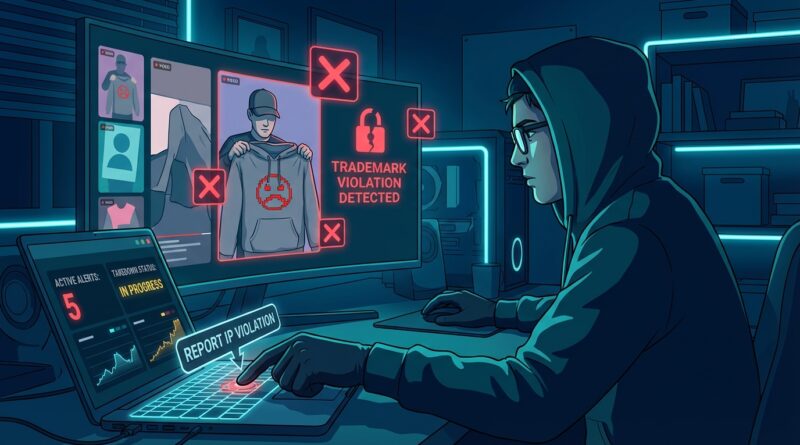
New Social Commerce IP Rules: How To Stop Livestream Sellers From Hijacking Your Brand In Real Time
You work hard to build a brand, then one random livestream seller flashes a lookalike logo on screen, tags your name, and starts moving fake products before you even know it happened. That is maddening. It is also getting more common. Livestream shopping moves fast, and for small brands, the damage can hit fast too. Customers get confused. Real buyers get diverted. Your support inbox fills up with complaints about products you never sold.
The good news is that platforms and regulators are starting to tighten the rules around real-time selling. The bad news is that you still need a plan, because automated systems miss plenty. If you want better trademark protection for livestream shopping, think in layers. Register what matters, lock down your platform tools, monitor active streams, save evidence quickly, and escalate fast when a seller is trading on your name. You do not need an in-house legal team to start. You do need a routine.
⚡ In a Hurry? Key Takeaways
- Trademark protection for livestream shopping starts before a stream goes live. Register your brand, logos, and top product names, then enroll in each platform’s reporting or brand protection tools.
- Set up a simple monitoring routine for TikTok Shop, Instagram, YouTube, and marketplaces with live video. Screenshot, screen record, and capture seller IDs the moment you spot misuse.
- If a platform bot rejects your complaint, escalate with proof of ownership, product images, timestamps, and customer confusion evidence. Speed matters because viral streams can do real damage in hours.
Why livestream selling is a trademark mess
Traditional counterfeits were bad enough. A fake listing sat on a marketplace page and waited to be found. Livestream selling is different. It is active, persuasive, and built for impulse buying.
A seller can say your brand name out loud, show a copied logo on packaging, pin a product link, and create urgency with countdowns and flash deals. By the time your team spots it, hundreds or thousands of viewers may have seen it.
That is why the latest platform policy updates matter. More services are spelling out rules for counterfeit goods, trademark misuse, fake endorsements, deceptive tags, and seller identity checks. But the platform rules do not remove your job. They mostly tell you where to complain and what proof to submit.
What the new rules are really changing
The details vary by platform, but the trend is pretty clear.
Platforms are putting more responsibility on sellers
Sellers are increasingly expected to prove they have the right to use a brand name, logo, or product imagery. Some platforms now ask for business verification, brand authorization, or supply chain documents for certain categories.
Platforms are also putting more responsibility on brands
If you own the trademark, you are usually expected to register complaints through a formal IP portal, brand registry, or seller enforcement system. In plain English, the platform wants you to raise your hand and document the problem.
Real-time enforcement is improving, but still patchy
Some platforms can suspend streams, remove products, or freeze payouts faster than before. That sounds great. In practice, automated moderation still misses spoken claims, blurry logos, mirrored video, and slight spelling changes.
So yes, policy is improving. No, you cannot trust the bots to catch everything.
Start with the basics you should already have
If your brand is selling in social commerce, these are the first boxes to tick.
1. Register your trademark
If you have not registered your brand name, logo, and key product marks in the countries where you sell, start there. Common law rights can help in some places, but platforms tend to respond faster and more consistently when you can attach a registration number.
At minimum, consider registering:
- Your brand name
- Your main logo
- Your top product line names
- Any slogan heavily used in social selling
2. Save clean proof of ownership
Create one folder with your trademark certificates, official logo files, product packaging photos, website screenshots, and links to your verified social accounts. When a complaint has to go out quickly, hunting for files wastes precious time.
3. Claim your official accounts everywhere you can
Even if you are not active on every social commerce app, reserve your brand handles. A dormant official account is still better than letting impostors grab your name first.
4. Join platform brand protection programs
Look for brand registry tools, IP reporting portals, counterfeit complaint forms, and seller verification options on every platform where your products might appear. This is not glamorous work, but it pays off when you need a fast takedown.
The settings and tools to turn on now
This is where trademark protection for livestream shopping becomes practical.
Use keyword alerts
Set alerts for your brand name, common misspellings, top product names, and phrases like “dupe,” “inspired by,” or “same as.” Include hashtags and seller tags. Free social listening tools can help, and paid monitoring platforms can do more if the budget allows.
Watch image misuse
Upload your official product images into reverse image search routines or brand monitoring tools. Sellers often steal your product photos long before they get bold enough to use your logo on camera.
Turn on comment and mention notifications
Customers often spot fakes before brands do. Make it easy for them to report suspicious streams, tagged videos, and shop listings.
Build a “report it now” page
Add a simple page to your website that tells customers and retailers how to report fake livestreams, knockoff sellers, and misleading product demos. Include a form or contact email. You want reports centralized, not scattered across direct messages.
What to monitor before, during, and after a livestream
You do not need a command center. You need a repeatable checklist.
Before a stream
- Search your brand name and top products on major social shopping platforms
- Check upcoming live event listings and seller pages
- Review affiliate or reseller partners so you know who is actually authorized
- Keep a current list of approved sellers and storefront URLs
During a stream
- Record the stream if possible
- Take screenshots showing the seller account, product card, price, and on-screen branding
- Note timestamps when your logo, product name, or false claims appear
- Capture pinned links and discount codes
- Copy comments from confused viewers asking if the seller is “official”
After a stream
- Save the replay link if one exists
- Document any linked shop listings
- Check whether the same seller reposted clips as shoppable short videos
- Monitor customer emails and social replies for confusion or complaints
That last point matters more than people think. Customer confusion is useful evidence. If shoppers believed the stream was connected to your business, say so in your complaint.
How to tell the difference between infringement and annoying but legal behavior
Not every mention of your brand is automatically a violation.
Usually stronger complaint territory
- A seller uses your exact logo on product packaging or stream graphics
- The stream claims the seller is “official,” “authorized,” or “partnered” when that is false
- The seller promotes counterfeit or lookalike goods under your brand name
- Your trademark appears in a way that is likely to confuse buyers
Usually murkier territory
- A reviewer compares their product to yours by name
- A reseller is selling genuine goods they lawfully acquired
- An influencer mentions your brand in commentary without pretending to be you
This is where many small brands get stuck. They know something feels wrong, but they are not sure whether the platform will agree. When in doubt, focus your report on likely customer confusion, false affiliation, counterfeit indicators, and exact misuse of your mark.
How to file a complaint that actually gets traction
Platform forms can feel cold and robotic. Make your report easy for a tired moderator to understand.
Include these pieces every time
- Your legal brand name and contact details
- Trademark registration number and jurisdiction
- Direct links to the stream, replay, seller account, and product listing
- Screenshots and video captures with timestamps
- A short explanation of why the use is infringing
- Evidence of confusion, if you have it
- A clear request, such as remove stream, remove listing, suspend seller, freeze inventory, or stop payouts
Use plain language
Do not write like a courtroom drama. Try this structure:
“We own the registered trademark X in category Y. This seller used our exact logo in a livestream and linked counterfeit products through this shop URL. Viewers were told or led to believe the stream was official. Please remove the stream and related listings, and review the seller account for repeat infringement.”
If the first report is denied, escalate fast
Most platforms have a second review path. Use it. Add more proof. Point out if the infringement is ongoing, repeated, or tied to multiple accounts. If there is a risk to consumer safety, say that too.
When automated tools fail you
They will, at some point.
A blurry logo might not match. A fake seller might swap one letter in your brand name. A host might say your name aloud without typing it anywhere. This is why human review still matters.
Your backup plan should include:
- A named person on your team or agency who owns takedown work
- A shared evidence folder with date-stamped files
- A list of platform complaint links and escalation emails
- A short template for legal notices and platform appeals
- A customer support script for buyers who were misled
If the same seller keeps popping up, document the pattern. Repeated abuse often gets more attention than a one-off complaint.
Do not ignore authorized sellers and creators
Sometimes the trouble starts closer to home. A reseller, affiliate, or creator may think they are helping by using your logo in stream thumbnails, altering product shots, or making claims you never approved.
Create simple written rules for partners
- What logo files they can use
- What they can and cannot say on stream
- How they should disclose affiliate relationships
- Which product claims need approval first
- What happens if they break the rules
This is not just brand housekeeping. It reduces confusion when you have to tell a platform, “This seller is not authorized,” or, “This creator exceeded their permission.”
A practical weekly routine for small brands
If all of this sounds like a full-time job, shrink it into a rhythm you can actually keep.
Every week
- Search your brand name on 3 to 5 key social commerce platforms
- Review alerts for tags, mentions, and misspellings
- Check top-selling or viral clips tied to your category
- Update your approved seller list
Every month
- Review whether your trademark coverage matches your current products and markets
- Audit your reporting portals and logins
- Refresh your evidence folder with current packaging and product photos
- Look for repeat infringers and cluster accounts
Every quarter
- Review creator and reseller agreements
- Update customer support scripts for counterfeit complaints
- Test your internal escalation process so nobody is improvising during a viral incident
What to do if the fake stream has already gone viral
First, breathe. Then work in order.
- Capture evidence immediately. Do not assume the replay will stay up.
- File the platform complaint with your strongest proof first.
- Report linked listings and the seller account, not just the video.
- Post a calm clarification on your official channels if customers are confused.
- Direct affected customers to your official store and support team.
- Track all related accounts, reposts, and clip edits.
You may not stop the first hour of damage. You can still stop the second and third wave.
At a Glance: Comparison
| Feature/Aspect | Details | Verdict |
|---|---|---|
| Trademark registration | Gives you stronger proof of ownership and usually makes platform complaints easier to process. | Do this first if you have not already. |
| Platform monitoring | Keyword alerts, manual searches, screenshots, and stream recording help you spot misuse before it spreads. | Essential for small brands with limited legal support. |
| Automated takedown tools | Useful for obvious infringements, but often miss spoken claims, altered logos, and repeat offenders using new accounts. | Helpful, not enough on their own. |
Conclusion
Social shopping is growing fast, and the rules around trademark protection for livestream shopping are changing right along with it. That is good news, but it does not mean your brand is safe on autopilot. Small brands are often the first to get hit because copycats know a single viral livestream can confuse customers and drain trust in one evening. The fix is not to panic. It is to build a simple protection routine. Register the marks that matter. Turn on the platform tools that exist. Monitor active streams and shoppable clips. Save evidence quickly. Escalate when the bots get it wrong. If you do those few things consistently, brand protection stops feeling like a legal black hole and starts feeling manageable. You do not need a giant team. You need a checklist, a folder of proof, and the confidence to act fast when someone tries to sell under your name.