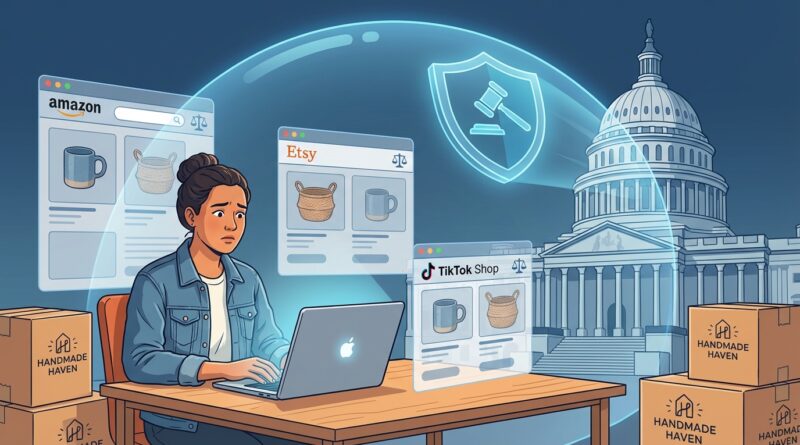
New US Bill Targets Amazon, Etsy And TikTok: How The Coming ‘Trademark Duty Of Care’ Could Redefine Online Brand Protection
If you run a small brand online, you already know the sick feeling. You spot a copycat listing on Amazon, Etsy, or TikTok Shop. Your photos are there. Your brand name is close enough to confuse buyers. Maybe the seller even hijacked your listing. Then the platform gives you the same tired answer. We are just the marketplace. That dodge may not last much longer. A new trademark liability law for online marketplaces is taking shape in Congress, and it could force large platforms to do more than pass along complaint forms and wait. The basic idea is simple. If a marketplace ignores obvious trademark abuse, it should not get to hide behind the “we’re only the platform” excuse. For small businesses, this matters a lot. If this bill moves forward, brands that already document infringement well and file clear notices could have a real advantage when stronger enforcement rules kick in.
⚡ In a Hurry? Key Takeaways
- This proposed bill would make big online marketplaces more legally responsible when they fail to act on obvious trademark infringement.
- If you own a brand, start saving screenshots, order records, URLs, seller names, and side-by-side comparisons now so your takedown notices are stronger.
- The biggest winners could be small brands that already know how to prove repeat infringement clearly and quickly.
What this bill is trying to change
Right now, trademark owners often face a messy system. Platforms usually offer reporting tools, but the burden falls heavily on the brand owner. You have to find the bad listing, gather evidence, file the complaint, follow up, and often repeat the process when the seller pops back up under a new name.
The proposed shift is about duty of care. In plain English, that means online marketplaces may be expected to take reasonable steps to prevent and remove trademark abuse, especially when the warning signs are obvious.
That is a big deal. It changes the question from “Did the brand report it correctly?” to “Did the platform act responsibly once it knew, or should have known, what was happening?”
Why Amazon, Etsy, and TikTok Shop are in the spotlight
These platforms are where a lot of buying happens. They are also where a lot of brand abuse happens. Counterfeit goods, lookalike listings, keyword stuffing, and seller accounts that disappear and reappear are common complaints.
Lawmakers are not picking these companies at random. They sit in the middle of the transaction. They host listings, process reports, rank search results, and in some cases handle payments, warehousing, shipping, or advertising. That makes it harder to argue they are just passive bulletin boards.
What “obvious trademark abuse” might look like
Not every dispute is clear-cut. Some trademark fights are genuinely complex. But many are not. Here are the kinds of facts lawmakers are likely thinking about:
- A seller uses a near-identical brand name to confuse buyers.
- Product photos are copied straight from the real brand.
- Listings claim to be “official” or “authentic” without permission.
- A seller keeps reposting removed listings through fresh accounts.
- Multiple complaints point to the same repeat offender.
If a platform sees that pattern and still does little or nothing, this bill appears aimed at closing that loophole.
What “trademark duty of care” means in normal language
Think of it like a store manager who knows someone keeps putting fake products on the shelf. If the manager is told again and again, sees the same scam return, and still shrugs, most people would say the store shares some blame.
That is the heart of the idea here. A duty of care does not mean platforms must catch every fake item instantly. It means they may need to maintain reasonable systems, respond to credible reports, and take repeat abuse seriously.
That could include better seller verification, faster takedown handling, tracking repeat violators, and making sure removed sellers cannot simply come back under a slightly different name.
Why small brands should pay attention now, not later
This is the part many business owners miss. If a new trademark liability law for online marketplaces becomes law, the brands that are ready on day one will likely benefit first.
Platforms tend to respond fastest when complaints are clear, complete, and easy to verify. If legal standards tighten, internal review teams will still need evidence. The difference is that they may have a stronger reason to act quickly.
Start building your evidence file now
You do not need a legal department to do this. You need a system.
- Save screenshots of each infringing listing.
- Copy the full product URL.
- Record the seller name and store ID.
- Keep dated screenshots showing your registered trademark and your real product listing.
- Note how the copycat listing is likely to confuse buyers.
- If possible, place a test order and keep the packaging, invoice, and product photos.
This turns a vague complaint into a solid record.
Use the right language in takedown notices
Many complaints get slowed down because they sound emotional instead of specific. Frustration is understandable, but platforms respond better to facts.
Include:
- Your trademark registration number, if you have one.
- The exact mark being infringed.
- The exact listing URLs.
- A short explanation of likely buyer confusion.
- Any proof the seller is a repeat offender.
If there is a pattern, say so plainly. “This seller reposted the same infringing product after prior removal on these dates” is stronger than “they keep stealing from us.”
Repeat offenders may become the real pressure point
One of the most important parts of any platform liability debate is repeat infringement. Lawmakers and courts often care less about one bad listing than about a system that allows the same abuse over and over.
If the coming law pushes platforms to adopt clearer repeat offender rules, brands that track repeat behavior carefully will be in the best position. That means connecting the dots between seller names, product images, contact details, packaging similarities, and relisted products.
Do not assume the platform will connect those dots for you. Hand them the pattern.
What could change for marketplaces if the bill passes
No one knows the final text yet, and bills often change. But if Congress does create a clear statutory duty, we could see some practical shifts:
- Faster response deadlines for trademark complaints.
- More aggressive suspension of repeat offenders.
- Stronger seller identity checks.
- Better internal recordkeeping by platforms.
- Higher legal risk for ignoring obvious abuse.
In short, reporting a fake listing may stop feeling like shouting into the wind.
What this does not mean
It does not mean every brand complaint will automatically win. Genuine disputes over resellers, compatibility claims, nominative use, and similar branding can still be tricky.
It also does not mean small businesses should wait for Washington to save them. Even with a stronger law, the brands that do best will be the ones with clean records, clear trademarks, and organized evidence.
How to prepare if you sell online
If you are a founder, creator, or side-hustle seller, here is the practical checklist:
1. Make sure your trademark basics are in order
Know exactly what mark you own, where it is registered, and which products it covers. If you are relying only on a business name and have no registration, your position may be weaker.
2. Create a simple infringement log
A spreadsheet is enough. Track dates, URLs, seller names, complaint IDs, outcomes, and relisting activity.
3. Save every platform response
If the law changes, prior reports and weak responses may matter more than you think.
4. Watch for repeat patterns, not just one-off copies
A pattern is often more persuasive than a single complaint.
5. Write notices like a calm investigator
Be specific. Be brief. Be factual.
At a Glance: Comparison
| Feature/Aspect | Details | Verdict |
|---|---|---|
| Current platform stance | Many marketplaces act mainly as complaint processors and often argue they are only hosting third-party sellers. | Frustrating for brands, especially when copycats return. |
| Proposed duty of care | Platforms could face clearer legal responsibility if they ignore obvious trademark abuse or repeat offenders. | A meaningful shift toward accountability. |
| Best move for brand owners now | Document every violation, use precise takedown language, and track repeat infringement patterns. | Smart preparation that could pay off quickly if the law changes. |
Conclusion
This quiet push in Washington matters more than it may seem. Online marketplaces are where many small brands get hurt first and hardest, and for years the rules have let platforms keep some distance from the damage. If Congress creates a real trademark duty of care, that balance could change. Amazon, Etsy, TikTok, and similar platforms may have to treat obvious infringement as their problem too, not just yours. The smartest move today is simple. Get organized before the law arrives. Keep clean evidence. Use the right words in your notices. Track repeat offenders carefully. If a new statute hard-codes what marketplaces must do when you report a knockoff, the brands that are prepared will be first in line for faster, better enforcement.