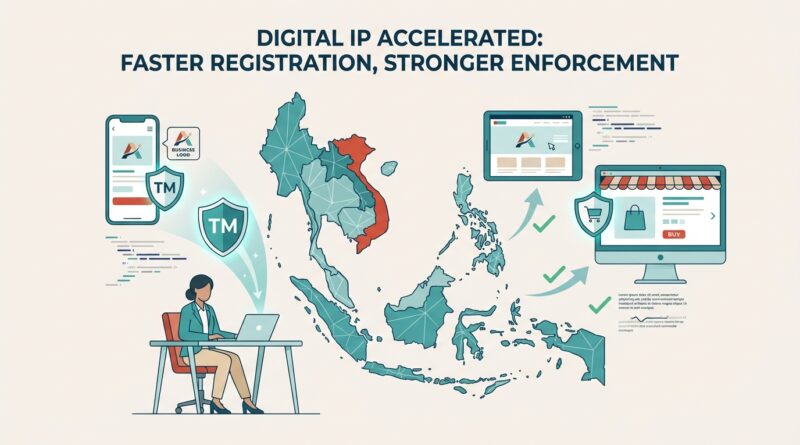
New Vietnam IP Law Supercharges Trademarks And Digital Enforcement: What Global Brands Need To Know On Day One
If you have ever watched a trademark filing sit for months while copycat sellers popped up online in the meantime, you already know the pain. It is expensive, slow, and oddly old-fashioned for a world where fake listings can go live in minutes. That is why Vietnam’s amended IP law matters on day one. As of April 1, 2026, the country is trying to fix both halves of the problem at once. It aims to speed up trademark examination and put more direct duties on digital platforms when counterfeit or infringing goods appear online. For global brands, startups, and marketplace sellers, that is a big shift. Vietnam is no longer just another filing on the to-do list. It is becoming a market where registration strategy and online enforcement strategy need to work together from the start. If you sell into Southeast Asia, this is the kind of legal change that can save time, cut clean-up costs, and help you act before copycats get comfortable.
⚡ In a Hurry? Key Takeaways
- Vietnam’s 2026 amended IP law links faster trademark handling with stronger online enforcement duties, which is rare and useful for brand owners.
- If Vietnam matters to your sales plan, file core marks now, review local classes and goods descriptions carefully, and prepare a platform takedown package before problems start.
- This is a practical chance to protect your brand earlier, but only if your filings, evidence, and online monitoring are organized from day one.
What changed today, in plain English
The short version is simple. Vietnam has updated its IP system to better match how brands actually get attacked now.
That means two things.
1. Trademark registration is meant to move faster
One of the biggest complaints from businesses entering fast-growing markets is delay. By the time a mark is reviewed, approved, challenged, and recorded, bad actors may already be selling under a confusingly similar name.
The amended law is designed to reduce that lag. The exact speed will depend on how the agencies implement it in practice, but the direction is clear. Vietnam wants a more efficient trademark examination process, not the old wait-and-hope routine.
2. Digital platforms face tougher IP enforcement expectations
This is the part that should get the attention of founders and ecommerce managers. Vietnam is putting more pressure on platforms and online intermediaries to respond when infringement happens. In other words, rights enforcement is not supposed to stop at your registration certificate. It now reaches more directly into the online sales layer.
That matters because modern trademark abuse usually shows up first in product listings, marketplace stores, sponsored posts, domain names, and social commerce pages.
Why this matters more than a normal trademark reform
Most legal updates focus on one side of the problem. They either improve registration, or they talk about online enforcement in a separate bucket. Vietnam’s 2026 amended IP law trademark digital enforcement approach is different because it ties the two together.
That is smart. A trademark right that takes forever to process is less useful. And a fast registration system without help from platforms still leaves brands playing endless whack-a-mole online.
Together, these changes can create a more realistic protection system. Not perfect. But more useful.
Who should pay attention right now
You do not need to be a giant luxury house to care about this.
This update matters if you are:
- a startup planning to sell in Vietnam or nearby markets
- an Amazon, Shopee, Lazada, TikTok Shop, or direct-to-consumer brand
- a software company with a visible consumer brand
- a beauty, fashion, electronics, food, or health product seller
- a distributor entering Vietnam under license
- a marketing team launching localized campaigns and sub-brands
If your brand name appears on packaging, listings, apps, websites, or creator content, this is your issue.
What global brands should do on day one
File smarter, not wider
Do not rush to file every possible variation just because the law changed. Start with your core marks. That usually means your main brand name, top product lines, logo if it is distinctive, and any transliterated or localized version that consumers may actually use.
Be careful with goods and services descriptions. A fast filing that covers the wrong things is still a bad filing.
Audit your current Vietnam position
Ask three basic questions:
- Do we already have registrations or pending applications in Vietnam?
- Are our filings in the right classes for how we really sell?
- Do our local distributors, agents, or partners control any brand assets we should control ourselves?
That last point is important. In fast-growing markets, messy channel relationships often create trademark headaches before counterfeiters do.
Build a takedown pack before you need it
This is where non-lawyers can save a lot of time. Put together one clean folder with:
- your registration certificates or application details
- proof of use of the mark
- official product images
- authorized seller lists
- template complaint language
- contact details for local counsel or your internal IP lead
When a fake listing goes up, speed matters. You do not want your team hunting for a PDF from 2024 while the seller keeps taking orders.
Watch the marketplaces, not just the registry
A lot of companies still treat trademark work like a filing exercise. That is too narrow now. Your real risk often shows up first in search results and social feeds.
Set up monitoring for:
- brand name misspellings
- lookalike logos
- unauthorized seller accounts
- repeat counterfeit keywords
- copycat domain names and handles
This law makes early action more practical, but only if you spot abuse quickly.
What “tougher platform duties” likely means in practice
For ordinary businesses, the practical question is not how the statute reads line by line. It is this. Will platforms have to take complaints more seriously?
The answer appears to be yes.
Expect stronger expectations around notice handling, cooperation, recordkeeping, and response to clear infringement claims. Platforms may also face more pressure to deal with repeat offenders instead of removing one listing at a time and calling it a day.
That will not turn every marketplace into a perfect police force. But it does give rightsholders a better story to tell when pushing for action.
What this does not fix
Let us stay realistic. A new law is not magic.
You can still run into:
- backlogs during the transition
- uneven enforcement between platforms
- bad-faith sellers who reopen under new names
- disputes over parallel imports or gray-market goods
- evidence problems if your paperwork is sloppy
So yes, this is promising. No, it does not mean you can stop doing the basics.
A simple playbook for non-lawyers
If you are a founder or marketer and want the shortest useful version, use this checklist.
- List your top 3 to 5 marks used in Vietnam or planned for Vietnam.
- Check whether they are already filed or registered locally.
- Review whether your goods and services coverage matches real-world use.
- Save proof of use and product images in one shareable folder.
- Map where your brand appears online, marketplaces, social shops, reseller pages, and paid ads.
- Assign one person to handle first-response complaints.
- Line up local counsel for harder cases.
That is not glamorous, but it works.
Why Vietnam could become a test case for other markets
This is the bigger story. Vietnam is not just updating old paperwork. It is treating trademark speed and digital enforcement as connected problems.
Other emerging markets are watching the same pressures build. More ecommerce. More cross-border sellers. More fast-moving counterfeits. More pressure on regulators to make IP rights mean something online, not just on paper.
So even if Vietnam is a small slice of your revenue today, it may be an early signal for how other jurisdictions will start handling platform responsibility and brand protection.
At a Glance: Comparison
| Feature/Aspect | Details | Verdict |
|---|---|---|
| Trademark examination | The amended law aims to speed review and make registration more useful for businesses entering the market. | Good news, but watch real processing times during rollout. |
| Digital platform enforcement | Platforms face stronger expectations to respond to infringement complaints and help curb online abuse. | Potentially very useful if your evidence and takedown process are ready. |
| Value for global brands | The law connects registration and enforcement, which matches how brands actually get copied in ecommerce. | Worth acting on now, especially for consumer-facing and marketplace-driven brands. |
Conclusion
Vietnam’s amended IP Law takes effect today, April 1, 2026, and that timing matters. This is one of the clearer examples of a country trying to speed up trademark examination while also putting tougher digital enforcement duties on platforms. For modern founders and marketers, that goes straight to the real problem. You do not have time or budget for endless filings, but you also cannot sit back while copycats eat your search traffic and marketplace sales. The smart move is to treat this as a practical opening. File smarter. Enforce earlier. Get your evidence organized. Watch the platforms where abuse starts. And keep an eye on Vietnam as a possible preview of how other emerging markets may begin policing digital brand abuse in the years ahead.