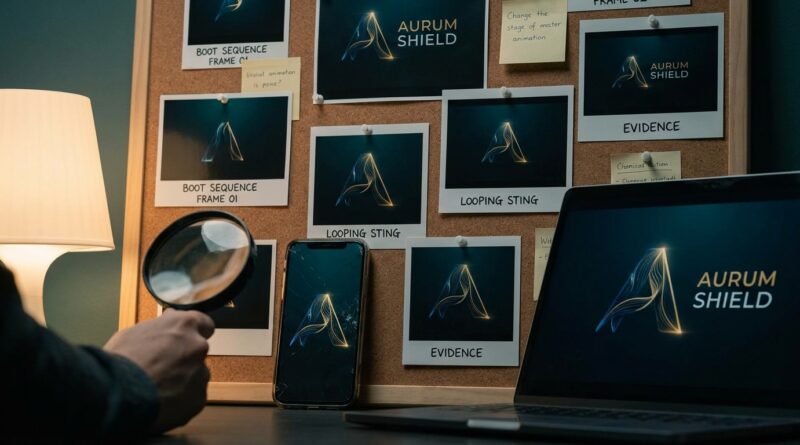
New China Trademark Law Quietly Turns Your Animations And App Screens Into Registrable IP: How To Lock Down ‘Moving’ Brands Before Copycats Catch Up
You spend weeks polishing a loading animation, a slick app transition, or a short looping brand sting for social media. Then someone copies the look, changes one color, and suddenly your “brand” feels a lot less yours. That frustration is real, especially if your business mostly lives on screens instead of shop signs and packaging. The good news is that China’s 2026 trademark changes finally catch up with how modern brands actually work. The new rules open the door for dynamic trademarks and clearer recognition of online-only use. In plain English, that means moving logos, animated brand moments, and in-app visuals may now be much easier to protect than under the old static-image playbook. If you sell apps, games, digital services, or creator-led products in China, this is a big shift. It gives smaller brands a better shot at locking down the exact moving pieces customers recognize before copycats move first.
⚡ In a Hurry? Key Takeaways
- China’s updated trademark framework for 2026 makes it more realistic to register dynamic marks, including certain brand animations and motion-based identifiers.
- If your brand appears in apps, startup screens, short loops, or UI visuals, start saving dated evidence now, including videos, screenshots, release logs, and launch records.
- Do not rely on your static logo alone. Copycats often mimic the moving parts users remember most, so early filing and clear documentation matter.
Why this matters more than most founders realize
For years, trademark systems were built around the old idea of a brand. A word mark. A flat logo. Maybe a package shape if you were lucky.
That never fit digital products very well. Users do not always remember your app icon in isolation. They remember the bounce of your loading screen. The soundless loop at the end of your promo clip. The way your onboarding cards slide into place. Those “small” touches often do the heavy lifting for recognition.
That is why the China dynamic trademark law digital brand animations story matters. It is not a niche legal tweak. It is a sign that the rules are catching up with how brands actually show up on phones, tablets, and social platforms.
What changed in China’s 2026 trademark overhaul
The headline change is simple. China is moving toward broader recognition of non-traditional marks, including dynamic or motion-based branding, while also better recognizing trademark use in online environments.
That means two practical things for businesses:
1. Motion can become part of the brand asset
If your brand identifier is not just a still image but a sequence of frames or a repeating motion, you may have a better path to registration than before.
Think of:
- App splash screen animations
- Short logo reveals before videos
- Looping end cards on social posts
- Distinct in-product transition screens
- Animated mascots used consistently as brand identifiers
2. Online-only use gets more respect
Many early stage companies have never printed a brochure, hung a sign, or sold through a physical shop. Their entire customer relationship happens through an app, a website, a mini-program, or livestream content.
Older trademark thinking sometimes made digital-first businesses feel like second-class citizens. A better recognition of online use helps close that gap.
What counts as a “moving” trademark in plain English
A moving trademark is not just “anything animated.” That is the key thing to understand.
To work as a trademark, the motion has to identify the source of the product or service. In other words, people should be able to see that motion and think, “That is that company.”
That is different from decoration.
Likely stronger candidates
- A consistent three-second brand reveal used across your app, ads, and product videos
- A distinct loading animation that appears every time users open your service
- A signature icon movement tied to your brand alone
Likely weaker candidates
- Generic spinning shapes
- Trend-based social effects everyone is using
- One-off animations made for a holiday campaign
The test is not “Is it cool?” The test is “Does it point to you?”
Why copycats love animations and in-app visuals
Because they are easy to imitate and hard to explain after the fact.
If someone steals a word mark, the problem is obvious. If someone copies the feel of your onboarding sequence, your button pulse, or your brand sting, things get murkier fast. That gray area is where lookalikes thrive.
And for users, those details matter more than many companies admit. People often trust familiar motion patterns before they even read a brand name. That is especially true in crowded app stores and short-form video feeds.
What founders and creators should do right now
You do not need to panic. But you do need a system.
Audit your brand assets
Make a simple list of every visual brand element you use that moves or appears only on screen.
- Launch animation
- Splash screen
- In-app reward sequence
- Animated logo reveal
- Looping social media signature
- Branded sticker or mascot motion
If users repeatedly see it, list it.
Separate decoration from identifiers
Ask one question for each asset. If a user saw this with no brand name attached, would they connect it to us?
If yes, it may be worth considering for trademark strategy.
Save evidence like a pack rat
This is the unglamorous part, but it matters a lot.
Keep:
- Dated video files
- Version histories
- App release notes
- Store listing screenshots
- Social posts showing first use
- Marketing decks and campaign launches
- Internal design approval records
If a dispute starts later, memory is useless. Records win.
Show the sequence clearly
For a moving mark, one screenshot is usually not enough. You will likely need a frame-by-frame representation or a clear visual sequence showing what changes over time.
Think of it like making a flipbook of your trademark. The movement is the point, so document the movement.
File early if China is part of your plan
If China is a target market, manufacturing base, licensing territory, or major user growth area, waiting can get expensive. China has long had a first-to-file reputation. This update makes that timing issue even more important for digital assets.
If your animation is central to your brand, do not wait until after it becomes famous.
What “online-only use” could mean for real businesses
This is one of the most useful pieces of the update for startups.
You may now be in a stronger position if your trademark use happens mainly through:
- Mobile apps
- SaaS dashboards
- Mini-programs
- Digital subscriptions
- Livestream storefronts
- Creator channels and digital communities
That matters because modern brands often launch digitally first and stay there for years. The old assumption that “real” trademark use needed more offline proof never matched how internet-native companies operate.
Common mistakes to avoid
Assuming copyright is enough
Copyright can help with creative works, but it is not the same as trademark protection. A brand animation may be artistic, but what you really want is protection tied to source identification in the market.
Using too many versions
If your animation changes every two months, it becomes harder to show that one specific moving element identifies your brand. Consistency helps.
Forgetting the app screen itself may matter
Sometimes the protectable value is not just the logo animation. It could be a distinctive arrangement or sequence of branded screen elements users strongly associate with you. That does not mean every UI is a trademark. It means some recurring branded visual systems deserve a closer look.
Waiting until a clone appears
By then, you are reacting. The point of this legal shift is to get ahead of the problem.
How to think about your brand if you build software
If you run a software company, stop thinking of the trademark file as a folder for your wordmark and icon only.
Instead, think of your brand as a set of recognition triggers:
- What users see first
- What repeats most often
- What competitors could mimic cheaply
- What customers instantly connect with your service
That mindset is often the difference between protecting a living digital brand and protecting a single flat image from 2019.
Who should pay attention first
- App founders entering China
- Game studios with distinctive intros or reward animations
- SaaS companies with recognizable onboarding flows
- DTC brands using motion-heavy social branding
- Creators building businesses around short looping visual identity
- Agencies creating repeatable branded motion systems for clients
If your business lives on screens, this is not background legal news. It is product strategy.
At a Glance: Comparison
| Feature/Aspect | Details | Verdict |
|---|---|---|
| Static logo vs moving mark | Static logos still matter, but motion-based identifiers can now play a bigger role in Chinese trademark strategy. | Use both, not one or the other. |
| Offline proof vs online-only use | The 2026 update better recognizes brands used mainly through apps, websites, and digital services. | Big win for startups and digital creators. |
| Waiting vs filing early | Early filing plus clean evidence gives you a much better shot than trying to prove ownership after clones appear. | Start documenting now. |
Conclusion
For anyone building a brand through software, motion, and screen-based experiences, this is one of those legal changes that could quietly save you a lot of pain later. China’s 2026 trademark overhaul gives the community a real edge because it explicitly opens the door to registering dynamic marks and online-only use. That means early stage founders, app builders, and digital creators can finally protect the exact animations and in-product visuals copycats love to rip, instead of waiting for a static logo to carry all the weight. The smart move now is simple. Identify the moving parts of your brand, keep proof, and get advice before someone else decides your best ideas look familiar.