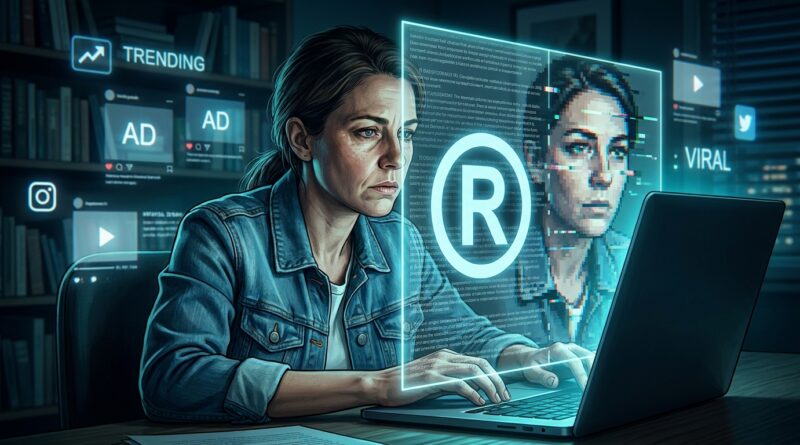
New Deepfake Brand Protection Laws Quietly Turn AI Fakes Into Trademark Ammo: How To Lock Your Name, Face And Voice Before Scammers Do
You do not need a law degree to feel the problem here. One day you are running your business, posting videos, building a following. The next day, a fake ad shows up with your face, your voice, or a social profile that looks close enough to fool customers. That is the part that makes people mad. Everyone says, “Report it,” but nobody can clearly tell you which rule actually stops it. Trademark? Copyright? Right of publicity? Platform policy? New deepfake laws? The annoying answer is often “some mix of all of them.” The good news is that trademark protection against AI deepfakes is starting to matter a lot more than many creators realize. Courts, regulators, and platforms are getting more willing to treat fake AI content as a brand misuse problem, not just a weird internet prank. If you lock down your brand basics now, you give yourself a cleaner path when a fake hits.
⚡ In a Hurry? Key Takeaways
- Trademark protection against AI deepfakes can help you act faster when scammers use your name, slogan, or brand identity in fake ads and fake profiles.
- Start by registering your brand name, key tagline, and any widely used catchphrase tied to your business, then save proof of how you use them online.
- Trademark is not a magic shield, but it works well alongside publicity rights, copyright, contracts, and platform reports.
Why this is suddenly a real problem for small brands
For years, deepfakes sounded like a celebrity problem. Now they are a small business problem.
A coach gets a fake TikTok account. A founder’s cloned voice is used in a scam pitch. A creator’s face appears in an ad for a product they have never touched. Customers do not stop to sort out the legal details. They just think the brand is involved.
That is why this matters. The injury is not only personal. It is commercial. If the fake confuses buyers, damages trust, or helps someone sell under your identity, trademark law starts to enter the picture in a very practical way.
What trademark can do that other laws sometimes cannot
People often hear “deepfake” and assume copyright is the answer. Sometimes it is. But copyright protects original works like specific videos, photos, scripts, and recordings. It does not automatically give you ownership over your face, name, or voice in every setting.
Trademark is different. It protects source identifiers. In plain English, it helps show that certain words, phrases, logos, and other brand signals point to you in the marketplace.
That matters when a fake is pretending to be your business
If a scammer uses your brand name in a fake ad, your tagline in a fake promo, or a lookalike profile that suggests endorsement, trademark claims can be easier for platforms and lawyers to understand quickly.
They do not have to solve every philosophical question about AI personhood. They can focus on something simpler. Is this likely to confuse consumers about who is behind this content?
That is why trademark protection against AI deepfakes is getting more attention. It speaks the language platforms already know. Impersonation, consumer confusion, false endorsement, counterfeit style misuse. Those are familiar lanes.
What trademark does not cover
It is still important to stay realistic.
A trademark does not mean you own your own face in every context. It does not automatically stop every parody, every random mention, or every bad meme. And if you never actually use a phrase as a brand identifier, you usually cannot just grab it now because you like it.
Also, voices are tricky. In some cases, a voice may be protected more clearly under state publicity law, unfair competition rules, or platform impersonation rules than under trademark alone.
So think of trademark as one fence line, not the whole property.
The legal stack you are actually dealing with
Most deepfake brand attacks involve more than one set of rules at once.
1. Trademark
Useful when the fake uses your brand name, product name, slogan, logo, or other source identifiers in a way that can confuse buyers.
2. Right of publicity
This covers commercial misuse of a person’s name, image, likeness, and sometimes voice. Rules vary a lot by state, which is one reason people get confused fast.
3. Copyright
Helpful if someone copied your original video, podcast, photo, or script to build the fake.
4. Platform rules
These can be the fastest tool in the real world. If a platform has impersonation, synthetic media, counterfeit, or ad fraud rules, you may get content removed before a full legal fight even starts.
5. New deepfake laws
These are growing, but they are uneven. Some focus on elections. Some focus on sexual content. Some target disclosure failures. They matter, but they are not yet a single clean nationwide fix for every fake ad or voice clone.
That is why brand owners who already have trademark paperwork often find they have a much cleaner takedown path. They can point to a registered right instead of trying to explain everything from scratch.
Why your tagline and catchphrase may matter more than you think
Many creators focus only on their business name. That is a mistake.
Scammers copy the little things people remember. A repeated intro line. A podcast sign-off. A sales phrase. A short slogan attached to your content. Those details help a fake feel real.
If you consistently use a phrase to identify your content or business, it may be worth reviewing for trademark filing. The same goes for a show title, a course name, a community name, or a product family name.
You are not trying to trademark every sentence you have ever spoken. You are trying to protect the signals your audience connects with you.
A weekend plan to build a basic legal perimeter
You do not need to do everything at once. Start with the parts that give you the fastest practical protection.
Step 1: List your real brand assets
Make a simple document with:
- Your business name
- Your creator name or handle, if used commercially
- Your logo
- Your main tagline
- Any catchphrase strongly tied to your brand
- Your product, course, newsletter, or podcast titles
Step 2: Check what is already in use
Before filing anything, search the USPTO database, search engines, YouTube, TikTok, Instagram, Amazon, and domain listings. You want to know whether someone is already using a similar mark in a related space.
Step 3: Save proof of use
Take screenshots of your website, sales pages, channel banners, product listings, and social profiles showing how the name or phrase is used in commerce. This matters.
Step 4: File the marks that do the most work
If budget is tight, start with the business name and the tagline or show name most likely to be copied in fake promotions. For many small brands, those two pieces carry a lot of takedown power.
Step 5: Tighten your platform identity
Claim consistent usernames across major platforms, even if you are not active there yet. A dormant official account is often better than leaving the name open for a scammer.
Step 6: Update your site terms and takedown channel
Put clear language on your website saying that unauthorized synthetic use of your brand assets, likeness, and content is prohibited. Add a contact email for reporting impersonation and fake ads.
This is also where related legal changes can catch people off guard. If your business has any public-facing brand at all, it is worth reading New ‘Nudification’ Ban Quietly Turns Fake Nudes Into A $500K IP Time‑Bomb: What Small Brands Must Add To Their Terms Before August 1. Different problem, same lesson. Waiting until the fake appears is the expensive way to learn.
What to do the moment a fake appears
Speed matters. So does being organized.
Start with evidence
Save the URL, username, ad ID, screenshots, video file, comments, dates, and any messages from customers who were fooled. If the content changes later, you will still have a record.
Then sort the complaint by type
If the fake uses your brand name or slogan to sell, report trademark infringement and false affiliation.
If it copies your original video or audio, report copyright infringement too.
If it uses your face, name, or voice to suggest endorsement, include publicity and impersonation concerns where the platform allows it.
If money is changing hands, note that clearly. Platforms tend to move faster when scams touch payments, ads, or consumer fraud.
Use the cleanest right first
This is where trademark helps. A registered mark can make your complaint easier to process. It gives a reviewer something concrete to match against the fake.
That does not guarantee instant removal. But it often beats trying to argue from vibes alone.
What founders and creators usually get wrong
“I own the domain, so I’m covered”
No. A domain name helps with online presence. It is not the same as trademark rights.
“I can’t trademark my personal brand”
Sometimes you can, if your name is used in commerce to identify goods or services. Many creators build exactly that kind of brand.
“Trademark is only for giant companies”
Not anymore. Small creators are now direct targets because fake ads can be made cheaply and spread fast.
“I’ll wait until a law is clearer”
That is understandable, but risky. By the time a perfect national deepfake rule arrives, scammers will have had years of head start.
Where the law seems to be heading
Regulators and courts are slowly connecting a common-sense point. If AI fakes are used to pass off goods, fool buyers, or hijack trust in a commercial setting, old brand law is not irrelevant. It may be one of the quickest tools available.
That does not mean trademark will solve every fake. It means the brands that treated names, slogans, and digital identity like real business assets are likely to be in a much stronger position than those who treated them like decoration.
At a Glance: Comparison
| Feature/Aspect | Details | Verdict |
|---|---|---|
| Trademark for fake ads and profiles | Strongest when scammers use your brand name, slogan, logo, or source-identifying phrases in a way that confuses customers. | Very useful. Often the clearest route for takedowns. |
| Copyright for AI fakes | Best when the fake copied your original videos, photos, scripts, or audio. Less helpful for identity alone. | Helpful, but not a full identity shield. |
| Publicity rights and platform rules | Can address misuse of face, name, likeness, and voice, but rules vary by state and by platform policy. | Important backup. Use alongside trademark. |
Conclusion
You do not need to predict every future AI scam. You just need to stop leaving your online identity wide open. This helps the community right now because regulators, courts, and platforms are starting to connect trademarks with deepfakes in a more direct way. That means the businesses and creators who already claimed their names, taglines, and signature phrases will usually have the cleanest path to fast takedowns when a clone, fake ad, or bogus profile appears. If you are a solo creator or small team, that is actually good news. You can build a basic but real legal perimeter around your brand in a weekend. It will not make you bulletproof, but it can make you much harder to impersonate and much easier to defend.