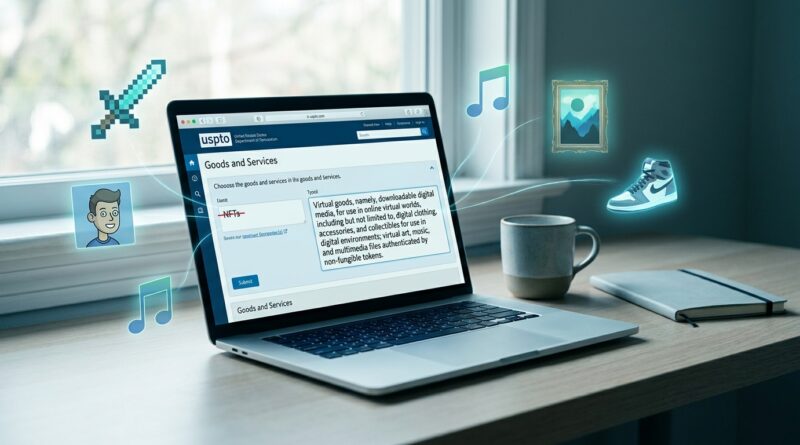
New USPTO NFT Guidance Quietly Turns Your Digital Merch Into a Filing Minefield: How To Describe Virtual Goods So Your Trademark Actually Sticks
You can feel the trap here. You are trying to protect a brand for NFTs, game skins, avatar outfits, filters, or other digital merch, so you grab an old trademark template, paste in “downloadable virtual goods authenticated by NFTs,” hit file, and expect the hard part to be over. Then the refusal lands. The USPTO’s newer guidance is a lot pickier about what you are actually selling, and vague “NFT” wording often does not cut it anymore. That is frustrating, especially because plenty of older blog posts and filing examples still look usable when they are already stale. The fix is not magic, though. You need to describe the actual goods, say whether they are downloadable, and treat “authenticated by non-fungible tokens” as a modifier, not the product itself. Get specific now, and you have a much better shot at a filing that sticks instead of one that burns money and time.
⚡ In a Hurry? Key Takeaways
- The USPTO now expects NFT and virtual goods trademark descriptions to name the actual digital item, not just say “NFTs” or “virtual goods.”
- Use wording like “downloadable virtual clothing” or “downloadable image files containing digital artwork authenticated by non-fungible tokens.” Be concrete.
- If you file with sloppy boilerplate, you can lose the filing fee, face delays, and end up unprotected where your brand is actually growing.
What changed, in plain English
The search term people should care about is this: USPTO NFT virtual goods trademark identification rules 2026. The short version is that the USPTO has been tightening how applicants identify digital products. It wants to know what the thing is, not just the technology wrapped around it.
That means “NFTs” by itself is usually too vague. Same for “virtual goods” standing alone. An NFT is better understood as a way to authenticate or relate to a digital asset. It is not a clear description of the asset itself.
Think of it like this. If you sold physical merch, you would not file for “items in a store.” You would say shirts, hats, mugs, or posters. The USPTO now expects that same level of plain detail for digital merch.
Why old trademark templates are suddenly risky
A lot of founders are still copying language from filings made when everyone was rushing to claim land in web3. Some of those applications got through. Some did not. Either way, many of them are bad models now.
The problem gets worse when people use AI tools or marketplace articles that were trained on those old examples. You get polished-sounding nonsense like “downloadable multimedia files authenticated by NFTs in the metaverse.” It sounds official. It also invites an examiner to ask, “What files?” and “What goods?”
That is where the filing minefield starts. You pay. You wait. Then you get an office action asking you to rewrite the identification because it is indefinite, overbroad, or unclear.
The rule of thumb that saves most applications
Name the digital product first. Then add the NFT language if it matters.
Bad approach
“NFTs.”
“Virtual goods.”
“Downloadable NFTs.”
“Digital assets in the metaverse.”
Better approach
“Downloadable image files containing digital artwork authenticated by non-fungible tokens.”
“Downloadable virtual clothing for use in online virtual worlds.”
“Downloadable multimedia files containing artwork, text, and audio authenticated by non-fungible tokens.”
“Downloadable virtual goods, namely, virtual footwear for use in online virtual worlds.”
See the pattern? The real product carries the sentence. The NFT wording just helps explain the format or authentication method.
How to describe common digital merch so your trademark actually sticks
NFT art
If you are selling token-linked art, the safer path is usually to describe the underlying digital file.
Try: “Downloadable image files containing digital artwork authenticated by non-fungible tokens.”
If there is sound or video, say that.
Example: “Downloadable video recordings featuring digital art authenticated by non-fungible tokens.”
Game skins and avatar items
This is where many founders get too broad. “Virtual goods” is not enough on its own.
Try: “Downloadable virtual clothing for use in online virtual worlds.”
Or: “Downloadable virtual footwear, headwear, and fashion accessories for use in online virtual environments.”
If it is specifically for a game, say so if accurate.
Filters, stickers, overlays, and digital add-ons
These can be trickier because the category depends on what the file actually does.
Possible examples: “Downloadable computer software for applying augmented reality filters to images and video.”
Or, if it is more like content than software: “Downloadable graphic image files featuring digital stickers.”
The key is not to force everything into “NFT” wording when it is really software, image files, or media content.
Virtual collectibles
“Collectibles” sounds nice in marketing copy. It is weak in a trademark identification unless you explain what the collectible is.
Try: “Downloadable digital collectibles, namely, image files featuring sports trading card artwork authenticated by non-fungible tokens.”
That gives the examiner something real to work with.
The words that cause trouble
Here are the usual suspects:
- NFTs. Too vague by itself.
- Virtual goods. Usually needs a “namely” phrase after it.
- Metaverse goods. More marketing than legal description.
- Digital assets. Broad to the point of foggy.
- Downloadable media. What media, exactly?
If your description sounds like something from a pitch deck, it probably needs work.
Downloadable versus non-downloadable matters more than people think
This is one of the easiest ways to trip over classification issues. The USPTO cares whether the thing is downloadable software or files, or whether it is a non-downloadable online service.
For example:
- Downloadable virtual goods usually point you toward goods in Class 9.
- Providing online non-downloadable virtual goods may involve service wording and different classes depending on what is actually being offered.
If you are running a platform, a marketplace, and a digital product line, you may need more than one class. That costs more, but it is better than pretending one vague sentence covers your whole business.
Three filing mistakes founders keep making
1. They describe the blockchain mechanic, not the product
The USPTO is not awarding points for sounding technical. It wants the item being sold or provided.
2. They try to stay broad on purpose
I get it. You want flexibility. But if your wording is so broad that nobody knows what the goods are, it is not flexible. It is defective.
3. They file before the product language is settled internally
Marketing says “digital collectibles.” Product says “avatar accessories.” Legal says “downloadable virtual goods.” If nobody picks one accurate description, the application turns into mush.
A simple drafting formula you can use
Here is the practical formula:
[Format] + [actual digital item] + [purpose or environment, if needed] + [NFT authentication language, if relevant]
Examples:
- “Downloadable image files containing digital artwork authenticated by non-fungible tokens.”
- “Downloadable virtual clothing for use in online virtual worlds.”
- “Downloadable computer software for viewing and trading digital collectibles authenticated by non-fungible tokens.”
- “Downloadable multimedia files containing art and music authenticated by non-fungible tokens.”
If you cannot explain the product in one plain sentence, your customers probably cannot either. That is usually a sign the trademark ID is still too fuzzy.
When you should slow down and get help
If your offering includes a mix of NFTs, software, a marketplace, creator tools, and branded virtual merch, this is where a trademark attorney earns their keep. Not because the words are fancy, but because one wrong class or one overbroad phrase can leave holes in protection.
This is especially true if your roadmap keeps shifting. A filing for downloadable art files does not automatically cover a marketplace, and a filing for virtual clothing does not automatically cover software for creating those items.
You do not need a huge legal budget to benefit from one hour of cleanup before filing. That hour can save months of back-and-forth later.
What smart founders should do this week
Open your current trademark applications, draft filings, and saved templates. Then check every mention of “NFT,” “virtual goods,” “digital assets,” and “metaverse.” Ask one simple question each time: What is the actual product?
If the answer is not obvious, rewrite it.
Also check your product pages, investor deck, and marketplace listings. Your trademark wording should line up with how the goods are really offered. If your filing says “digital artwork” but the product is really a virtual fashion item, that mismatch can come back to bite you.
At a Glance: Comparison
| Feature/Aspect | Details | Verdict |
|---|---|---|
| Vague ID | Uses terms like “NFTs,” “virtual goods,” or “digital assets” without naming the underlying item | High refusal risk |
| Specific ID | Names the actual product, such as digital artwork, virtual clothing, or software, and adds NFT wording only if relevant | Much stronger filing |
| Class planning | Separates downloadable goods from online services, marketplaces, or software platforms | Best for long-term protection |
Conclusion
The quiet shift in USPTO treatment of NFTs and virtual goods is exactly the kind of thing that catches busy founders off guard. Old templates, AI-generated IDs, and random examples from 2022 or 2023 can look fine right up until an examiner rejects them. The good news is that the fix is practical. Be specific. Describe the real digital product. Treat NFT language as supporting detail, not the whole description. If you get this wrong, you can waste a filing fee, slow down your launch, and leave your brand exposed in the very categories where you are expanding. If you get it right now, you put cleaner rights around your digital lines before competitors figure out why their own applications keep hitting a wall. That is a very real edge as more brands move from physical shelves to virtual ones.