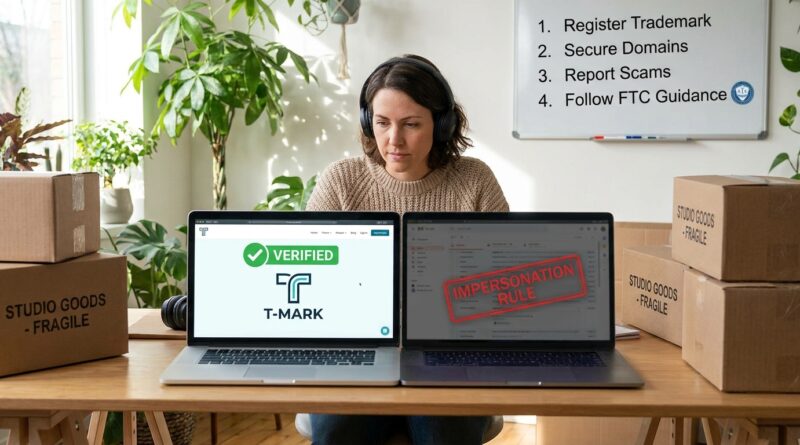
New FTC Impersonation Rule Is Coming For Fake Brand Accounts: What Small Businesses Must Fix Now
It is maddening when a fake Instagram page, sketchy website, or marketplace seller copies your business name and logo, then starts confusing customers or stealing orders. Most small businesses do not have a legal team on standby, so the usual advice has been painfully simple. Report it, wait, then chase the next fake account that pops up. The new FTC impersonation rule could finally give honest brands a stronger path to get those scams taken down. But here is the catch. Platforms and regulators can only move fast if you can prove the brand is really yours. That means this is not just a legal story. It is a paperwork story, a login security story, and a brand housekeeping story. If your records are messy, the rule may still help, but not as much as you hope. If your house is in order, this can become a real brand protection tool instead of one more thing to worry about.
⚡ In a Hurry? Key Takeaways
- The FTC impersonation rule gives small businesses a stronger way to push back when fake accounts or sites pretend to be their brand.
- Start now by organizing trademark records, domain ownership, social account access, and proof that your logo and business name belong to you.
- This rule helps most when you can document the scam clearly and respond fast before customers lose money or trust.
What the FTC rule actually means for small brands
Plain English version. The FTC is taking a harder line on impersonation scams involving businesses and government entities. That matters because scammers do not just target giant companies anymore. They target local shops, online sellers, clinics, repair companies, nonprofits, and side hustles.
The scam is usually simple. A fake page copies your logo. A fake website uses a lookalike domain. A bogus email address pretends to be your support team. Customers think they are dealing with you. Then the damage lands on your business, not just the scammer.
The phrase to keep in mind is FTC impersonation rule brand protection. This is about giving enforcement more teeth, especially when bad actors mislead people by pretending to be a real business. It does not mean every fake account vanishes overnight. It does mean there is a clearer basis for action when someone is using your identity to deceive customers.
Why some businesses will benefit more than others
This is the frustrating part. The businesses that get the most help are usually the ones that can prove ownership quickly.
If a platform asks, “How do we know this brand is yours?” you want a clean answer. Not a week-long treasure hunt through old email accounts and random design files.
What platforms and investigators usually want to see
Think of this as your brand identity folder. At minimum, gather these items now:
- Your legal business name and any DBA records
- Trademark registration details, if you have them
- Proof you own your domain names
- A list of your official social media handles
- Your logo files with creation dates or invoices from the designer
- Screenshots of your real website, support page, and contact information
- Proof of business formation, such as LLC or corporation documents
- Access to the email accounts used to manage your brand assets
You do not need a giant legal binder. You do need a neat paper trail.
What to fix right now before a fake account hits
1. Lock down your official accounts
Make a list of every account that represents your brand. Facebook, Instagram, TikTok, LinkedIn, X, YouTube, Google Business Profile, Etsy, Amazon, Shopify, and any marketplace where your business appears.
Then check three things:
- Who owns the login
- Who has admin access
- Whether two-factor authentication is turned on
A shocking number of small businesses still have an ex-employee, old agency, or former intern tied to their main account. Fix that first. If your own access is messy, reporting an impersonator gets harder.
2. Register the domain names that are easy to fake
If your business is called Sunny Trail Coffee, scammers may grab names like sunnytrailcoffeeshop.com or sunnytrail-support.com. You do not need to buy the whole internet, but it is smart to claim the obvious lookalikes if they are affordable.
Also document what you already own. Save receipts, registrar screenshots, and renewal dates.
3. Clean up your public contact information
Your website should clearly show your real contact methods. That includes:
- Your official domain
- Your support email
- Your verified social links
- Your physical address, if relevant
- Your refund or customer service policy
This helps customers spot fakes faster. It also helps a platform compare the real brand against the impersonator.
4. Get serious about trademarks if your brand is growing
A trademark is not required for every complaint, but it can make life easier. If you have a distinctive name, logo, or slogan that is central to your business, talk to a qualified trademark attorney or use the USPTO process if it fits your situation.
Even if you are not ready to file, at least make sure you can show consistent use of your name and branding in commerce. Save invoices, packaging, ads, screenshots, and dated marketing materials.
How to document an impersonation case so it actually goes somewhere
When a fake account appears, panic is natural. But evidence first, reporting second.
Build a simple incident record
Create one folder for each impersonation incident. Include:
- Screenshots of the fake profile, website, listing, or email
- The full URL
- The date and time you found it
- Examples of copied logos, product photos, or text
- Customer complaints or messages mentioning the fake account
- Any payment links, phone numbers, or email addresses the scammer used
If customers lost money, keep those reports too. The stronger the record, the easier it is to show real harm and clear deception.
Know where to report it
One report is rarely enough. In many cases, you should report the problem to:
- The platform hosting the fake account
- The domain registrar or web host, if it is a fake site
- The payment processor tied to the scam
- The FTC, especially if consumers are being deceived
- Your state attorney general, if the damage is local and serious
The new rule does not replace platform reporting systems. It strengthens the backdrop behind them. That matters because platforms tend to move faster when a complaint is well-documented and clearly tied to impersonation.
Where small businesses often trip up
Most businesses do not fail because the scam is too clever. They fail because the proof is scattered.
Common weak spots
- No one knows who controls the original social account
- The website was set up years ago under a former employee’s email
- The logo was made casually, with no contract or invoice
- The business uses one brand name publicly and another legally
- There is no written record of official sales channels
None of this is fatal. It just slows you down when speed matters most.
A practical 30-day checklist
If you want to prepare without turning this into a month-long headache, do this over the next 30 days.
Week 1
- List every official social account, website, and marketplace profile
- Turn on two-factor authentication everywhere
- Remove old admins and confirm current ownership
Week 2
- Gather business formation records and DBA paperwork
- Save domain ownership records and renewal details
- Collect logo files, brand guidelines, and designer invoices
Week 3
- Document official customer support channels on your website
- Create a one-page brand proof document with your main facts
- Check whether your name or logo should be trademarked
Week 4
- Set up a reporting template for future impersonation cases
- Assign one staff member to monitor fake accounts weekly
- Save screenshots of your real profiles and site as baseline evidence
What this does not do
It is worth being realistic. The FTC rule is helpful, not magical.
It will not stop every overseas scammer. It will not make every social platform responsive overnight. It will not fix weak passwords, confused ownership, or missing paperwork inside your business.
What it does do is give brand owners a more solid framework when someone is clearly pretending to be them to mislead people. That is a big step forward.
At a Glance: Comparison
| Feature/Aspect | Details | Verdict |
|---|---|---|
| FTC rule impact | Creates a stronger basis to act when scammers impersonate a business to deceive customers. | Good news, especially for brands with clear records. |
| What businesses must prepare | Trademark info, domain ownership, account access, logo proof, and documented official channels. | Do this now, before you need it. |
| Limits of the rule | Does not guarantee instant takedowns or solve internal account messes. | Helpful tool, not a magic shield. |
Conclusion
The big takeaway is simple. Impersonation scams are growing fast across social media, marketplaces, and email, and the FTC is moving from talk to real enforcement. That is good news for small businesses, but only if you can show what is yours and where the scammer crossed the line. If you organize your brand records now, clean up account ownership, and keep a simple evidence process ready, the FTC impersonation rule brand protection story becomes practical, not abstract. You are not just reacting anymore. You are preparing. And that can make the difference between a frustrating game of whack-a-mole and a faster, stronger takedown when your customers need you most.