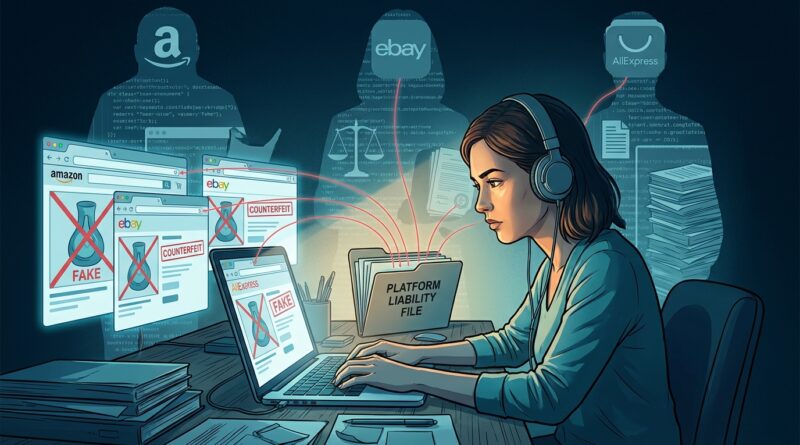
New Trademark Liability Fights Are Coming For Online Platforms: What Small Brands Must Do Before Courts Rewrite The Rules
You spot fake versions of your product on a marketplace, report them, and wait. Then wait some more. That is the part that drives founders crazy. Most small brands assume the platform will eventually step in because it runs the store, handles the traffic, and profits from the sale. But a growing set of US trademark fights is asking a tougher question. At what point does a platform stop being just the host and start sharing legal blame for the counterfeits sold through its system? That matters a lot for 2026 and beyond. If courts move the line, your takedown emails, screenshots, order records, and complaint wording could suddenly become much more important than they seemed at the time. The brands that keep clean records now will be in a stronger position later, whether they are pushing for faster removals, asking for better brand tools, or trying to prove a platform knew there was a repeat problem and did too little.
⚡ In a Hurry? Key Takeaways
- Platforms are not automatically liable for every fake listing, but courts are looking more closely at when knowledge, control, and repeat warnings can create trademark risk for them.
- Start saving screenshots, seller names, URLs, test buys, shipment details, and every platform response so you can show a pattern, not just isolated complaints.
- This is not just legal theory. Better records can help you get faster takedowns now and may also matter if online platform trademark liability for counterfeits 2026 becomes a bigger court issue.
Why this fight is changing now
For years, many platforms treated counterfeit complaints like customer service tickets. You submit a form. They remove one listing. Another pops up next week under a new seller name.
That loop is exactly why the legal question is heating up. Courts and regulators are starting to ask whether some intermediaries know enough, control enough, and profit enough that they should do more than react one listing at a time.
This does not mean every marketplace, payment processor, ad platform, or search tool will suddenly be on the hook. It does mean the old assumption, that only the direct seller matters, is getting less comfortable.
For small brands, that shift can feel abstract. It is not. If judges start focusing on what the platform knew and when it knew it, your paper trail becomes evidence, not just paperwork.
What courts usually care about in these cases
Trademark law has long allowed claims against parties that are not the direct counterfeiter in some situations. The hard part is proving the platform was more than a passive bystander.
1. Knowledge
Did the platform have actual notice of infringement? Did you report specific listings, seller accounts, product images, or repeat activity? Did other brands report the same seller too?
General complaints like “there are fakes on your site” are weaker than detailed notices with links, order numbers, and side by side comparisons.
2. Control
How much power did the platform have to stop the problem? Could it suspend sellers, freeze payouts, remove listings in bulk, block certain keywords, or require proof of authenticity?
The more control a service has over listings, storefronts, fulfillment, or payments, the more attention that question gets.
3. Continued support after warning
This is often where things get interesting. If a platform keeps letting the same seller operate after repeated notices, a brand may argue the platform did not just miss the problem. It tolerated it.
4. Financial connection
Courts also look at whether the platform earned fees, ad revenue, commissions, or service charges tied to the infringing activity. Profit alone is not enough, but it adds context.
What this means for small brands right now
You do not need to become a full time investigator. But you do need a better system than random screenshots in your camera roll.
If the debate over online platform trademark liability for counterfeits 2026 keeps growing, brands with organized evidence will have the advantage. Brands with vague memories and incomplete notices will be stuck recreating events months later.
Build an infringement file for each platform
Create one folder for Amazon, one for Walmart Marketplace, one for Etsy, one for TikTok Shop, and so on. Keep everything there.
For each suspicious listing, save:
- Listing URL
- Date and time found
- Seller name and seller ID
- Screenshots of the full page
- Product images used
- Price
- Claims that suggest authenticity
- Shipping origin and fulfillment details if visible
Do test buys when it makes business sense
A screenshot shows a listing existed. A test buy can show what actually arrived. That can be much stronger.
Keep the packaging, shipping label, invoice, payment record, and photos of the product from multiple angles. If the fake has safety issues, bad materials, or missing labels, note that too.
Log every notice you send
Do not just send a complaint and move on. Save the exact wording, the date, the submission method, any confirmation number, and the platform’s response.
If the listing comes back, document that. If the same seller opens a near identical storefront, document that too. Courts often care about repeated notice and repeated failure.
How to write complaints in language that matters
Many founders write platform complaints like angry customers. That is understandable. It is also less effective.
You want your notice to be clear, factual, and easy to act on.
Include specific identifiers
Name your trademark. Include registration numbers if you have them. Identify the exact product. Add the listing URL and seller account name.
Explain why it is counterfeit or infringing
Do not just say “this is fake.” Say what makes it fake. Wrong logo placement. Unauthorized product photos. Missing batch codes. Packaging differences. A product variation you never made.
Point out repeat patterns
If you have reported similar listings before, say so. If the same seller keeps relisting, include prior complaint dates and case numbers.
Ask for more than one listing removal
If the facts support it, ask the platform to review related listings, linked seller accounts, warehouse stock, and payment activity tied to the seller. One listing at a time is often too narrow.
Do not ignore the support tools platforms already offer
Some founders avoid brand registry or enforcement programs because they assume they are a hassle. They can be. But they also create records, and records matter.
If a platform offers brand protection dashboards, seller reporting tools, image matching, or bulk complaint systems, use them. Even if they are imperfect, they help establish what you flagged and how the platform responded.
This is also a good moment to think globally. Rules are shifting outside the US too. If your brand sells overseas or plans to, read New Vietnam IP Law Quietly Targets Digital Platforms: What Small US Brands Need To Know Before Their Products Go Global. It is a useful reminder that platform responsibility is becoming an international issue, not just a domestic one.
Which platforms could face more pressure
Not all intermediaries sit in the same legal position.
Marketplaces
These are the most obvious targets because they host listings, collect fees, and often control seller access.
Fulfillment providers tied to marketplaces
If a service stores, packs, or ships inventory, that can raise new questions about control and visibility into repeat counterfeit sales.
Payment processors
These cases are harder, but not impossible, depending on what the processor knew and whether it kept serving a seller after detailed warnings.
Search and advertising tools
These fights can be more fact specific. The issue is often whether the service simply indexed content or played a more active role in steering buyers to known infringing listings.
What founders should do in the next 90 days
1. Audit your current counterfeiting recordkeeping
Pick one platform and ask yourself a simple question. If you had to show a judge six months of infringement history, could you do it in an hour?
If the answer is no, fix the system now.
2. Standardize your takedown template
Create a short complaint template with trademark details, listing identifiers, infringement explanation, and prior report references.
3. Track repeat offenders separately
Some sellers are one offs. Others are organized. Keep a repeat offender sheet with seller aliases, return addresses, payment clues, and image reuse.
4. Preserve platform promises
If a platform representative says they will investigate, escalate, or block future listings, save that message. If the same issue continues later, that history may matter.
5. Talk to counsel earlier if the pattern is serious
You do not need to sue everyone. But if counterfeits are recurring, widespread, or creating safety risks, get legal advice before records disappear or account data changes.
At a Glance: Comparison
| Feature/Aspect | Details | Verdict |
|---|---|---|
| Platform knowledge | Specific notices, repeat reports, and proof that the service knew about the same seller or listings more than once. | Very important. Detailed notice beats general complaints. |
| Platform control | Ability to remove listings, suspend sellers, freeze payouts, block inventory, or limit account access. | The more control, the more pressure a platform may face. |
| Brand preparation | Screenshots, test buys, saved emails, case numbers, and a clear timeline of recurring infringement. | Best move for small brands right now. Useful today, and potentially critical later. |
Conclusion
The rules are not fully rewritten yet, but they are moving. That is exactly why this matters now. Judges and regulators are actively rethinking how far trademark liability should reach for intermediaries like marketplaces, search tools and payment processors, and small brands are almost never in the room when those standards are shaped. The good news is that you can still prepare. If you learn now how to document infringement patterns, preserve platform communications, and phrase complaints in the language courts care about, you put yourself in a much stronger position. That can help you push platforms to act faster today, negotiate better protection tools tomorrow, or even take part in future test cases if the right moment comes. In plain English, better records give you more power and fewer regrets.