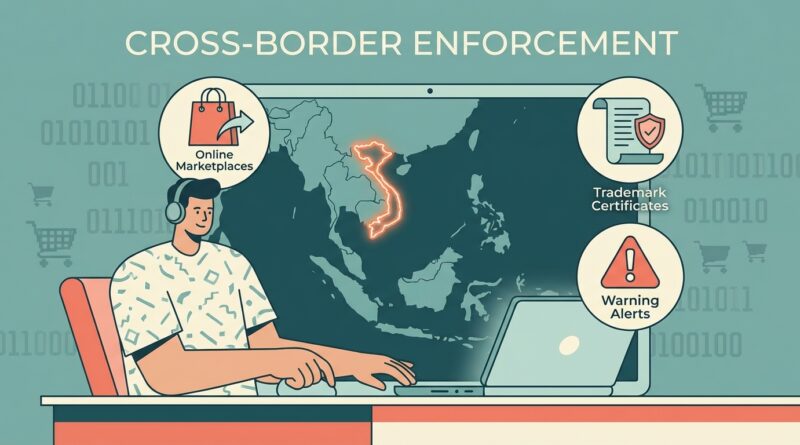
New Vietnam IP Law Quietly Targets Digital Platforms: What Small US Brands Need To Know Before Their Products Go Global
You do all the hard parts. You build the product, find a supplier, get a few sales, maybe even land a reseller in Southeast Asia. Then a strange email lands in your inbox. It mentions Vietnam, platform liability, trademark proof, and a deadline that feels way too short. That is the kind of problem that makes small brands feel ambushed, and honestly, it is frustrating for a reason. Vietnam’s amended IP Law and Decree 100/2026, both effective from April 2026, make digital platforms more responsible for reacting to trademark complaints. That sounds helpful, but there is a catch. The brands that file early, monitor listings, and answer fast are in a much stronger position than the ones that assume their US trademark or Amazon success will carry over automatically. If your products could show up on Shopee, Lazada, TikTok Shop, or through a local distributor, this is not a legal footnote. It is a market-entry issue.
⚡ In a Hurry? Key Takeaways
- Vietnam’s 2026 IP changes make platform trademark complaints move faster, so small US brands need local filing and monitoring before copycats appear.
- Start with a 60-minute plan. Check your Vietnam trademark status, list who can sell your product there, and set up regular marketplace monitoring.
- The biggest risk is not just counterfeits. It is a reseller, factory contact, or distributor filing first and using platform rules against you.
What changed under Vietnam’s 2026 rules
The search term here is a mouthful, but the issue is simple. The Vietnam 2026 IP law digital platform trademark rules push online marketplaces and digital intermediaries to react more seriously when trademark complaints come in. The amended IP Law and Decree 100/2026 signal a clear policy direction. Platforms are not supposed to just shrug and host whatever gets listed. They are under more pressure to review, remove, disable, or otherwise act when rights owners present a proper complaint.
For a big company with an in-house legal team, that is manageable. For a small brand in Ohio selling skincare, kitchen tools, pet gear, or electronics accessories, it can be a mess. You may not even know your product is being listed in Vietnam until a distributor asks for proof of ownership, or a customer sends you a screenshot.
The practical shift is this. Speed matters more. Documentation matters more. Local rights matter more. If someone gets there first, even by using a reseller relationship or local business registration, they may gain a head start that becomes expensive to unwind.
Why US brands should care, even if Vietnam is not your main market
A lot of founders hear “Vietnam IP law” and think, “We are not opening stores there, so this can wait.” That is risky.
Vietnam sits in the middle of a lot of sourcing, manufacturing, and cross-border fulfillment. Your packaging, product photos, cartons, or factory contacts may already be circulating in the region. That means your brand can show up in local digital channels long before you make a formal market-entry plan.
And once your brand appears somewhere, three things can happen fast.
1. A copycat listing goes live
Someone grabs your images, product title, and brand name, then starts selling a lookalike or gray-market version.
2. A reseller files first
A local seller decides they are “helping” by registering your mark, or worse, tries to control the market by filing before you do.
3. A platform asks for proof you do not have ready
You may own the brand in the US, but the platform complaint team may want Vietnam-specific documents, translations, or a cleaner record of ownership and authorization.
That is why this matters beyond Vietnam itself. These platform-first enforcement ideas tend to spread. What shows up in one fast-growing e-commerce market often appears in others a year or two later.
The quiet risk nobody talks about enough
The scary part is not always the obvious counterfeit. Sometimes the bigger problem is a legitimate business contact with partial access to your brand.
Think about the people who may already know your product well:
- Your contract manufacturer
- A sourcing agent
- A freight partner
- A local distributor testing demand
- A reseller who bought from you once and now claims a broader right to sell
If one of those parties files first or presents themselves as the effective local rights holder, the new system can make platform action move quickly in their favor, especially if your paperwork is incomplete or slow.
This is why founders should stop thinking of trademarks as a “later, when we get bigger” task. In cross-border e-commerce, IP timing is often a growth issue, not a legal luxury.
What small brands should understand about platform liability
When a country shifts more responsibility onto digital platforms, the platforms usually respond in predictable ways. They build stricter complaint systems. They ask for more documents. They move faster to reduce their own risk. And they can become less patient with messy disputes.
That means your brand protection process needs to be simple enough to use under pressure.
Expect platforms to ask for:
- Trademark registration details
- Proof of brand ownership
- Proof that the listing is unauthorized or confusingly similar
- Translated documents or locally relevant paperwork
- A quick response when the seller disputes your complaint
If you have ever dealt with Amazon Brand Registry or marketplace takedowns in the US, the rhythm will feel familiar. But local law changes can make the stakes higher and the timeline tighter.
Your 60-minute action plan
You do not need a ten-page memo to start. You need one focused hour and a short checklist.
Minutes 0 to 15: Check your trademark exposure
Ask these questions:
- Do we have a registered trademark in Vietnam, or only in the US?
- Have we filed through Madrid or directly in any Southeast Asian markets?
- Are our brand name, logo, and key product line names all covered?
If the answer is “we only have US protection,” that is your warning sign. US rights do not automatically protect you in Vietnam.
Minutes 15 to 30: Map who can legally sell your product
Make a quick list of every party who touches your goods in or near the region:
- Factories
- Trading companies
- Distributors
- Market-entry consultants
- Resellers
- Marketplace account operators
Next to each name, write one line: “Authorized to do what?” If the answer is vague, fix that in writing. The less ambiguity you leave around distribution and listing rights, the less room someone has to get creative later.
Minutes 30 to 45: Set up platform monitoring
You do not need expensive software on day one. Start with a repeatable habit.
- Search your brand name on Shopee, Lazada, and TikTok Shop
- Search common misspellings
- Search by your hero product names
- Take screenshots of suspicious listings
- Save seller names, URLs, prices, and dates
Put this into a shared folder. A simple spreadsheet is fine. What matters is that you can show a pattern if you need to complain or escalate.
Minutes 45 to 60: Clean up your proof pack
Create one folder called “Brand Enforcement.” Include:
- Your trademark certificates
- Your company formation documents
- Product photos
- Official packaging shots
- Your website URL
- Authorized seller list
- A short explanation of how to identify fake or unauthorized listings
If you already work with counsel, ask them what local-language versions would help in Vietnam. This step saves time later, when a platform gives you a short reply window.
What to do if a reseller or distributor already filed first
First, do not panic. “Filed first” does not always mean “wins forever.” But it does mean you need to move in a more organized way.
Start by gathering the timeline. When did you first use the mark? When did you start selling into the region? What agreements exist with the reseller or distributor? Did they have limited permission, or no permission at all?
Then separate two tracks:
- Trademark ownership and cancellation strategy
- Marketplace takedown and sales channel strategy
These are related, but not identical. In some cases, you may need to challenge the filing while also working platform-by-platform to stop bad listings or at least document disputed use.
This is also the moment to get local advice, not just general US advice. Vietnam-specific procedure matters here. The point is not to create fear. It is to avoid the common mistake of treating a local filing dispute like a standard Amazon complaint.
Supplier contracts now matter more than they used to
Many brand owners focus on filing, which is smart, but forget the source of the leak. If your supplier contract is loose, your trademark strategy is half-built.
Make sure your agreements cover:
- Who owns the brand, logos, packaging, and product images
- Whether the supplier can use your mark for any local filing, ad, or listing
- Whether excess inventory can be sold locally
- Who controls molds, artwork, labels, and inserts
- Confidentiality around launches and new product lines
A lot of IP problems begin as supply-chain sloppiness, not dramatic fraud. Someone has files. Someone posts inventory. Someone assumes a regional test sale is harmless. Then suddenly you are in a platform dispute with your own product photos being used against you.
How to think about enforcement without getting overwhelmed
You do not have to police the entire internet. You just need a sane priority system.
Priority 1: Your brand name
If someone is using your exact mark, start there.
Priority 2: Your top-selling SKU names and packaging
These are often what shoppers recognize first.
Priority 3: Sellers that look “official”
A random low-volume seller is annoying. A seller pretending to be your brand store is more dangerous.
Priority 4: Repeat offenders
If the same operator keeps reappearing across platforms, document every instance. Patterns help.
The goal is not perfect control. It is better position. Better paperwork, better timing, and better internal coordination.
What this signals for the next few years
Vietnam’s changes are a warning shot for anyone selling globally through marketplaces. Governments want platforms to carry more responsibility. Platforms want rights owners to be faster and clearer. And bad actors know small brands often arrive late.
So if your business uses Amazon, TikTok, Shopee, Lazada, wholesale partners, or regional distributors, the lesson is bigger than one country. Build your process now, while the problem is still manageable.
That means filing earlier. Writing cleaner distributor agreements. Watching marketplaces regularly. Keeping proof in one place. And not assuming growth can happen first while IP catches up later.
At a Glance: Comparison
| Feature/Aspect | Details | Verdict |
|---|---|---|
| Trademark filing timing | Early local filing in Vietnam gives you stronger footing when disputes hit platforms or distributors start asking questions. | Do this before expansion, not after. |
| Platform complaint readiness | A clean proof pack with certificates, product photos, and authorized seller info helps when platforms move quickly under stricter rules. | High value, low cost. |
| Supplier and reseller control | Loose contracts create openings for unauthorized filings, gray-market sales, and confusing listing claims. | Tighten contracts now. |
Conclusion
Vietnam’s amended IP Law and new Decree 100/2026 did not just change a few technical rules. They sent a message. Fast-growing digital markets are putting more pressure on platforms to respond to trademark complaints, and they are rewarding rights owners who file and enforce quickly. For small US brands, that matters right now. You can lose ground in a market tied closely to manufacturing and cross-border fulfillment. A local reseller can try to use these procedures against you if they file first. And the same ideas often spread to other countries soon after. The good news is that you do not need a giant legal budget to start protecting yourself. One focused hour spent on filing status, seller permissions, platform monitoring, and supplier coordination can put you far ahead of the brands that wait until a bad listing blows up. Get organized early, and you give your brand a much better shot at growing globally on your terms.