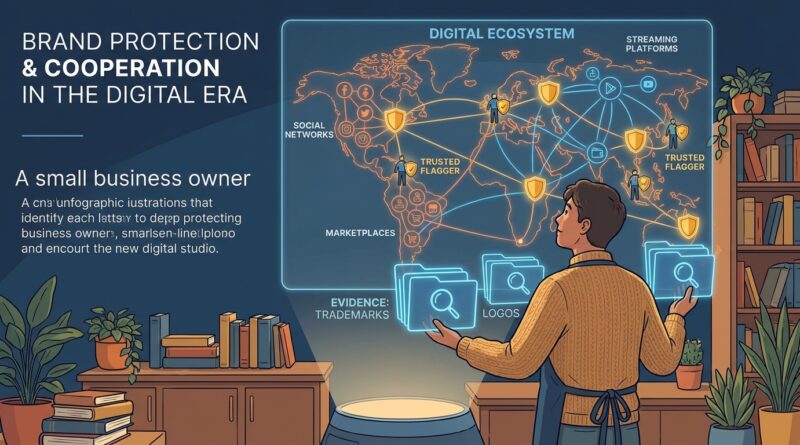
New Trusted Flaggers Under The EU Digital Services Act: What This Quiet Shift Means For Your Brand Online
You spend months building a brand, then a fake seller pops up overnight with your name, your photos, or a knockoff version of your product. You report it through the usual platform form, get an auto-reply, and then wait. And wait. That frustration is exactly why this quiet change in Europe matters. Under the EU Digital Services Act, a new group called “trusted flaggers” can now send priority reports to online platforms about illegal content, including some counterfeit goods, scams, and trademark-related abuse. That does not mean every brand suddenly gets a fast lane. It means there is now a more powerful reporting layer sitting between platforms and the public. If you are a founder, indie brand, or creator, the big question is simple. Will your case reach that layer, or get lost in the usual pile? Knowing how EU Digital Services Act trusted flaggers trademark protection works could make the difference between a quick takedown and weeks of damage.
⚡ In a Hurry? Key Takeaways
- Trusted flaggers are approved expert bodies whose reports must be treated with priority by platforms under the EU Digital Services Act.
- If your brand faces fake listings, scams, or illegal use of your trademark, start building evidence now and find the right consumer, IP, or sector body that may channel reports through this new system.
- This is not magic removal power, but it can mean faster action, better records, and a stronger position if you later need legal help or platform escalation.
What changed, in plain English
The Digital Services Act, often shortened to DSA, is the EU’s big rulebook for how online platforms should handle illegal content and goods. One small-sounding piece of it has very real effects. National authorities in EU member states can now appoint “trusted flaggers.”
These are not random internet volunteers. They are vetted organizations with proven expertise in spotting certain kinds of illegal content. Once approved, their notices are supposed to be handled with priority by online platforms.
That matters because platforms receive huge numbers of reports every day. A report from an ordinary user might sit in a queue. A report from a trusted flagger goes into a more serious lane.
Why small brands should care
If you run a small shop, a creator brand, or a direct-to-consumer product line, you probably do not have a giant legal team. Most smaller businesses deal with infringement in the most tiring way possible. Filling out report forms one by one, sending screenshots, and chasing support tickets.
Trusted flaggers could help change that, at least in some cases.
If a fake listing is selling unsafe counterfeits, if a scam ad is impersonating your brand, or if illegal content is using your trademarks in a way that breaks the law, a trusted flagger may be able to push that issue into a faster review path.
That does not mean your trademark complaint automatically qualifies. Trademark disputes can be messy. Some are clear-cut counterfeiting. Others are more like business disputes over names, resale, parody, or fair use. Trusted flaggers are more likely to be useful where the illegality is clear and well documented.
What a trusted flagger actually is
Think of a trusted flagger as a recognized specialist. Not a judge. Not your personal lawyer. Not a platform employee.
To get the label, the organization must show that it has expertise and works independently and carefully. The idea is simple. Platforms should be able to trust that reports from these bodies are better researched and less spammy than the average complaint.
Important point
Trusted flaggers do not “remove” content themselves. They flag it. The platform still makes the final moderation decision.
But in real life, priority review can be a big deal. Speed matters when fake listings are draining sales, misleading customers, or damaging your reputation.
Does this cover trademark and IP problems?
Sometimes yes, but not all trademark issues will fit neatly into the trusted flagger route.
Here is the practical version.
More likely to fit
Cases involving counterfeit products, dangerous fake goods, consumer fraud, scam storefronts, impersonation, and illegal listings often have a better chance of getting attention through trusted flagger systems, especially where consumer harm is obvious.
Less straightforward
Classic trademark disputes between two businesses, arguments over keywords, comparative ads, or grey-market resale may not be treated as simple illegal-content questions. Platforms may still tell you to use their normal IP forms, or to settle the matter through courts or formal legal notices.
So yes, EU Digital Services Act trusted flaggers trademark protection is real, but it is strongest when your trademark problem overlaps with clearly illegal online activity.
How this works in the real world
Let’s say you sell handmade skincare in the EU. A marketplace suddenly shows five sellers using your product photos, your brand name, and suspiciously low prices. Customers start emailing you because the goods they received look wrong.
You can still file your normal marketplace complaint. You should. But now there may also be a consumer protection body, anti-counterfeit group, or other approved expert organization in your country that can identify the listing as part of a broader illegal pattern and report it with priority.
That is the shift. Instead of every small brand fighting alone, some complaints can move through a recognized expert channel.
What you should do now if your brand is being copied
1. Get your evidence in order
Do not wait until a problem explodes. Build a simple evidence pack now.
- Your registered trademarks, if you have them
- Your product photos and original listing URLs
- Screenshots of the fake or illegal content
- Dates and times
- Seller names, account IDs, and storefront links
- Customer complaints or proof of confusion
- Any product safety concerns
This helps whether you use a platform form, a lawyer, or a trusted flagger route.
2. Separate “annoying” from “illegal”
This sounds harsh, but it saves time. Not every use of your brand is illegal. Some things are platform policy issues. Some are trademark infringement. Some are fraud. Some are counterfeiting.
The more clearly you describe the problem, the easier it is for anyone to help you.
For example:
- “This seller is offering counterfeit goods under our mark” is stronger than “Someone copied us.”
- “This listing uses our trademark and fake safety claims” is stronger than “We do not like this ad.”
3. Identify the right bodies in your EU market
Trusted flaggers are designated at national level. That means the relevant body may differ by country and by topic.
Start with:
- Your national Digital Services Coordinator
- Consumer protection authorities
- Anti-counterfeit and brand protection groups
- Industry associations
- IP lawyers or trademark agents who monitor DSA enforcement
You are looking for organizations that either are trusted flaggers already, are applying for that role, or work closely with those who are.
4. Ask a simple question
When you contact one of these bodies, do not send a rambling essay. Ask directly:
“We are dealing with suspected counterfeit or illegal impersonation using our trademark on [platform]. Does this fit a trusted flagger reporting pathway, and what evidence do you need?”
That gets to the point quickly.
5. Keep using platform IP tools too
This is important. Trusted flaggers are not a replacement for the platform’s own trademark complaint system. Use both where appropriate.
Think of it like calling your bank and freezing your card after spotting fraud, while also filing a police report. One route does not cancel the other.
What platforms are supposed to do
Under the DSA, platforms must process notices from trusted flaggers with priority and without undue delay. They also need to explain certain decisions more clearly than before.
For brands, that means two useful things:
- A better chance of quicker action in serious cases
- A stronger paper trail showing what you reported and how the platform responded
That paper trail matters. If a platform ignores repeated evidence of illegal listings, your records can become useful later in legal action, regulator complaints, or business negotiations.
What trusted flaggers cannot do
It is worth keeping expectations realistic.
- They cannot guarantee takedowns.
- They cannot turn a weak trademark claim into a strong one.
- They cannot usually solve cross-border counterfeiting overnight.
- They are not a shortcut around courts for complicated disputes.
They are best understood as a stronger reporting route, not a magic button.
Why this matters more than it sounds
For years, many small brands have been stuck in the same loop. Big platforms say, “Use the form.” The form leads to a queue. The queue leads to a generic answer. Meanwhile, the fake seller keeps selling.
The DSA does not fix everything. But it does create a more formal middle layer between total chaos and expensive litigation.
That middle layer is where smart brands should pay attention. Not because it solves every infringement issue, but because it can help sort the obvious illegal stuff faster.
A good habit to start this month
Create a one-page “brand abuse file” for your business.
Include:
- Your trademark registration numbers
- Your official shop and social links
- Samples of approved product images
- A short summary of your common abuse problems
- A contact email for legal or brand complaints
If a problem appears, you will not be starting from scratch. You will have a clean packet ready for platforms, advisers, or trusted flagger contacts.
At a Glance: Comparison
| Feature/Aspect | Details | Verdict |
|---|---|---|
| Standard platform report form | Available to everyone, but often slow, inconsistent, and hard to escalate for small brands. | Still necessary, but rarely enough on its own. |
| Trusted flagger notice | Priority channel for reports from approved expert bodies under the DSA, best for clearly illegal content or listings. | Very useful if your case fits and you can reach the right body. |
| Formal legal action | Stronger for complex trademark disputes, repeat offenders, or serious damages, but slower and more expensive. | Best as backup or escalation, not your first move in every case. |
Conclusion
Right now, most small brands are still trying to fight digital infringement by shouting into generic platform report forms while a new enforcement layer is quietly forming above them. That is the opportunity here. If you understand how trusted flaggers work, and where your counterfeit, scam, or trademark-related complaints fit, you can get faster removals, better records, and a stronger position if the fight gets bigger. You do not need to become an EU law expert. You just need to stop treating every online abuse problem like a random support ticket. For founders, indie makers, and creators, that shift alone can mean practical protection for your brand identity at a time when the rules for policing illegal content online are changing fast across Europe.