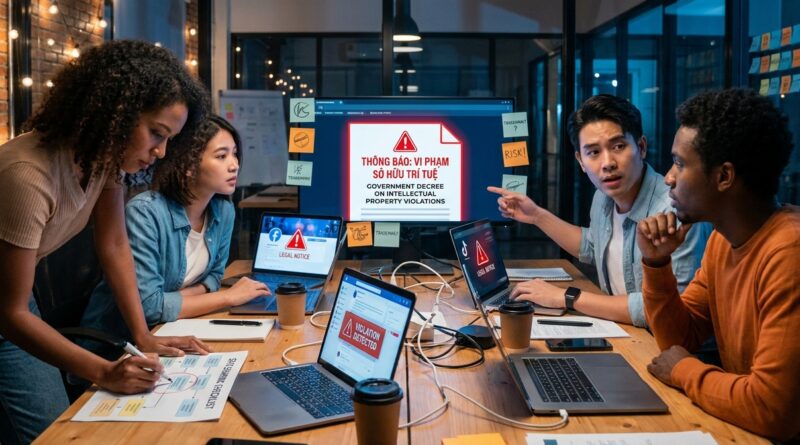
New Vietnam Social Media IP Decree: What It Signals For Anyone Sharing Branded Content Online
If you run a social account for a small brand, newsletter, course, or side hustle, this kind of news can feel deeply unfair. One day, reposting a clip, a screenshot, or part of an article looks like normal promotion. The next day, it can look like an IP violation with real fines attached. That is the worry behind the Vietnam social media intellectual property decree 174 2026. Vietnam’s Decree 174/2026 signals a stricter approach to unlicensed sharing of protected content on social media, especially news, creative works, and branded materials. Even if you are not based in Vietnam, it matters. It points to a wider shift. Governments are paying closer attention to how content moves online, who owns it, and who profits from reposting it. For creators, SaaS teams, and educators, the smart move now is simple: tighten your content habits before a casual social post turns into a legal headache.
⚡ In a Hurry? Key Takeaways
- Vietnam’s Decree 174/2026 is a warning sign that reposting copyrighted or branded content on social media is getting riskier, not safer.
- Audit your social workflow now. Use links, licensed assets, original summaries, and written permissions instead of copy-paste sharing.
- The bigger issue is not just one fine in one country. IP trouble can grow into takedowns, frozen campaigns, domain fights, and trademark problems as you expand.
What Decree 174/2026 appears to signal
At its core, this is about control over digital content. Vietnam’s new decree raises the stakes for sharing protected material online without permission. That can include news articles, videos, music, graphics, photography, and other creative works that often get reposted on Facebook, TikTok, YouTube, Instagram, and messaging platforms.
The important point for non-lawyers is this. Authorities are treating social reposting less like casual internet behavior and more like distribution. If a creator, business, or affiliate account copies protected material to attract attention, traffic, or sales, regulators may see that as more than simple sharing.
That is why the Vietnam social media intellectual property decree 174 2026 matters beyond Vietnam. It fits a broader pattern. Countries are becoming less relaxed about unlicensed digital use, especially where social media turns copyrighted work into marketing fuel.
Why small brands and creators should care, even outside Vietnam
You might be thinking, “We do not sell in Vietnam, so why does this matter?” Fair question. The answer is that internet rules rarely stay local in practice.
Your content crosses borders fast
If your posts can be viewed in a market, shared by users in that market, or targeted to users there through ads, your brand can end up in the blast radius of local rules. You may never have meant to operate there, but your content can still travel there.
Platforms react globally
Even when a law is local, platform enforcement often is not. A complaint in one region can lead to content removal, account warnings, demonetization, or ad restrictions that affect your whole operation.
IP disputes rarely stay tidy
A copyright issue can start with a single post. Then it spreads. Maybe your ad account is flagged. Maybe a platform asks for proof of rights. Maybe a local distributor or competitor notices your naming, visuals, or domain strategy. What began as “just a repost” can become a much bigger mess.
What kinds of social posts now look riskier
This is where people get caught out. Many social habits feel harmless because everyone does them. That does not mean they are safe.
Full or near-full article reposts
If you copy an article into a caption, carousel, thread, or blog post and just credit the source, that may still be infringement. Credit is not the same as permission.
Clips pulled from news, shows, or other creators
Short clips often get treated like fair game online. They are not automatically fair game. If the clip is the main value of the post, it may create risk, especially when used for growth or sales.
Branded images, logos, and product photography
Sharing a partner’s assets without clear approval can be risky. So can reposting customer, influencer, or press images if the rights are unclear.
Course and webinar promos using third-party content
Online educators often use screenshots, article excerpts, charts, and media clips in social teasers. That is common. It is also exactly the sort of habit worth reviewing now.
The practical checklist: how to lower your risk quickly
You do not need to panic. You do need a cleaner process.
1. Replace copy-paste with link-plus-summary
If you want to share a news story or outside article, post a short original summary in your own words and link to the source. Do not reproduce the whole thing or the most valuable parts of it.
2. Treat “found on social” as unlicensed by default
If you found a clip, photo, or graphic on someone else’s feed, assume you do not have the right to reuse it unless the license or permission is clear.
3. Keep proof of permission
A quick DM approval may feel enough in the moment. It often is not. Save emails, contracts, license receipts, creator agreements, and terms that show what you were allowed to use and where.
4. Review your scheduling tools and freelancers
Many infringement problems happen because a social manager, agency, or VA grabs assets to keep the content calendar full. Set simple rules. No unlicensed clips. No article copying. No logo use without approval. No “we will fix it later.”
5. Be extra careful with paid ads
Using questionable content in an organic post is risky enough. Using it in a paid campaign is worse because there is clearer commercial intent.
6. Build an approved asset library
Create one folder of content your team can safely use. Put your owned graphics, licensed stock, approved testimonials, product shots, and partner-cleared assets there. Make the safe option the easy option.
7. Check local rules before entering a new market
If you are testing a new country, do a light IP review first. That includes content rights, trademarks, and sometimes domain strategy too.
Where people get confused: sharing vs infringement
This is the part that frustrates almost everyone. Social platforms are built to make sharing feel normal. Buttons literally invite you to repost, remix, duet, stitch, clip, and embed. But platform features do not erase intellectual property law.
Think of it this way. A platform may make something technically easy. That does not always make it legally safe.
Also, giving credit is good manners. It is not a magic shield. The same goes for adding “no copyright intended” or “all rights belong to the owner.” Those phrases do not create permission.
How this can spill into brand, trademark, and domain problems
This is where smart founders should widen the lens. A stricter IP climate does not stop at social media posts.
When regulators and rights holders become more alert, they often look at the whole commercial picture. Your content, your brand name, your landing pages, your domain, and your marketplace listings all start to matter together.
For example, if you are promoting into a new region with reused media, a similar brand name, and a domain that brushes up against someone else’s trademark, you may have multiple weak points at once. One complaint can lead people to inspect the rest.
That is why this is not just a “social team problem.” It is an operations problem. It is also a market-entry problem.
A simple decision rule for busy teams
If you are ever unsure whether a post is safe, ask three quick questions.
Did we make it?
If yes, your risk is usually lower, though music, logos, and other embedded elements can still complicate things.
Did we license it or get clear permission?
If yes, save the proof and follow the terms.
Are we using someone else’s content to get attention, leads, or sales?
If yes, stop and double-check. That is where many problems begin.
What to do this week
Here is the no-drama version.
- Audit your last 60 days of social posts.
- Remove or revise anything that copies articles, uses random clips, or reuses branded visuals without clear rights.
- Update your social media guidelines for staff and contractors.
- Store licenses and permissions in one place.
- Use original commentary and links instead of reposting whole works.
- Before entering a new market, check content rights, trademarks, and naming conflicts.
That last step matters more than many people realize. A business can be careful with content but still run into trouble if its branding and web presence are not lined up properly.
At a Glance: Comparison
| Feature/Aspect | Details | Verdict |
|---|---|---|
| Reposting articles and media | Copying full text, clips, images, or artwork into social posts without permission is getting harder to defend. | High risk. Use original summaries and links instead. |
| Using third-party content for promotion | Commercial use, especially in ads or lead generation, draws more scrutiny than casual personal sharing. | Needs caution. Get permission or swap in licensed assets. |
| Cross-border expansion | A local content complaint can trigger wider reviews of your brand, trademarks, and digital presence in that market. | Plan ahead. Do a basic IP check before pushing into new regions. |
Conclusion
Vietnam’s new Decree 174/2026 is not just a local story about bigger fines. It is a sign that governments are tightening the rules around how digital content moves, who owns it, and who gets to profit from sharing it online. That is annoying, yes. It also means creators and small businesses need a cleaner playbook. The good news is that this is manageable. If you switch from copy-paste habits to original summaries, keep proof of rights, train your team, and check IP issues before entering new markets, you can avoid most of the ugly surprises. The real value here is not fear. It is awareness. Once you know where a simple content promo can cross the line, you can protect your traffic, your brand, and your future growth with a lot less stress.