New ‘Virtual Goods’ Trademark Rules Quietly Turn Your In‑Game Skins Into Real‑World Rights: How To Claim Your Brand Inside Games Before Marketplaces Rewrite The Rules
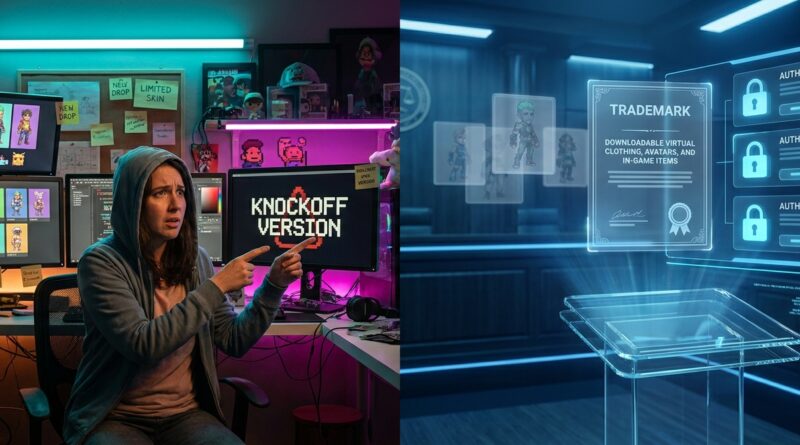
You can spend months creating the perfect skin pack, emote set, or virtual hoodie for your community, then find out somebody else is selling a lookalike version inside a game marketplace. That is the part that stings. A lot of small studios, streamers, mod teams, and indie brands still think digital items are “just pixels,” so they file trademarks only for physical shirts, toys, or software. Meanwhile, trademark offices and platforms are getting much more specific about virtual goods. Quietly, the rules are changing. If your filing does not clearly cover downloadable virtual goods, in-game skins, or branded digital items, you may be leaving a hole big enough for copycats to walk through. That matters now because marketplaces, fan servers, and resale ecosystems are treating virtual products more like real commercial goods every year. If your audience spends money in games, your brand has to show up there legally too.
⚡ In a Hurry? Key Takeaways
- Trademark protection for virtual goods and in-game skins is now a real business issue, not a niche legal extra.
- Review your filings and product listings now. Use clear wording for downloadable virtual goods, skins, emotes, and digital merch instead of vague catch-all labels.
- If you wait until a copycat appears in a game marketplace, cleanup is usually slower, more expensive, and less effective than filing early.
The big shift is simple. Virtual goods are being treated more like actual products.
That may sound obvious, but for years many creators got by with loose descriptions. They would register a brand for clothing, entertainment services, or software and assume that covered everything they might do later in games.
That assumption is getting riskier.
Trademark offices have been pushing applicants to describe digital goods more precisely. Platforms are doing their own sorting too. They want to know whether your item is game software, a downloadable digital file, a cosmetic skin, a virtual accessory, or branded content sold for use in online worlds. Those categories affect search results, takedowns, licensing deals, and who gets the stronger claim when names collide.
So yes, your in-game skin may still be “just pixels” to a casual player. To a marketplace, a trademark examiner, or a reseller, it can now look a lot more like a product line.
Why this is catching small creators off guard
Big publishers usually have legal teams watching these changes. Smaller creators do not. They are busy shipping updates, managing Discord, answering customer complaints, and trying to keep art contractors paid on time.
That leads to three common mistakes.
1. Filing only for physical goods
A clothing brand files for shirts and hats, then starts selling matching avatar wearables in a game. The physical filing may help some, but it is not the same as directly claiming the digital product category.
2. Using fuzzy wording
“Entertainment services” or “computer software” can be too broad or too outdated for some modern virtual goods use cases. If your actual business is selling skins, emotes, downloadable digital outfits, or branded accessories for avatars, your application should say that clearly.
3. Assuming platform rules will protect them
Platforms care about their own policies first. If your rights are unclear, enforcement can get messy. A marketplace may ask for more proof, delay action, or let the other seller argue that your registration does not actually cover the virtual item in dispute.
What “virtual goods” usually means in trademark practice
This is where people get tripped up. “Virtual goods” is a useful business phrase, but by itself it is often not specific enough in a trademark application.
Examiners and registries usually want to know what the virtual goods are. For example:
- Downloadable virtual clothing for use in online worlds
- Downloadable in-game skins
- Downloadable digital artwork authenticated by technology systems
- Downloadable virtual accessories, bags, weapons, or character outfits
- Emotes, animations, or cosmetic game items
The wording matters because trademarks are tied to the goods and services you claim. If your wording is sloppy, your protection may be narrower than you think.
Why marketplaces are quietly rewriting the power balance
Search and category systems decide who gets seen. Takedown systems decide who gets removed. Recommended listings decide who gets sales. That means the “rules” of virtual commerce are not just being written by courts and trademark offices. They are also being shaped by storefronts, creator economies, mod hubs, and gaming platforms.
If your brand is not clearly claimed for the kind of digital item you sell, a copycat can slip into the same keyword lane. Maybe they call it fan art. Maybe they list it through a grey-market shop. Maybe they upload it to a private server economy and collect money there.
At that point, your argument is not just “they copied me.” It becomes “my rights actually cover this category of digital good.” Those are very different fights.
What small brands should do right now
Audit what you actually sell, not what you used to sell
Make a list of every branded digital item connected to your business:
- Skins
- Emotes
- Avatar outfits
- Weapon wraps
- Virtual merch
- Downloadable art packs
- Game passes or branded digital collectibles
If the revenue or community value is real, treat it like a real product line.
Check your existing trademark filings
Look at the exact goods and services wording. Not the logo. Not the filing receipt. The wording.
Ask:
- Does it clearly mention downloadable virtual goods?
- Does it identify the type of item, like clothing, skins, or accessories?
- Does it cover the countries or regions where your players actually are?
- Does it reflect your current business, not your 2021 business?
Match your public listings to your legal language
Your trademark paperwork should not live in a bubble. Product names, storefront categories, terms of sale, license terms, and creator agreements should all line up. If you call an item a “digital collectible” in one place, a “skin” in another, and “software content” somewhere else, you create avoidable confusion.
Lock down your chain of ownership
This part gets missed all the time. If a freelance artist made the skin, do you have signed IP assignment terms? If a modder designed the logo variant, who owns that version? If your community manager uploaded assets to a platform account, whose account is it?
You cannot enforce what you do not clearly own.
Courts and offices are not waiting for everyone to catch up
The reason this topic feels confusing is that the rules are not arriving in one dramatic announcement. They are hardening piece by piece through office guidance, examiner practice, platform standards, and legal disputes over digital branding.
That is exactly why businesses miss the shift. Nothing looks urgent until a conflict lands in their lap.
If you also care about the design side of digital assets, not just the trademark side, it is worth reading New EUIPO Design Rules Quietly Expand Digital Brand Protection: What App And Game Founders Need To Change Today. It does a good job showing how digital brand protection is expanding beyond old physical-world assumptions.
A practical example
Imagine you run a small streetwear label. You start selling real hoodies, then launch matching avatar hoodies in a popular game. Players love them. Soon a third-party seller posts near-identical virtual hoodies under a confusingly similar name.
If your registration only covers physical apparel, you may still have arguments. But they are not as clean as they would be if your filing clearly covered downloadable virtual clothing for use in online environments.
That difference matters when you ask a platform to remove listings fast. Clean rights usually move faster than half-fitted rights.
How to think about trademark protection for virtual goods and in-game skins
The easiest way to think about it is this. Ask where customers meet your brand and what they are buying there.
If they are buying identity items inside a game, then your brand is functioning inside a game, not just on a website or a cotton shirt. Your legal strategy needs to follow that reality.
For many creators, this does not mean filing everything under the sun. It means being honest and specific about the digital goods that already matter to your audience and revenue.
Red flags that say you need to act soon
- Your best-selling branded items are digital, but your trademark filing mentions only physical goods.
- You license art or skins from contractors without strong written IP assignments.
- Fans are already making unofficial servers, shops, or cosmetic packs using your name.
- You rely on platform forms and hope they sort out infringement for you.
- Your legal language still treats all digital items as generic “software.”
At a Glance: Comparison
| Feature/Aspect | Details | Verdict |
|---|---|---|
| Old physical-only trademark approach | Covers shirts, toys, or general software, but may not clearly reach skins, emotes, or virtual wearables sold inside games. | Too risky if digital goods are part of your real business now. |
| Specific virtual goods wording | Names the actual downloadable items, such as in-game skins, virtual clothing, or avatar accessories. | Stronger and easier to use in disputes and platform takedowns. |
| Waiting until copycats appear | Leaves you reacting after others have claimed search traffic, listings, and community attention. | Usually costs more time and money than filing clearly from the start. |
Conclusion
Virtual goods are not a side quest anymore. For a lot of brands, they are becoming one of the fastest-growing parts of revenue, identity, and customer loyalty. That is why trademark protection for virtual goods and in-game skins matters right now. As trademark offices and platforms get more specific, the creators using fuzzy labels or relying on old physical-only filings are the ones most likely to lose ground to copycat shops, fan servers, and grey-market sellers. The good news is that this is fixable. Start by matching your legal filings to what you actually sell in digital spaces. A little cleanup now can save a very ugly fight later, right where your customers already spend their time.