New EU AI Deepfake Labels Quietly Turn ‘Synthetic Content’ Into Trademark Ammo: How Small Brands Can Turn Fake Videos Into Easy Wins
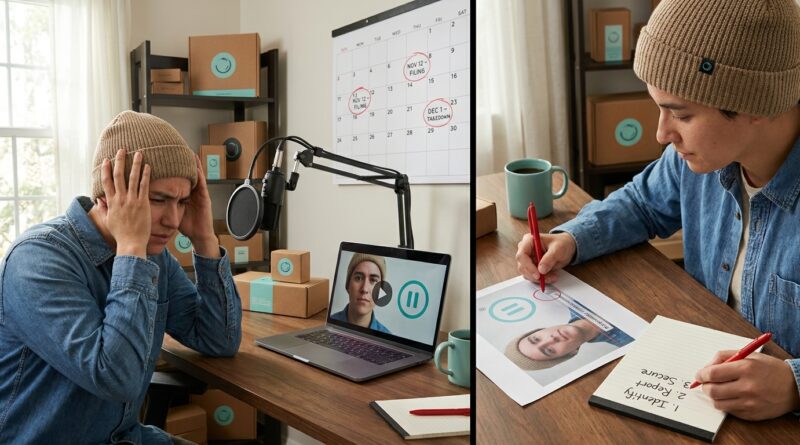
You wake up, check your phone, and there it is. A fake video using your face, your logo, or packaging that looks a lot like your product. Maybe it is selling a scam. Maybe it is pushing knockoffs. Maybe it is just weird and damaging. Either way, the usual advice is maddening. Report it. Wait. Hope somebody at the platform cares. That is exactly why the new EU AI Act deepfake trademark protection angle matters so much. The rules around labeling synthetic content are starting to give small brands something they have not had before, which is a clearer paper trail. If a fake video carries a disclosure label, that label can help show the content is artificial while also making it easier to frame a trademark complaint around consumer confusion, impersonation, and misleading commercial use. That will not solve every case overnight, but it turns panic into a process.
⚡ In a Hurry? Key Takeaways
- The EU AI Act’s synthetic content disclosure rules can support trademark and impersonation takedowns when fake videos misuse your brand.
- Save the video, the disclosure label, the caption, the account name, the URL, and proof of your real branded use before you file any complaint.
- Even if your business is in the US, these rules can still matter if the content targets or reaches people in Europe.
What changed, in plain English
The big shift is not that deepfakes suddenly became illegal across the board. It is that the EU is building a framework where certain AI-generated or AI-manipulated content should be disclosed as synthetic. Then, in practice, that disclosure can become useful evidence.
Think of it this way. Before, a fake video using your brand might get brushed off as “just content.” Now, if it is labeled as synthetic, you may have an easier time showing three things at once. First, it is not authentic. Second, it is being presented in a way that can still confuse viewers. Third, it may be using your trademark, trade dress, voice, likeness, or product look to push a commercial scam.
That is where EU AI Act deepfake trademark protection starts to feel real for small businesses. The label does not replace trademark law. It can strengthen how you present the complaint.
Why a deepfake label can actually help your case
This sounds backward at first. If a video says it is synthetic, would that not protect the person posting it?
Not necessarily.
A disclosure label is not a magic shield. If the overall post still makes people think your brand approved it, sponsored it, or is actually in the video, classic trademark confusion issues can still exist. Courts and platforms usually care about the whole picture. Name, logo, packaging, product shots, account handle, sales pitch, link in bio, fake discount code, and comments. It is a mix.
The trademark angle
Trademark problems usually come down to confusion. Would an ordinary customer think this came from you, was approved by you, or is connected to you? A small “synthetic” marker does not erase confusion if the rest of the post screams your brand.
For example, a fake ad might include:
- Your exact logo in the corner
- Your product packaging copied almost perfectly
- A cloned voice saying “I use this every day”
- A caption pushing viewers to a scam checkout page
That is not just “creative AI use.” That can be textbook confusion.
The platform enforcement angle
Platforms often move faster when a report looks organized and tied to a clear rule set. If you can point to synthetic content labeling issues and trademark misuse together, your complaint stops looking like a vague rant and starts looking like a structured notice.
You are not saying, “Please remove this because I hate it.”
You are saying, “This is synthetic content using my protected branding in a misleading commercial context, and here is the evidence.”
What the June 2026 code of practice means for normal people
Most small brands are not going to read policy documents for fun. Fair enough. What matters is the practical effect.
The June 2026 code of practice helps turn broad transparency ideas into something closer to a playbook. Expect more detail around how providers, platforms, and participants in the AI chain should handle disclosure, traceability, and risk. That matters because every extra bit of standardization gives you more language for a takedown request.
You do not need to become a lawyer to use that. You just need to document the post and refer to the synthetic content disclosure issue in a calm, factual way.
If you are in the US, why should you care?
Because the internet does not care where your LLC was filed.
If you sell into Europe, have customers there, run ads there, or your content is viewable there, EU-facing rules can still matter. A platform doing business in Europe may be more sensitive to a complaint that mentions transparency obligations tied to synthetic content, especially when the post also creates brand confusion or pushes fraud.
This is also why it is smart to tighten up your own trademark basics. If your brand assets are loose, your complaint gets weaker. We recently covered that in New USPTO Deepfake Policy: How To Trademark Your Real Brand Before AI Clones It. It is worth reading if you want your brand paperwork in better shape before the next fake shows up.
Your practical evidence checklist
If a fake video appears, do not start by arguing in the comments. Start by collecting proof.
Capture the post itself
- Full screen recording of the video playing
- Screenshots of the post before and during playback
- The account name, handle, profile link, and bio
- The post URL and date
Capture the synthetic content disclosure
- Screenshot the “AI-generated,” “synthetic,” or similar label if present
- Record where the label appears, on-screen, in metadata, or in platform tools
- Note if the label disappears after sharing, reposting, or embedding
Capture the trademark misuse
- Your logo shown in the video
- Your product packaging or trade dress
- Your brand name in captions, hashtags, or overlays
- Any cloned voice or face used to imply endorsement
Capture the confusion and harm
- Comments from users who think the ad is real
- Messages from customers asking if it is official
- Links to scam sites, fake coupons, or checkout pages
- Proof of lost sales, refund requests, or support tickets
Capture your real use
- Your official website and product pages
- Your social accounts showing legitimate use of the mark
- Trademark registration details, if you have them
- Older marketing materials that show your established branding
This last part matters more than people think. You are not just proving the fake exists. You are proving what the real brand looks like, and why viewers could be misled.
How to frame the takedown request
Keep it boring. Seriously. The more emotional the message, the easier it is for a platform to miss the point.
Include these core points
- This content uses synthetic or AI-generated media.
- It misuses my brand name, logo, packaging, likeness, or voice.
- It is likely to confuse consumers into believing the content is affiliated with, endorsed by, or originating from my business.
- It may facilitate fraud, counterfeit sales, or deceptive commercial activity.
- I am attaching evidence of the post, the disclosure label, and my legitimate branded use.
If there is a scam link, say so directly. If there is a fake promo code or fake store, include it. If users are already confused, attach those screenshots too.
What not to do
There are a few easy mistakes that can weaken a strong complaint.
- Do not rely on one screenshot. Posts change fast.
- Do not assume the synthetic label will stay visible forever.
- Do not only report under “spam” if trademark confusion is the real issue.
- Do not forget to save proof of your own real branding.
- Do not wait a week if the post is actively selling something.
Will this work every time?
No. Some platforms are still inconsistent. Some fake accounts pop back up. Some posters sit outside easy enforcement channels. And a label alone does not automatically win a trademark dispute.
But this is still progress. It gives you a stronger combination of facts. Synthetic content. Brand misuse. Consumer confusion. Commercial deception. That stack is much harder for a platform to shrug off than a simple “someone copied me.”
At a Glance: Comparison
| Feature/Aspect | Details | Verdict |
|---|---|---|
| Synthetic content label | Can help show the video is AI-made or manipulated, which supports a more precise complaint. | Useful evidence, not a complete solution |
| Trademark confusion claim | Strong when the fake uses your logo, packaging, name, or likeness in a way that suggests endorsement. | Often your best legal and platform argument |
| Cross-border enforcement | EU rules may still matter for non-EU businesses if the content reaches European users or sales markets. | Very relevant for online brands |
Conclusion
If your voice, logo, or product is being faked in AI videos, you do not have to sit there refreshing a support ticket and hoping for mercy. The new EU AI Act transparency rules, along with the June 2026 code of practice, give you something concrete to point to when a platform drags its feet. Even if you are based in the US, these rules can still matter if you have viewers or customers in Europe. The real win here is not that deepfakes suddenly became easy to fix. It is that you can now build a cleaner, stronger case. Save the video. Save the synthetic content label. Save proof of your real branded use. Then frame the complaint around confusion and misuse, not just annoyance. That turns a scary fake into a repeatable enforcement routine, which is a much better place for any small brand to start.