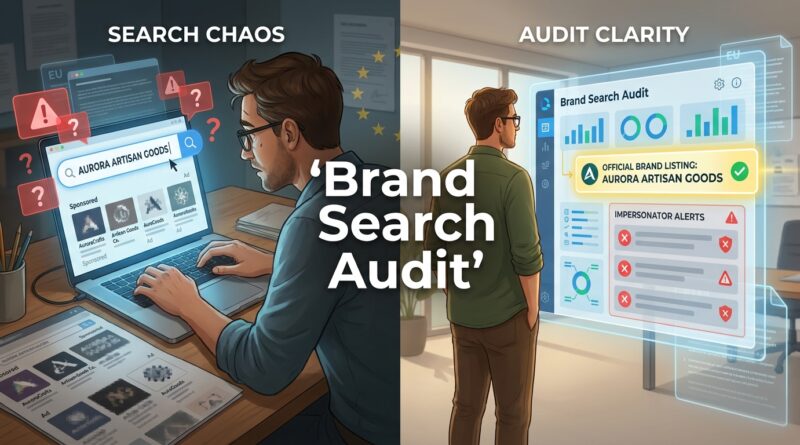
New EU Ruling Quietly Turns Your Brand Name Into A Search Result Trap: How To Stop Platforms From Misrouting Your Trademarked Traffic
You did the hard part already. You built a brand people actually remember, got customers to search for it by name, and then watched platforms send that valuable traffic somewhere else. Maybe to a reseller. Maybe to a lookalike. Maybe to a competitor who bought ads on your exact brand term. It feels sneaky because it often is. And for years, the standard answer was a shrug. The algorithm picked it. Nothing to be done. That line is getting weaker fast. New EU enforcement tied to the Digital Services Act and related transparency duties is putting more pressure on big platforms to explain how search, rankings, ads, and complaint systems work when brand names are involved. For small businesses, creators, and founders, that matters. If you have been trying to figure out how to use EU digital services act trademark search results rules in real life, not just policy talk, start with a simple audit and a paper trail.
⚡ In a Hurry? Key Takeaways
- EU rules are making large platforms explain more about search rankings, ads, and complaint handling, which gives trademark owners a better shot at fixing branded search misrouting.
- Start by checking your brand name across search results, autofill, shopping boxes, app stores, marketplace search, and sponsored listings, then save screenshots, links, dates, and device details.
- Do not file vague complaints. A short evidence pack that shows user confusion, trademark ownership, and repeated misrouting usually gets more traction.
What is actually changing
The big shift is not that platforms suddenly became kind. It is that they are being pushed to document and justify more of what they do.
Under the EU’s newer digital rule mix, especially for very large platforms and search services, there is more focus on transparency, notice systems, ad disclosures, and how users can report problems. That does not mean every bad result disappears overnight. It does mean the old “the system did it” excuse is harder to hide behind.
If your brand name pulls up competitors, copycats, fake listings, or confusing sponsored placements, you now have a better reason to ask for a real review instead of a canned reply.
Why branded search traffic is so valuable
When someone searches your exact brand name, they are not browsing casually. They already know you, or they were told about you. That is warm traffic. It is often your cheapest conversion and your easiest sale.
So when a platform routes that person to the wrong place, the damage is bigger than a normal ad click. You lose the sale. You lose trust. In some cases, the customer blames you for the confusion.
This problem shows up in a few common ways:
- Competitor ads triggered by your brand term
- Marketplace results that rank copycat products above your real listing
- Autocomplete suggestions that steer users toward knockoffs
- Recommendation widgets that show “similar” brands right after your name is searched
- Map, local, or shopping boxes that place unofficial sellers first
Your 7-step audit for EU digital services act trademark search results problems
1. Search your exact brand name everywhere customers might type it
Do not just test Google and stop. Check:
- General search engines
- Marketplace search bars
- App stores
- Social platform search
- Video platform search
- Shopping tabs and product carousels
- Maps and local search
- Internal site search on major reseller platforms
Type your brand exactly as customers do it. Then try common misspellings, spaces, hyphens, and product line names.
2. Test on more than one device
Search results can change by device, account history, location, and whether you are logged in. Run checks on:
- Mobile and desktop
- Logged in and logged out
- Browser private mode
- At least two locations, if you can manage it
You are looking for patterns, not one weird result.
3. Save evidence properly
This is where most people slip. A complaint that says “your platform is stealing my traffic” is easy to ignore. A complaint with timestamps and screenshots is much harder.
For each bad result, save:
- Screenshot of the full page
- Visible date and time
- Search term used
- URL of the result page, if possible
- Device type and browser
- Your location or market
- Why the result is confusing or infringing
Name your files clearly. Example: BrandX-search-mobile-Paris-2026-09-09-competitor-ad.jpg.
4. Separate “annoying” from “actionable”
Not every competitor appearance is illegal. Some results are simply aggressive marketing. Focus first on the strongest cases:
- Fake products using your mark
- Seller listings pretending to be official
- Ads or listings that copy your trademark in a misleading way
- Results that create obvious customer confusion
- Autocomplete or labels that falsely connect your mark to another seller
If you have a registered trademark, include the registration number. If you do not, include proof of long-standing commercial use.
5. Check the platform’s complaint route before emailing support
This part matters. Many large platforms now have dedicated channels for illegal content, IP complaints, ad transparency, or seller abuse. Use the formal form first if one exists.
Why? Because formal notices usually create a case number and a traceable record. Random support chats often disappear into the void.
Look for pages labeled:
- Trademark complaint
- Notice and action
- Illegal content report
- Ad repository or ad transparency center
- Business complaint or out-of-court dispute information
6. Write a complaint that sounds calm and specific
Keep it boring. Boring works.
Use this simple structure:
- Your name and business name
- Your trademark details
- The exact search term tested
- The result or ad that is causing confusion
- Why it is misleading, infringing, or improperly ranked
- The evidence attached
- The fix you want
Example fix requests:
- Remove infringing listing
- Review ad use of trademarked term
- Correct false “official” label
- Escalate search ranking issue for trademark confusion review
- Explain why this result is shown for an exact brand-name query
7. Follow up like a project manager, not an angry customer
Set a calendar reminder for 7 to 10 days. If there is no response, follow up with the case number and attach the original evidence again.
If the platform provides an appeal path, use it. If it has a special route for trusted flaggers, business users, or legal notices, use that too.
What to say when a platform hides behind “ranking”
You do not need to argue about trade secrets or demand the whole algorithm. Ask narrower questions.
Try language like this:
- My concern is not your full ranking system. It is the treatment of my exact trademark in this specific query.
- Please review whether this result creates brand confusion for users searching my registered mark.
- Please explain the complaint path and review standard for exact-brand queries that surface third-party sellers or ads.
- Please confirm whether this content was sponsored, promoted, or otherwise given paid placement.
That keeps the issue practical. It also fits better with transparency duties around ads, notices, and user reporting.
Do not forget in-platform ads
A lot of trademark damage no longer happens on the open web. It happens inside platforms.
Search ads, promoted products, suggested accounts, sponsored videos, and “related items” modules can all siphon off branded traffic. If someone searches your name and sees a paid result that looks official, that should go into your evidence pack.
Make a note of:
- Whether the ad was clearly labeled
- Who paid for it, if disclosed
- Whether the ad text uses your mark
- Whether the landing page creates confusion
Where small creators often miss the risk
Many people think trademark search issues only hit ecommerce brands. Not true. Game creators, digital artists, streamers, and app founders can run into the same problem when a platform starts treating their name as a generic keyword.
If you sell digital items, skins, or branded virtual products, this gets even more important. A useful companion read is New ‘Virtual Goods’ Trademark Rules Quietly Turn Your In-Game Skins Into Real-World Rights: How To Claim Your Brand Inside Games Before Marketplaces Rewrite The Rules. It shows how brand protection is moving into spaces many founders still treat as informal.
What not to do
A few mistakes can weaken a good complaint.
- Do not send one giant emotional rant
- Do not mix copyright, trademark, counterfeiting, and customer service issues into one messy message
- Do not assume one screenshot is enough
- Do not wait months while confusion keeps spreading
- Do not accuse a platform of breaking the law unless you can point to the specific problem clearly
Your goal is to make review easy. Give the platform a neat file, a clear request, and a record it cannot pretend not to see.
If you use agencies or resellers, clean up your own house too
Sometimes the mess is partly internal. Old affiliates may still be bidding on your brand. Resellers may be using outdated logos or calling themselves “official.” Marketplace distributors may have duplicate listings that confuse search systems.
Before you escalate externally, check:
- Your affiliate rules
- Your reseller agreements
- Your brand usage guidelines
- Your marketplace seller map
- Your own ad campaigns for accidental self-competition
If you can show a platform that a listing is unauthorized, not just inconvenient, your case gets stronger.
At a Glance: Comparison
| Feature/Aspect | Details | Verdict |
|---|---|---|
| Exact-brand search audit | Check search engines, marketplaces, app stores, social search, and ads using your trademark and common variations. | Do this first. It shows where traffic is being lost. |
| Evidence pack quality | Screenshots, dates, URLs, device details, and a short explanation of user confusion or infringement. | Important. Weak evidence usually gets weak responses. |
| Platform complaint path | Use formal trademark, notice-and-action, or ad transparency channels instead of generic support where possible. | Best route for a trackable, reviewable case. |
Conclusion
You do not need to become a policy expert to protect your brand. You just need a repeatable routine. Search your own name across platforms. Save solid evidence. Use the complaint systems that large services now have to maintain. Follow up clearly. Right now, a wave of EU digital rules, from the Digital Services Act designations to tougher transparency duties, is forcing large platforms and search interfaces to document how they treat brand names and react to IP complaints. That gives small founders and creators more room to push back than they had even a year ago. Most advice still stays up in the clouds. The better move is a simple checklist you can run this week. If you can show where your trademarked traffic is being diverted at the exact moment a customer types your name, you are no longer just complaining. You are presenting a case.