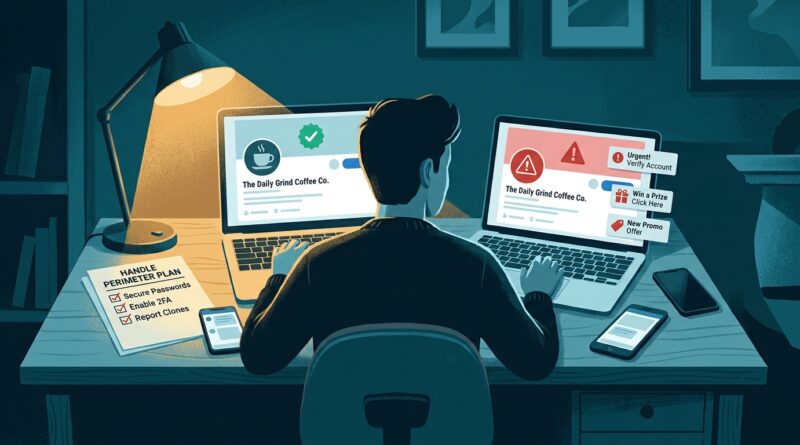
New ‘Handle‑Hijack’ Crackdowns Quietly Turn Fake Social Accounts Into Trademark Time Bombs: How To Lock Down Your Brand Handles Before Platforms Do It For You
You do not need a Fortune 500 legal team to get burned by a fake Instagram, TikTok, or X account. It can happen to a bakery, a plumber, a coach, or a local shop. One morning, a customer messages you asking why your “support account” wants payment in gift cards. By the time you look, the fake profile has copied your logo, stolen your photos, followed your customers, and maybe even triggered a platform warning because there are now two versions of “you” online. That is the part that feels unfair. You are the real business, but messy handle use across platforms can make it harder to prove fast. Social media brand impersonation trademark protection is no longer just a big-brand problem. It is now basic business hygiene. The good news is that a few simple steps can make your brand much easier to defend before platforms or regulators decide there is a problem.
⚡ In a Hurry? Key Takeaways
- Fake brand accounts are now treated more seriously by platforms when you can show clear handle ownership and trademark rights.
- Start by locking down the same or very similar handles on every major platform, even if you do not plan to post there yet.
- A simple record of your official handles, logos, and first-use dates can speed up takedowns and reduce customer scams.
Why fake accounts have become a much bigger problem
Years ago, most impersonation was clumsy. Bad grammar. A blurry logo. A weird username. Now cheap AI tools can clone bios, profile photos, product shots, captions, and even customer service language in minutes.
That means scammers do not need much skill. They just need your brand name, a handful of public posts, and a target list.
For small businesses, the damage usually shows up in three places first.
Customer trust
People get tricked into sending money, clicking fake links, or sharing account details. Even if you had nothing to do with it, they still connect the bad experience to your brand.
Platform confusion
If your business uses different names on different sites, or if an old dormant page is still floating around, a platform may struggle to tell which account is really yours.
Trademark and fraud exposure
Regulators and platforms increasingly see impersonation as more than “annoying online behavior.” They see consumer harm. They also see misuse of names, logos, and trade identity. That is where social media brand impersonation trademark protection starts to matter.
What “handle-hijack” crackdowns actually mean
Platforms are getting more aggressive about fake accounts, but they are also relying more on automation. That sounds good until you realize automated systems are not great at sorting out brands with sloppy account naming.
Here is the risk. If you use @AcmeCo on one platform, @Acme_Official on another, and your Facebook page still shows an old DBA name from 2021, a fake account with a cleaner, more “brand-like” setup may not look fake at first glance.
That can slow down enforcement. Worse, it can create a mess where the platform asks for proof you never organized.
Your goal: build a “handle perimeter”
Think of a handle perimeter as a fence around your brand identity. You are making it obvious, documented, and consistent enough that both humans and automated systems can tell what belongs to you.
Step 1: Claim your core handles everywhere
Even if you only actively use two social networks, claim your brand handle on the others. At minimum, check Instagram, Facebook, TikTok, X, YouTube, LinkedIn, Pinterest, Threads, and any marketplace or messaging platform your customers may search.
If your ideal handle is unavailable, use a clear backup pattern such as:
- @BrandNameOfficial
- @ShopBrandName
- @BrandNameHQ
Pick one pattern and stick to it. Random variations create confusion.
Step 2: Make your bios match
Your business name, website URL, logo, and short description should be consistent across every account. This helps customers spot fakes, and it helps support teams reviewing impersonation complaints.
Use the same:
- brand name spelling
- logo version
- website link
- customer service contact method
Step 3: Post a simple “official accounts” list on your website
This step is easy and often overlooked. Create one page on your website called something like “Official Social Accounts.” List every real handle there.
Now, when a platform asks for proof, you have a public source showing your official brand presence. Customers also have somewhere to check before replying to a suspicious message.
Step 4: Save proof of first use
Keep screenshots showing when you started using your business name, logo, and handles. Save launch announcements, profile creation emails, old posts, and website archives if you have them.
This matters because faster takedowns often go to brands that can quickly show, “We were using this identity first, and here is the proof.”
Where trademark rights fit in
Many small business owners assume trademark law only matters once they are huge. Not true. If your name is part of how customers recognize you, trademark rights can become one of the fastest ways to explain to a platform that an account is not just fake, but infringing.
You do not always need a federal registration to report impersonation, but having one can make your position stronger. Especially when the fake account uses your business name, logo, or a confusingly similar handle to sell, solicit payments, or pose as support.
That is the practical side of social media brand impersonation trademark protection. It is not just about legal paperwork. It is about shortening the argument when time matters.
What platforms tend to respond to fastest
- consistent handle use across services
- a matching website and domain
- clear branding and proof of ongoing use
- registered trademark details, if you have them
- evidence of customer confusion or fraud
Red flags that make your brand easier to impersonate
If any of these sound familiar, fix them soon.
- You have old pages with outdated names or logos.
- Your team sometimes uses personal accounts for customer service.
- Your handles are different on every platform.
- Your website does not link to your real social accounts.
- You have never claimed accounts on platforms you do not currently use.
- No one in the company is officially responsible for monitoring impersonation.
None of this means you did something wrong. It just means a scammer has more room to create doubt.
How to monitor without living on your phone
Most small brands still rely on casual scrolling to spot fakes. That is not enough anymore.
Set a monthly check routine
Search your business name, common misspellings, and your founder or store manager’s name on major platforms. Also search terms like “support,” “help,” “customer care,” and “refund” next to your brand name.
Ask staff to report weird customer messages
Your support inbox is often the first warning system. If customers mention discount codes, payment requests, or direct messages you did not send, treat that as an impersonation clue.
Use saved screenshots
When you find a fake, capture the profile, posts, username, follower count, links, and any messages. Do this before reporting it. Fake accounts often disappear and reappear fast.
What to do when a fake account appears
Move quickly, but do not panic.
1. Document everything
Take screenshots and note the date, time, platform, URL, and what the account is doing.
2. Report through the platform’s impersonation and trademark channels
If the account is using your name or logo, do not just file a generic “spam” complaint. Use the route that mentions impersonation, trademark, brand misuse, or intellectual property when it applies.
3. Warn customers publicly
Post a short message from your official account and website. Tell customers which handle is fake, what not to click, and where your real support team can be reached.
4. Escalate if money or identity theft is involved
If customers are being tricked into payments or account logins, this has moved beyond a fake profile nuisance. It is fraud.
If the abuse also involves manipulated images or intimate deepfakes tied to your business or founder, the response window gets even tighter. We covered that in New ‘Take It Down’ Rules Quietly Turn Deepfake Nudes Into Trademark‑Level Emergencies: How To Build a 48‑Hour Response Plan Before Platforms Stall. The lesson carries over here too. Speed and documentation matter more than perfect wording.
A simple brand handle checklist for small businesses
- Claim your preferred handle on major platforms.
- Use one standard version of your brand name and logo.
- Turn on two-factor authentication for every official account.
- List official handles on your website.
- Remove or update abandoned pages.
- Keep a folder with screenshots, registration records, and brand assets.
- Register your trademark if the brand is central to your business growth.
- Create a one-page response plan for impersonation reports.
Why this matters more now than it did a year ago
Platforms are under pressure to act faster on scams, fakes, and misleading commercial accounts. Regulators are paying more attention too. That sounds helpful, and often it is. But it also means your business may get judged by how clearly it presents its own identity online.
If your brand footprint looks scattered, you may spend more time proving who you are. If it looks organized, your reports are more likely to move faster.
At a Glance: Comparison
| Feature/Aspect | Details | Verdict |
|---|---|---|
| Casual monitoring | Depends on someone noticing a fake while scrolling or hearing about it from customers. | Too risky for most brands now. |
| Handle perimeter setup | Claimed handles, matching bios, website verification, and archived proof of use. | Best low-cost defense. |
| Trademark-backed takedown approach | Uses name, logo, and ownership records to support faster impersonation and infringement reports. | Strongest option when scams are active. |
Conclusion
Fake brand accounts are no longer rare, and they are no longer just a PR headache. They can trigger payment fraud, account loss, and real customer confusion in a matter of hours. Cheap AI is making the cloning part easier, while platforms and regulators are treating impersonation more like a consumer protection and trademark problem. That means organized brands usually have an easier time getting action. If you start building your handle perimeter now, consistent handles, clear branding, a public list of official accounts, and solid proof of use, you put yourself in a much better spot. It is one of those boring jobs that can save you from a very loud mess later.