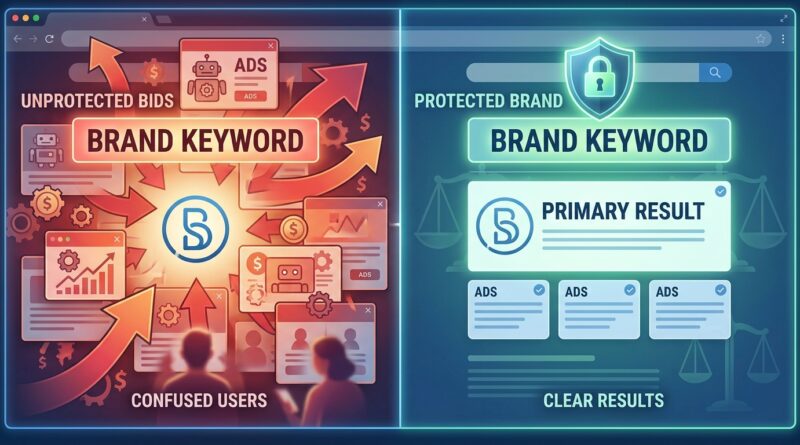
New Google Ads Rules Quietly Turn Your Brand Name Into a Battleground: How To Stop AI Bidding Against Your Own Trademark
You finally get people searching for your business by name, and then Google Ads starts charging you more to reach them. That is the headache many small businesses are walking into right now. With Google pushing harder on smart bidding, broad matching and AI-led campaign decisions, your own brand name can quietly turn into an auction. If your settings are loose, competitors may show up when someone types your trademark. Worse, your own campaigns can start bidding too aggressively on searches you should have been protecting more carefully and paying less for. It feels unfair because it is. The good news is you do have options. You do not need to be a lawyer or a paid search expert to tighten things up. You just need a simple plan: lock down your trademark use, separate your brand campaigns from everything else, and watch the search terms report like a hawk.
⚡ In a Hurry? Key Takeaways
- Google Ads trademark keyword bidding rules do not fully stop rivals from bidding on your brand name, so you need account controls, not just trust in policy.
- Split brand and non-brand campaigns, add tight negative keywords, and review search terms often so AI does not lump your trademark into a messy smart bidding bucket.
- Register your trademark and keep evidence of confusing ads, landing pages and CPC spikes. That gives you something real to use if you need to file a complaint or talk to counsel.
What changed, and why people are upset
Google has spent years nudging advertisers toward automation. The latest push means smart bidding systems make more of the choices that humans used to make. That includes what queries to chase, how much to bid, and when to stretch beyond the exact keyword list you thought you set up.
On paper, that sounds helpful. In real life, it can turn your brand traffic into collateral damage.
Say you run a bakery called Blue Lantern Cakes. A customer types “Blue Lantern Cakes” because they already know you. That should be an easy, cheap click if you run a clean brand campaign. But if competitors are also bidding on your name, and your own smart campaigns are loose, Google may run a more expensive auction than you expected. Suddenly you are paying more to “win” traffic that was already looking for you.
What the Google Ads trademark keyword bidding rules actually mean
This is where many owners get tripped up. Google’s ad policies and trademark law are not the same thing.
Google usually does not ban all bidding on brand names
In many regions, Google allows advertisers to bid on trademarked terms as keywords. The bigger issue is often the ad text and the landing page. If a rival uses your trademark in a way that confuses buyers, that is more likely to trigger a policy issue or a legal dispute.
Your rights depend on confusion, use, and local law
Courts generally care about whether a shopper is likely to be misled. A competitor simply bidding on your brand name is not always automatically illegal. But if their ad implies they are you, or sends visitors to a page designed to mimic your brand, that is a much bigger problem.
That is why the Google Ads trademark keyword bidding rules are only part of the story. You need to know both the platform policy and what trademark law in your area says about confusion and unfair competition.
Why AI bidding makes this worse
Automation is not evil. It is just indifferent. It does not care that your brand name took years to build. It cares about conversion signals and auction outcomes.
If your campaigns are set up loosely, AI can make a few expensive mistakes:
1. It mixes brand and non-brand intent
Brand searches usually convert differently from generic searches. Someone typing your business name is much warmer than someone typing “best meal prep near me.” If those searches are mixed together, smart bidding can overvalue or undervalue the wrong traffic.
2. It expands into “close enough” searches
Broad match and automated targeting can pull in terms you never meant to target. Sometimes that includes competitor terms. Sometimes it means your non-brand campaign starts chasing your own brand terms.
3. It hides waste behind good top-line numbers
You might still see conversions. That does not mean the spend is healthy. If brand CPCs are climbing because of internal overlap or competitor pressure, your reports can look fine while efficiency quietly gets worse.
The simplest way to protect your brand traffic
If you only do three things this week, do these.
Create a dedicated brand campaign
Put your brand name, common misspellings, product line names, and trademarked phrases into their own separate campaign. Keep it isolated from your generic search efforts.
This gives you cleaner reporting and more control over budget, bids and ad copy.
Add negative keywords to non-brand campaigns
Your non-brand campaigns should usually exclude your brand name and close variants. That stops Google from bidding on your trademark from multiple places at once.
Add negatives for:
- Your company name
- Common misspellings
- Product and founder names people search for
- Your slogan, if people use it as a search term
Review the search terms report regularly
This is still one of the best reality checks in Google Ads. Look for:
- Competitor names appearing in your campaigns
- Your brand terms appearing in non-brand campaigns
- Odd query expansions that could waste money
- Rising CPCs on your name without a clear reason
How to tell if you are paying to compete against yourself
You do not need fancy software to spot it. Look for these warning signs.
Your brand CPC suddenly jumps
If your own name is getting more expensive, check whether competitors have entered the auction, or whether your other campaigns are also serving on those terms.
Impression share is unstable on your own name
If you are losing impression share on your trademarked terms, something changed. It could be budget. It could be rank. It could be a competitor push.
Search term overlap appears across campaigns
If multiple campaigns are matching the same brand search, you have an account structure problem. AI will not fix that for you.
Click quality drops even when volume looks fine
If people bounce more, convert less, or call asking if a rival is connected to you, that is a sign confusion may be creeping in.
What to do if a competitor is bidding on your trademark
Take a breath first. Not every case is worth a legal battle.
Step 1: Capture evidence
Take screenshots of the search result, the ad copy, the visible URL, and the landing page. Note the date, time, device and location if possible. Save enough detail to show what a customer actually saw.
Step 2: Check whether the ad is confusing
Ask a simple question. Would an average person think this ad is from your company, affiliated with your company, or an official reseller when it is not?
If yes, that is stronger evidence than “they bid on my name and I do not like it.”
Step 3: File a trademark complaint with Google if it fits
If the issue involves trademark use in ad text or misleading presentation, Google may review it under its trademark complaint process. The outcome depends on region and facts, but it is often worth trying.
Step 4: Talk to a trademark lawyer if the damage is real
If a rival is repeatedly targeting your brand in a deceptive way, especially at scale, get legal advice. A short consultation can tell you whether you have a strong claim or just an annoying competitor.
Trademark basics that matter for small businesses
You do not need a law degree here. Just keep the basics straight.
Registered marks are easier to enforce
If you have not registered your core brand name, start there if the name matters to your business. Common law rights can help, but registration gives you a cleaner path in many disputes.
Document how you use the brand
Keep records of your website, packaging, ads, invoices and social profiles. If you need to show real commercial use later, you will be glad you kept the paper trail.
Your product names matter too
Many founders only think about the company name. But service names, course names, app names and signature products can also become battlegrounds if they drive search traffic.
Smart campaign hygiene that saves money
This is the boring stuff that prevents expensive surprises.
Use separate budgets for brand and non-brand
Do not let generic prospecting eat the budget that protects your name. Brand traffic is usually your cheapest and highest-intent traffic. Treat it that way.
Watch match types carefully
Exact match is not as exact as it used to be, but it still gives you more control than broad match in many cases. For brand campaigns, tighter targeting is usually your friend.
Be careful with Performance Max and broad automation
These campaign types can work, but they are not known for crystal-clear search query control. If brand protection is your goal, do not assume automation is doing what you would do manually.
Label and segment everything
Use naming conventions that make it obvious what is brand, non-brand, competitor, and remarketing. If you cannot read your account structure quickly, you will miss problems.
A practical weekly checklist
- Check brand CPCs and impression share.
- Review search terms for brand leakage into non-brand campaigns.
- Spot-check live searches for your name on desktop and mobile.
- Screenshot any confusing competitor ads.
- Make sure brand negatives are still applied where needed.
- Confirm your trademark registration details are current.
When it is fine to bid on your own brand name
For most businesses, running a controlled brand campaign still makes sense. It can help you:
- Own more space on the results page
- Direct searchers to the right offer or location
- Push down rivals or affiliates
- Measure branded demand more clearly
The problem is not bidding on your own name. The problem is doing it sloppily, or letting automation turn a simple protection strategy into a bidding war.
The real lesson here
Google Ads is not just an ad tool anymore. It is part auction house, part recommendation engine, part black box. That means small account mistakes can snowball fast.
If your business depends on branded search traffic, treat your trademark like inventory. Guard it. Segment it. Monitor it. Keep receipts.
At a Glance: Comparison
| Feature/Aspect | Details | Verdict |
|---|---|---|
| Google policy vs trademark law | Google may allow keyword bidding on a brand term, while courts focus on whether shoppers are likely to be confused. | Do not assume platform policy fully protects your rights. |
| Smart bidding convenience | Automation can save time, but it may mix brand and non-brand intent or expand into unwanted searches. | Useful only with tight campaign structure and regular review. |
| Best protection step | Separate brand campaigns, add negative keywords elsewhere, and collect evidence of confusing competitor ads. | Highest-value move for most small businesses and creators. |
Conclusion
Right now, a lot of owners are learning the hard way that branded search traffic is not automatically safe. Google’s August bidding changes and its bigger push toward AI-driven targeting are arriving at the same time as court decisions that put more attention on trademark confusion and keyword bidding fights. That mix can punish the people with the least time to babysit ad accounts. Small businesses, solo creators and growing brands are most likely to get hit by rising brand CPCs, vague policy lines and smart campaigns that cheerfully bid against their own best interests. The fix is not panic. It is structure. Register the marks that matter. Separate your brand campaigns. Add negatives. Save evidence. Review what the machine is actually doing, not what the sales pitch says it is doing. If you handle both the legal side and the account cleanup side, you can protect your brand, cut wasted spend and make decisions from facts instead of guesses.