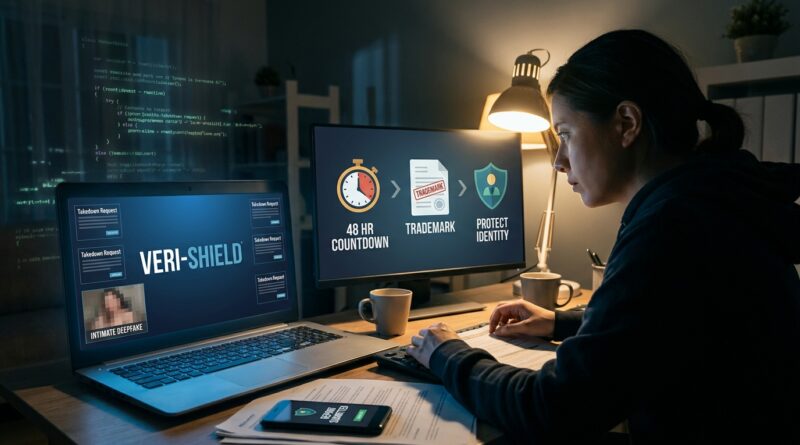
New ‘Take It Down’ Rules Quietly Turn Deepfake Nudes Into Trademark‑Level Emergencies: How To Build a 48‑Hour Response Plan Before Platforms Stall
You find the post at 9:12 a.m. It uses your company name, your founder’s face, and an AI-generated nude clip that is fake but convincing enough to do real damage. Then the worst part starts. Not the content itself. The forms. The vague menus. The “please choose the policy category” maze while screenshots multiply and customers begin asking questions. If that sounds maddening, you are not overreacting. Deepfake intimate content can stain a brand in hours, and the usual trademark complaint route often moves too slowly to match the harm. That is why the newer Take It Down rules matter more than many founders realize. They are not just a privacy issue. They can become a speed tool. If the content is intimate, nonconsensual, and tied to a real person or your brand identity, you may be able to push platforms on a much tighter response clock while your legal team builds the longer trademark and reputation case.
⚡ In a Hurry? Key Takeaways
- Take It Down Act deepfake trademark protection works best when you treat intimate deepfakes as both a safety emergency and a brand emergency, not just a trademark complaint.
- Build a 48-hour response plan now with screenshots, identity proof, platform links, escalation contacts, and a prewritten notice so you are not improvising under pressure.
- This faster path does not replace trademark strategy, but it can buy you precious time by getting harmful content reviewed and removed sooner.
Why this changed the playbook
Most people hear “Take It Down” and think revenge porn, teen safety, or celebrity abuse. That is part of it. But many founders, creators, and small brands are missing the practical point. If a fake intimate image or video uses a founder’s likeness, an employee’s likeness, or your brand name to spread humiliating content, the platform may have obligations that move faster than a standard IP report.
Trademark systems usually ask a different question. Is this infringing use in commerce. Is there confusion. Is there brand misuse. Those questions matter, but they can take time. Intimate content systems ask a much more urgent question. Is this nonconsensual sexual or intimate content involving a real person. If yes, the review lane is often treated as a safety problem first.
That is the opening. You use the safety lane for speed, then use trademark and reputation tools for cleanup and follow-through.
What “trademark-level emergency” really means
It does not mean the law magically turns every fake nude into a trademark claim. It means the business impact is just as serious as a major counterfeit, phishing, or impersonation event. Maybe worse.
Here is what tends to happen fast:
- Search interest spikes around your founder or brand.
- Customers assume silence means guilt.
- Affiliates, sponsors, or investors start asking questions.
- Copies spread to mirror accounts and low-quality sites.
- Your evidence trail gets messy if you do not capture it early.
That is why your first two days matter so much. You are not trying to solve everything in 48 hours. You are trying to stop the bleeding, preserve evidence, and give platforms the cleanest possible reason to act now.
Your 48-hour response plan before platforms stall
Hour 0 to 2. Freeze the chaos and collect evidence
Do not start by rage-reporting from ten different accounts. Start by building one clean incident file.
Capture:
- The exact URL of each post, account, reel, short, or page.
- Screenshots showing the content, username, date, caption, comments, and your brand name if visible.
- Screen recordings if the post is a video or story that may disappear.
- The date and time discovered.
- Any signs the content uses your logo, product, founder image, or official photos.
- Any customer messages or press inquiries showing confusion or harm.
Name the folder clearly. Something like “Deepfake Incident 2026-09-03”. Keep a simple log in a document or spreadsheet.
Hour 2 to 6. Decide which lane you are using
Ask three yes-or-no questions:
- Is this intimate or sexually explicit content?
- Is it nonconsensual, fake, or manipulated?
- Does it use a real person’s face, name, likeness, or your brand identity?
If the answer is yes across the board, file through the platform’s intimate image or nonconsensual sexual content route first. Do not wait for your trademark team to perfect the IP argument.
Then file a second report, if needed, under impersonation, trademark, brand misuse, or harassment. Think of the first filing as the fire alarm. The second is your paper trail for long-term enforcement.
Hour 6 to 12. Send one complete notice, not five sloppy ones
Platforms move faster when you make their decision easy. Your notice should be factual, short, and specific.
Include:
- Who is depicted or imitated.
- Why the content is fake or nonconsensual.
- Why it is intimate content.
- How it uses your brand name, founder identity, or official assets.
- The exact URLs.
- A request for immediate removal and prevention of re-upload where available.
A simple template can look like this:
“This report concerns nonconsensual AI-generated intimate content depicting or imitating [name], who is a real person and [founder/executive/creator] associated with [brand]. The content is fake, sexually explicit, and unauthorized. It also uses our brand name and causes immediate reputational harm and public confusion. Please remove the content under your intimate image and safety policies, preserve records, and confirm removal of the listed URLs.”
Hour 12 to 24. Start escalation, not panic
If you have no response, escalate with structure.
- Reply within the existing ticket instead of opening a brand-new one if possible.
- Use business support or verified creator channels if you have them.
- Have counsel send a parallel notice if the content is spreading fast.
- Flag the content for impersonation and trademark misuse separately.
If your brand sells in Europe or serves EU users, documentation matters even more. A smart companion step is to improve how your real media assets are labeled and archived. That makes it easier to show what is genuine and what is manipulated. This is where New EU AI Transparency Rules Quietly Turn Your Product Photos Into Evidence Files: How To Label Content So Platforms Stop Guessing For You becomes useful. It is not just a compliance story. It is an evidence story.
Hour 24 to 48. Control the public side
Silence can be wise for a few hours. Silence for two days can look like confusion.
Prepare a short statement if the content is already circulating:
- Confirm the material is fake and unauthorized.
- State that takedown requests are active.
- Ask people not to share or amplify it.
- Give media or partners a single contact point.
Keep it calm. No dramatic legal threats unless your lawyer wants that. The goal is to reduce spread, not feed curiosity.
What to put in your response kit before anything happens
This is the part too many teams skip until they are under stress.
Build a simple “deepfake incident kit”
- A folder with brand registration certificates, logo files, and official founder headshots.
- Links to your platform reporting pages for major social networks and hosts.
- Government ID or business identity proof, stored securely and ready if needed.
- A one-page contact list for legal, PR, social, and executive approval.
- Two prewritten notices, one for intimate content and one for trademark misuse.
- A spreadsheet template for URLs, timestamps, ticket numbers, and outcomes.
You want your team to act like a restaurant during a lunch rush. Not calm because the situation is fun. Calm because everyone knows their station.
Why founders should not rely on trademark alone
Trademark law is still important. If someone uses your mark to imply endorsement, sell traffic, impersonate your business, or damage goodwill, you should preserve that angle. But trademark alone often asks the platform to sort out nuanced legal questions.
Safety teams, on the other hand, are usually trained to move faster on intimate abuse. That is why the best Take It Down Act deepfake trademark protection strategy is layered:
- First, use intimate content reporting for urgency.
- Second, use impersonation and trademark reporting for breadth.
- Third, use PR and evidence management for recovery.
Think of it as using the fastest door available, not the fanciest one.
Common mistakes that slow removals
Filing under the wrong category
If you file a fake nude only as trademark infringement, you may land in a slower review queue.
Sending incomplete URLs
“Please remove this account” is weaker than “Please review these five exact links.”
Forgetting the real person angle
If a real founder, employee, or creator is depicted or imitated, say that clearly. It matters.
Arguing instead of documenting
Platforms are not persuaded by outrage. They are persuaded by clean facts and policy triggers.
Ignoring re-uploads
Removal of one post is often the start, not the finish. Keep watch for copies and variants.
When to call a lawyer right away
Do it immediately if any of these are true:
- The content targets a minor.
- There is extortion, blackmail, or payment demand.
- The post is tied to a competitor, former employee, or known harasser.
- Media outlets have begun asking for comment.
- The content appears on sites known for reposting removed material.
A lawyer can help preserve claims without slowing your first-wave takedown requests. The trick is parallel action, not sequential action.
At a Glance: Comparison
| Feature/Aspect | Details | Verdict |
|---|---|---|
| Primary reporting lane | Use intimate or nonconsensual sexual content reporting first when a deepfake nude or explicit fake involves a real person tied to your brand. | Fastest option in many cases |
| Trademark complaint | Useful for misuse of your name, logo, founder identity, or confusion in the market, but often slower because the platform must assess IP issues. | Important, but not enough by itself |
| 48-hour response kit | Prebuilt templates, evidence folders, platform links, and internal contacts cut delay when every hour affects reputation. | Best practical step you can take today |
Conclusion
The quiet shift here is simple. TIDA-style enforcement has raised expectations around how fast platforms should react to intimate abuse, and smart founders can use that same urgency when deepfakes and intimate fakes are wrapped in a brand. That does not replace trademark law. It gives you a faster first move. Most creators and business owners still treat this as a narrow privacy issue, when it is also a real-world brand protection issue. If you build a copy-paste 48-hour plan now, you give yourself a much better shot at getting abusive, brand-soiling content taken down quickly, while you sort out the longer legal and reputation strategy with a clear head.