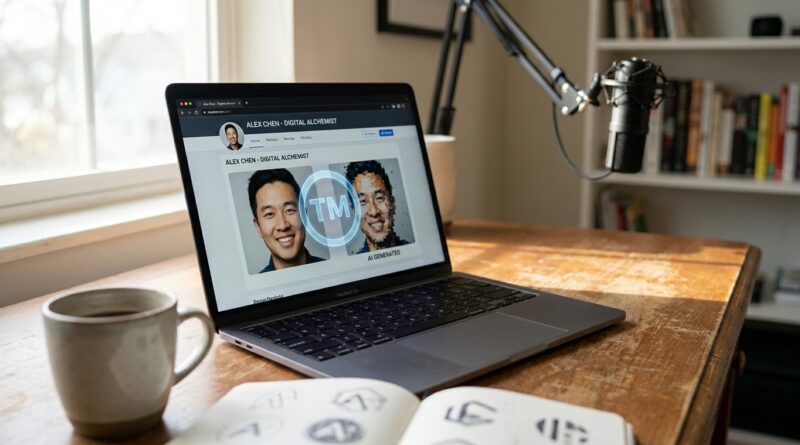
New ‘Identity Is IP’ Wave: How To Quietly Trademark Your Online Persona Before AI Platforms And Copycats Do
You spend years building a recognizable online identity, then someone can copy chunks of it in an afternoon. That is the part that stings. A cloned voice, a fake ad with your face, a lookalike account using your catchphrase. It all feels unfair because it is. The legal system is moving, but slowly. If you are a creator, coach, streamer, founder, or small business owner, waiting around is not a smart plan. The good news is you do not need a celebrity budget to start protecting yourself. If you are wondering how to trademark your online persona, think smaller and smarter. You are not trying to trademark your entire self. You are building a practical identity portfolio. That can include your brand name, social handle, logo, avatar style, slogan, and other pieces people connect with you. Get those basics documented and registered where you can, and you will be in a much stronger position when copycats or AI fakes show up.
⚡ In a Hurry? Key Takeaways
- You usually cannot trademark your whole identity, but you can trademark the parts of your online persona people use to recognize you.
- Start with your name or brand name, handle, logo, signature phrase, and visual assets, then check which ones you actually use in business.
- Basic paperwork now can make takedowns, platform complaints, and legal action much easier later.
Why this matters now
Not long ago, identity theft online mostly meant fake accounts and stolen photos. Now it can mean a synthetic version of you. Your voice. Your likeness. Your style. Even your mannerisms.
That changes the risk for regular people. You no longer need to be a movie star to get copied. If you sell courses, post content, run a niche brand, or build an audience around your personality, you are already in the zone where this matters.
Big names have been using trademark law and right-of-publicity claims for years to fight fake endorsements and unauthorized products. That same basic playbook is starting to matter for smaller creators too.
First, a simple truth: you cannot trademark “being you”
This is where people get confused. A trademark does not protect your entire personality in one sweep. It protects source identifiers. In plain English, that means the things that tell people a product, service, or piece of content comes from you.
So when people ask how to trademark your online persona, the real answer is this. Break your persona into parts that can actually be protected.
Pieces that may be protectable
These are the usual building blocks:
- Your brand or creator name
- Your business name
- Your podcast or channel name
- Your logo
- Your tagline or signature phrase
- A stylized avatar or mascot
- Product line names tied to your identity
- In some cases, your real name, if used commercially
That is your starter identity portfolio. Not glamorous, but very useful.
What trademark law does, and what it does not do
Trademark law is strongest when someone is using your protected name, phrase, or branding in a way that confuses people. Maybe they create a fake coaching page with a near-identical handle. Maybe they run ads that make it look like you endorsed a product. Maybe they launch a clone account using your slogan and profile art.
That is where trademark rights can help a lot.
But trademark law is not the only tool. If someone uses your face or voice to imply your approval, right-of-publicity laws may also matter. Those rules vary by place, which is annoying, but the big idea is simple. People generally do not get a free pass to commercially exploit your identity.
If you are also dealing with impersonation on marketplaces or social platforms, it helps to know how reporting systems are changing. For example, New Trusted Flaggers Under The EU Digital Services Act: What This Quiet Shift Means For Your Brand Online explains why platform enforcement may become a bigger part of brand protection, especially in Europe.
How to trademark your online persona, step by step
1. List the parts of your identity people actually recognize
Open a notes app and make a plain list. What do followers, customers, or clients associate with you right away?
- Your @handle
- Your display name
- Your show or newsletter title
- Your logo
- Your intro line or catchphrase
- Your profile image or branded character
- Your course or community name
Do not overthink it. You are trying to identify what signals “this is me” in the market.
2. Separate personal identity from brand identity
Your face and voice matter, but trademarks usually attach better to brand assets than to broad personal traits. Ask yourself which items are being used to sell, promote, or identify goods or services.
For example, “Jamie North” as the name on your paid newsletter may be a stronger trademark candidate than “my calm speaking style” or “my haircut.”
3. Check whether the name is already taken
This step saves pain later. Search the USPTO database if you are in the United States. Also search Google, YouTube, TikTok, Instagram, domain names, podcast platforms, and app stores.
You are looking for conflicts, not just exact matches. A similar name in a related field can still be a problem.
4. Prioritize the assets worth filing first
Most people do not need to file everything at once. Start with the pieces that matter most for confusion and copycats:
- Your main brand or creator name
- Your logo
- Your signature paid offer name
- Your best-known slogan or phrase
If your budget is limited, this is where to begin.
5. Make sure you are using the mark in commerce
This is the practical part many people miss. Trademark rights are tied to actual use. If you say a name is your brand, you should be using it on your website, sales pages, content headers, packaging, or service materials.
Save proof. Screenshots. Launch emails. Product pages. Invoices. Dated social posts. This kind of evidence becomes very handy later.
6. Lock down matching usernames and domains
This is not a trademark filing step, but it is identity defense 101. If possible, claim the same handle across major platforms, even if you are not active there yet. Grab the domain too.
That simple move stops a lot of future headaches.
7. Create a basic evidence folder
Make one folder in cloud storage with:
- Your logo files
- Profile images and avatar designs
- First-use screenshots
- Dates you launched key assets
- Links to your active profiles
- Any examples of confusion or impersonation
If someone copies you, you will be glad this already exists.
8. File trademark applications where it makes sense
If an asset is central to your business, filing may be worth it. You can file yourself in some places, but many people use a trademark lawyer because mistakes in classes, descriptions, or conflicting marks can cost time and money.
You do not need to file everywhere on day one. Start where your business actually operates or where your audience is concentrated.
What about your face, voice, and likeness?
This is where trademark law meets other legal rights. Your face or voice is not automatically a trademark just because it is yours. But if your likeness is strongly tied to commercial activity, other claims may come into play, especially if someone suggests you endorsed something.
That is why celebrities often use a mix of trademark rights, copyright, contract terms, and right-of-publicity claims. For a smaller creator, the lesson is not “do everything.” It is “do the basics well so you have options.”
If your avatar, illustrated persona, or branded character is distinctive, that may be easier to protect than your raw likeness alone. Think of it as protecting the packaging around your identity.
Three mistakes people make
Trying to protect everything at once
You do not need a giant legal fortress. You need the high-value pieces covered first.
Using a generic brand name
If your name is too descriptive, it is harder to protect. “Daily Marketing Tips” is much weaker than something distinctive and specific.
Waiting until after a copycat appears
Yes, you can still act later. But having registrations, records, and consistent branding in place makes every complaint easier.
How this helps when AI fakes show up
Say someone posts a fake video that sounds like you and uses your branding to sell a sketchy product. If you have done nothing, you are left arguing from scratch that the account is misleading.
If you have a clear identity portfolio, things change. Now you can point to registered marks, consistent use, brand assets, and documented confusion. Platforms tend to respond better when your claim is specific and supported.
This is not magic. It will not stop every fake. But it can shorten the fight.
A practical starter checklist
If you want the short version of how to trademark your online persona, do this over the next two weeks:
- List your key identity assets.
- Search for conflicts.
- Claim matching handles and domains.
- Standardize your name, logo, and visuals across platforms.
- Save proof of use.
- Pick one or two important assets to file first.
- Set up alerts for impersonation and misuse.
That alone puts you ahead of most people.
At a Glance: Comparison
| Feature/Aspect | Details | Verdict |
|---|---|---|
| Brand name and handle | Usually the strongest place to start if people know you by a consistent public name tied to your business or content. | High priority |
| Logo, avatar, and slogan | Useful for proving identity and confusion, especially when copycats mimic your look and messaging. | Good second step |
| Face, voice, and likeness | Harder to protect through trademark alone. Often needs a mix of publicity rights, platform reports, and evidence of false endorsement. | Important, but less straightforward |
Conclusion
You do not need to panic every time a new voice clone or video generator launches. You do need a plan. Celebrities already use trademark law and publicity rights to protect their identity from fake endorsements and AI copycats, and that approach is slowly moving down to everyday creators and founders. The smart move is to build a small identity portfolio now. Your handle. Your logo. Your avatar. Your signature phrase. Your brand name. Those pieces give you something concrete to point to when someone tries to hijack your reputation. If you have been wondering how to trademark your online persona, start there. Small steps today can save a very messy cleanup tomorrow.