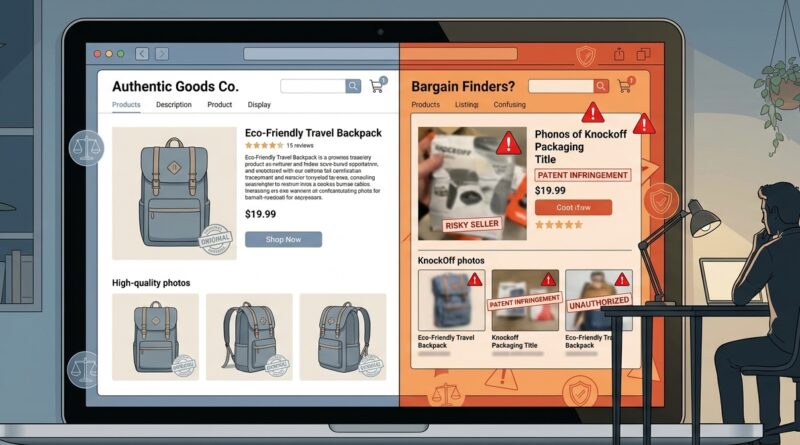
New ‘Marketplace Liability 2.0’ Rules Quietly Turn Your Etsy And Amazon Shops Into Legal Defendants: How To Bullet‑Proof Your Listings Before Platforms Shift The Blame
If you run an Etsy, Amazon, or Temu shop, this shift is maddening. You list a product in good faith, assume the platform will handle the big legal fights, and then one day a complaint lands in your inbox that treats your listing like Exhibit A in a trademark case. That is where things are headed. Courts and platform policy teams are slowly moving away from the idea that marketplaces are just neutral bulletin boards. When platforms get more pressure over counterfeits, copycats, and confusing listings, they often respond by pushing more of the trademark risk onto sellers. That means your title, bullet points, tags, photos, and even the way you compare your item to a better-known brand can suddenly matter a lot more than they did a year ago. The good news is simple. A careful listing cleanup now can cut your risk, protect your account, and make it easier to report obvious infringers later.
⚡ In a Hurry? Key Takeaways
- Online marketplace trademark liability for sellers is rising because platforms are under pressure to stop acting like passive hosts and start policing listings more aggressively.
- The fastest fix is to audit your titles, tags, descriptions, photos, and comparison language for any brand name use that could imply affiliation, sponsorship, or “compatible with” confusion.
- Clean listings do more than lower your legal risk. They also give you better evidence if you need to challenge a copycat or bad faith competitor later.
Why this problem is getting bigger, quietly
Most small sellers still think of a marketplace as a giant mall. You rent a tiny booth, post your item, and if somebody files a trademark complaint, the platform sorts it out.
That old assumption is getting shakier.
Recent court fights and policy changes have pushed marketplaces into a more active role. When a platform helps shape listings, promotes products, recommends search terms, groups offers, or profits from repeat infringement, it can start looking less like a neutral host and more like part of the sale itself.
Once that pressure hits the platform, the platform looks for a release valve. Guess who gets it. Sellers.
That is why online marketplace trademark liability for sellers is becoming a live issue even for honest shops that are not trying to copy anyone.
What “marketplace liability” means in plain English
Here is the simple version. Trademark law cares a lot about customer confusion.
If a buyer could reasonably think your product is made by, approved by, connected to, or officially compatible with another brand when it is not, you have a problem.
Years ago, marketplaces often had more room to say, “We are just hosting user content.” That defense is not disappearing overnight, but the mood has changed. Platforms now have stronger reasons to remove first and ask questions later. They also have stronger reasons to make sellers promise, in policy terms, that every word and image in a listing is legally safe.
So when a complaint comes in, the platform may not fight for nuance. It may simply suspend the listing, freeze the funds, or warn the account.
The screenshot test
Before we get into the checklist, use this simple rule.
Open one of your listings and imagine a lawyer screenshotting only the title, main image, and first two bullets. If that cropped image would make a stranger think your item is tied to another brand, fix it now.
That is the real world test.
The riskiest parts of a listing
1. Product titles
Titles are often the first thing complaint bots scan and the first thing brand owners quote in takedown notices.
Common mistakes include stuffing a famous brand into the beginning of a title, using a competitor name for search traffic, or writing titles that sound like an official accessory when the item is really third-party.
Bad example: “Nike Style Custom Sweatshirt”
Bad example: “Stanley Cup Replacement Lid” if your product is not clearly, lawfully described as a third-party compatible item
Safer approach: lead with what your item is, not whose traffic you want.
2. Tags, backend keywords, and hidden search terms
A lot of sellers forget that hidden metadata counts too. You may never show the keyword publicly, but platforms and rights owners can still see enough to complain.
If you are using unrelated brand names just to get clicks, that is low-hanging fruit for a trademark report.
3. Product photos
Photos are not just decoration anymore. They are evidence.
If your images show branded packaging, logos in the background, or side-by-side comparisons that imply endorsement, those images can do as much damage as the wording in your description. This is especially important on newer social commerce platforms. If you sell across channels, it is worth reading New TikTok Counterfeit Crackdowns Quietly Turn Your Product Photos Into Trademark Evidence: How To Prep Your Catalog Before The Bots Arrive because the same photo habits that trigger TikTok problems can spill over into marketplace disputes elsewhere.
4. “Compatible with” language
This area trips up plenty of honest sellers.
You often can describe compatibility when it is true and necessary, but the wording has to be careful. The point is to help buyers identify fit, not make them think the product is official.
Usually safer: “Replacement strap compatible with Model X watches. Third-party accessory. Not made or endorsed by Brand Y.”
Usually riskier: “Brand Y Watch Strap” when it is not a genuine Brand Y item.
Do not put the brand name in giant text on the image unless it is truly needed and legally justified.
5. Descriptions that overpromise affiliation
Watch for phrases like “official,” “authentic style,” “designer inspired by Brand X,” or “same as” language. These can create confusion fast.
“Inspired by” is not magic protection. In many cases, it just waves a red flag.
Your bullet-proofing checklist
Here is the practical part. If you do nothing else this week, do this.
Run a listing audit on your top 20 products
Start with your bestsellers and highest-margin products. They are the most visible and the most likely to attract complaints.
For each listing, review:
- Title
- Bullet points or short description
- Full description
- Image text and backgrounds
- Tags and keywords
- Variation names
- Alt text or hidden fields if your platform uses them
Remove brand names you do not need
If a third-party brand name is not necessary to describe fit, function, or a lawful resale item, cut it.
Search traffic is not a legal defense.
Rewrite compatibility statements
When compatibility matters, be factual and narrow.
- Name the exact model only if needed
- State that your item is third-party
- State that there is no endorsement or affiliation if appropriate
- Avoid putting the other brand in the first words of the title unless truly necessary
Clean up your images
Check every image for:
- Visible logos
- Branded packaging from another company
- Comparison graphics that imply sameness
- Watermarks you do not own
- Lifestyle shots that accidentally show another brand too clearly
Keep proof of your own originality
Save drafts, sketches, supplier communications, design files, invoices, and timestamps. If someone accuses you unfairly, documentation helps. If someone copies you, documentation helps even more.
Make your brand status easy to prove
If you have your own trademark application or registration, keep those records handy. If you have branded packaging, custom labels, or original photography, organize it now. A clean evidence folder can save days of panic later.
How to avoid the most common seller mistakes
Mistake 1. Using competitor brands as “search bait”
This still happens all the time. A seller thinks, “I am not claiming it is their product. I just want to show up in search.”
That logic does not hold up well in a complaint.
Mistake 2. Assuming handmade means low risk
Handmade sellers often think trademark issues only hit big counterfeit operations. Not true. A handmade mug, shirt, sticker, planner, candle, or printable can trigger the same complaint process if the listing borrows somebody else’s brand too freely.
Mistake 3. Copying what everybody else is doing
If ten other listings use a risky brand reference, that does not make it safe. It just means ten other sellers may be next.
Mistake 4. Thinking a disclaimer fixes everything
A disclaimer helps only if the rest of the listing is already pretty clear. You cannot slap “not affiliated” at the bottom and then use a title and hero image that suggest the opposite.
What to do if you get a trademark complaint
First, do not panic and do not send an angry message.
Do this instead:
- Take screenshots of the listing as it appeared when the complaint hit.
- Read the exact reason given by the platform.
- Check whether the complaint is about title wording, image content, product authenticity, or broader brand confusion.
- Compare your listing against the complainant’s actual trademark rights, not just their demands.
- Edit what is clearly risky right away.
- If the complaint looks wrong or abusive, gather proof before filing a counter or appeal.
Many sellers hurt themselves by answering too fast with the wrong explanation. Facts first. Emotion later.
Why this is also an opportunity for honest sellers
This shift is not just bad news.
If you clean up your listings now, you put distance between yourself and the sloppier sellers who are still keyword-stuffing brand names, borrowing images, or using confusing titles. That makes your shop safer. It also makes your enforcement stronger.
When you report a copycat, platforms are more likely to take you seriously if your own listings are tidy and well documented. You look like the careful party, not just another seller in a messy category.
A simple workflow you can use every month
Step 1. Export or list your active SKUs
Focus on the products that get the most traffic first.
Step 2. Search for brand references
Look for every third-party brand name in titles, bullets, tags, and descriptions.
Step 3. Review your images like a stranger would
Zoom in. Check corners, packaging, props, and text overlays.
Step 4. Mark each listing green, yellow, or red
- Green means no third-party brand use
- Yellow means limited compatibility language that needs checking
- Red means obvious risk or unclear affiliation
Step 5. Fix red listings first
That is where complaint risk usually lives.
Step 6. Save before-and-after copies
If a dispute comes later, it helps to show that you acted quickly and in good faith.
At a Glance: Comparison
| Feature/Aspect | Details | Verdict |
|---|---|---|
| Brand names in titles | Using another company’s mark for attention, search traffic, or vague comparison is one of the fastest ways to trigger a complaint. | Remove unless truly necessary and legally accurate. |
| Compatibility wording | You can often describe fit if it is factual, narrow, and clearly third-party, with no suggestion of endorsement. | Use carefully, with plain disclaimers and clean formatting. |
| Product photos | Logos, branded packaging, and misleading comparison visuals can become key evidence in marketplace reviews and legal claims. | Audit every image, not just the wording. |
Conclusion
Marketplace liability is going through a real-time reset. The big question is when a platform stops looking like a neutral host and starts looking like part of the infringement problem. When that pressure builds, platforms often shift the risk downhill to individual sellers. That is why your listing needs to be treated like a legal document as much as a sales page. For honest sellers, this is frustrating, but it is also useful. If you quietly tighten your titles, tags, descriptions, and photos now, you cut the odds of takedowns, account trouble, and ugly trademark fights. You also put yourself in a stronger position against bad faith competitors who still treat marketplace rules like a joke. Do the cleanup before the warning email arrives. It is much easier to stay ahead of this change than to explain your way out of it later.