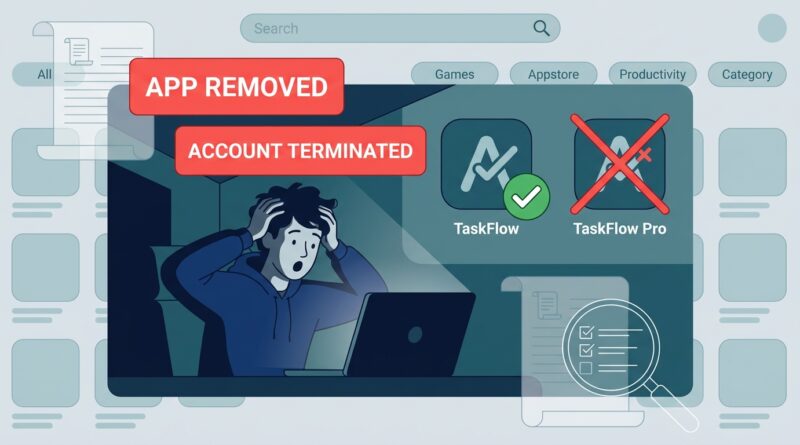
New App Store Name Rules Quietly Turn Your AI App Into A Trademark Takedown Risk: How To Clear Your Brand Before Stores Kill Your Listings Overnight
You finally ship your AI app. Then the email lands. Your listing is pulled, or worse, your developer account is flagged because your app name is “confusingly similar” to someone else’s. That is a brutal way to learn that naming is not just a branding exercise. It is a legal and platform risk. A lot of small teams are getting caught here because app stores are getting stricter about names, while courts are also taking a harder look at lookalike brands. If your app sounds too close, looks too close, or lives in the same category as another product, you can run into trouble fast. The good news is you do not need to be a lawyer to do a smart app name trademark check for AI apps. You just need a simple process, a little skepticism about your “perfect” name, and a habit of checking before you publish instead of after someone complains.
⚡ In a Hurry? Key Takeaways
- Your app can be removed even if you did not copy on purpose. “Too close” is often enough.
- Before launch, search trademark databases, app stores, domains, and social handles for similar names in related product categories.
- A forced rename after launch costs far more than a careful name check at the start, especially for AI apps growing across stores and platforms.
Why developers are getting blindsided
Most founders pick a name the same way they pick a logo. They ask if it sounds smart, looks clean, and has a free domain.
That is not enough anymore.
App stores have always had naming rules, but enforcement is getting sharper. They are watching for copycat behavior, user confusion, keyword stuffing, and names that look like they are riding on somebody else’s reputation. AI apps are especially exposed because so many names reuse the same words. Think “chat,” “gen,” “mind,” “pilot,” “flow,” “smith,” “lab,” or “assist.” One more clever twist on a crowded pattern can be all it takes to trigger a complaint.
The legal standard that often matters is “likelihood of confusion.” That does not mean exact copying. It means a normal person could think the two products are connected, sponsored, or come from the same company.
And yes, that can happen even if your spelling is a little different.
What “likelihood of confusion” actually means in plain English
This phrase sounds intimidating, but the basic idea is simple. If your name is close enough to another brand that customers may mix them up, you have a problem.
It is not just about identical names
Courts and platforms often look at a mix of things:
- How the names sound when spoken out loud
- How they look on screen
- Whether they mean similar things
- Whether the apps serve similar users or solve similar problems
- Whether the branding, icons, or listing copy also feel similar
So “WriteMate AI” and “RightMate AI” could be risky in the same category. “NovaNote” and “NovaNotes” might also be risky if both are productivity tools with AI writing features.
Category overlap matters a lot
If your app is a meditation app named like a farm equipment brand, that may not be a big issue. But if your AI image app has a name close to another AI image app, alarm bells start ringing.
This is why an app name trademark check for AI apps should always focus on similar goods and services, not just exact matches.
Why AI apps face more name trouble than other apps
The AI space is crowded, fast, and full of similar language. Founders naturally drift toward the same naming habits. Short, futuristic, clean. Usually one real word mixed with one techy word.
That creates clusters of names that feel different to the founder but look nearly identical to a reviewer, a trademark examiner, or a frustrated competitor.
There is another issue too. AI apps tend to expand fast. Today you are an image generator. Six months later you also do video, voice, writing, agents, and team collaboration. A name that looked “clear enough” for one niche can become risky when your product spreads into categories where another brand already operates.
The simple pre-launch name check most founders skip
You do not need a law degree to pressure test a name. Start with a practical screen. The goal is not perfect certainty. The goal is to catch obvious danger before your listing goes live.
1. Search the app stores first
Look in Apple’s App Store and Google Play.
Search:
- The exact name
- Common misspellings
- Names that sound the same
- Plural and singular forms
- The name without spaces or punctuation
If you find a close match in the same app category, slow down. Even if that company has no federal trademark registration yet, the store may still care.
2. Search trademark databases
If you are in the U.S., check the USPTO database. If you plan to operate in the UK, EU, Canada, or Australia, check those systems too.
You are looking for:
- Exact matches
- Close phonetic matches
- Marks in software, SaaS, AI, education, design, productivity, or other related classes
Do not panic if you see the same word used for totally unrelated goods. But do pay attention if the mark covers software, online platforms, or AI services.
3. Search Google like a customer would
This sounds obvious, but people often skip it.
Type the name into Google, YouTube, LinkedIn, X, Reddit, Product Hunt, and GitHub. Look for startups, beta products, newsletters, Discord communities, and even open source projects using the same or a very similar name.
Some of the nastiest surprises come from unregistered brands that already built market recognition.
4. Check domains and social handles
If the .com is taken by a company in your space, that is a warning sign. Same for major social handles already in active use.
It does not always mean legal conflict, but it often means practical confusion. And practical confusion turns into support tickets, bad reviews, and store complaints.
5. Say the name out loud
This is the easiest test and one of the most useful.
Call a friend. Say the name once. Ask them to spell it. Then ask what app they think it is. If they confuse it with an existing tool, take that seriously.
Red flags that should make you rename now, not later
Here are the danger signs I would treat as serious:
- A near-identical app name already exists in your category
- Your name differs by one letter, one syllable, or a swapped word
- The other brand has a registered trademark for software or SaaS
- Your icon, color scheme, or app listing also looks similar
- You are adding “AI” to a known brand-like root word
- You chose the name because it reminds people of a popular product
If any of those sound familiar, the cheap move is to rename before launch. The expensive move is to defend it after growth starts.
What kinds of names are safer?
Not all names carry the same risk.
Usually stronger choices
- Made-up words with no obvious copycat vibe
- Unexpected combinations that do not sound like three other tools
- Names that are easy to say but not generic
Usually weaker choices
- Descriptive names like “AI Photo Editor Pro”
- Names built from crowded tech fragments used by everyone else
- Spellings that are intentionally close to a known app
If your name could be mistaken for a feature, a category, or a competitor, it is weaker from both a branding and trademark angle.
Do app stores really care if there is no lawsuit?
Yes. That is the part many developers miss.
Stores do not need to wait for a final court ruling to take action. They can act on policy concerns, complaints, impersonation risk, or evidence that users may be misled. In practice, that means a competitor complaint can create a huge headache long before any judge gets involved.
This is similar to what is happening in online marketplaces more broadly. If you want to see how platforms are getting tougher about lookalike products and branding, the pattern is very clear in New ‘Superfake’ Crackdown Quietly Turns High‑End Dupes Into Legal Red Flags: How To Audit Your Brand Before Marketplaces Name Names. Different market, same lesson. Platforms act fast when confusion and imitation become a trust problem.
What to do if you already launched under a risky name
Do not freeze. Do a quick triage.
Step 1. Gather facts
Find out who the conflicting brand is, what they sell, where they operate, and whether they have registrations.
Step 2. Compare the overlap honestly
Are you both in AI writing? Both in image generation? Both sold through the same store? Be brutally realistic here.
Step 3. Save your branding assets
Back up screenshots, reviews, logos, store copy, help docs, and analytics. If you need to rename, you will want a clean migration plan.
Step 4. Decide whether to fight, coexist, or rename
If the other mark is weak or unrelated, you may have room to respond. If the overlap is strong, a rebrand may be the smarter move.
This is the point where legal advice can save money. Not because every issue becomes a lawsuit, but because one short opinion can stop you from making a very expensive stubborn decision.
A practical naming workflow for founders
If you are still early, use this order:
- Brainstorm 20 to 30 names, not 3.
- Delete anything generic or obviously inspired by a known app.
- Run a fast app store and Google search.
- Check trademark databases in your main markets.
- Check domain and handle availability.
- Test pronunciation and confusion with real people.
- Pick from the safest top three, not just the coolest one.
That one habit can spare you from the awful “rename everything next week” sprint.
At a Glance: Comparison
| Feature/Aspect | Details | Verdict |
|---|---|---|
| Exact app store search | Checks whether similar names already exist in your category and whether users may mix them up. | Do this first. Fast and very useful. |
| Trademark database search | Shows registered marks and pending filings tied to software, SaaS, AI, and related services. | Important before launch, especially if you plan to scale. |
| Generic or trendy AI naming | Names built from crowded terms may feel modern but are more likely to overlap with competitors. | Higher risk. Be more original. |
Conclusion
Naming used to feel like the fun part. For AI apps in 2026, it is also a risk check. That sounds annoying, because it is. But it is much better to spend an afternoon doing an app name trademark check for AI apps than to spend a month fixing a takedown, changing store listings, updating URLs, and explaining a rebrand to confused users. This matters right now because account terminations and forced renames are rising at the same time AI apps and new social platforms are taking off. Too many founders still treat names like a design choice instead of a legal one. A clear, non-lawyer naming process helps you spot trouble early, avoid ugly surprises, and put yourself in a better position if someone later copies your brand too closely. A careful name is not boring. It is insurance for your growth.