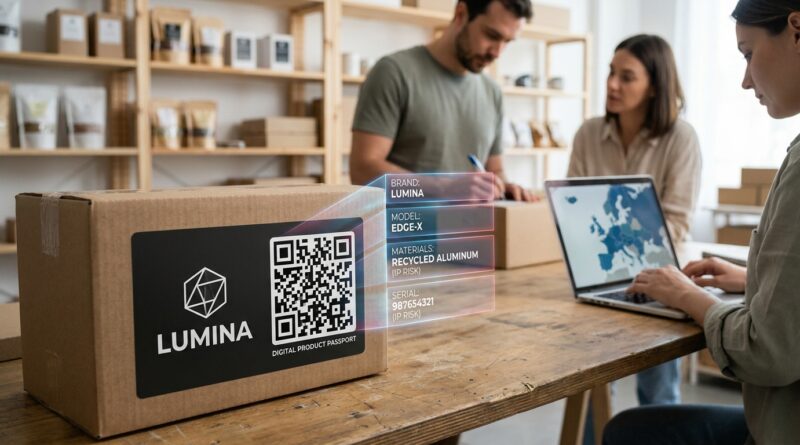
New EU Digital Product Passports Quietly Turn QR Codes Into Trademark Trouble: What US Brands Must Fix On Their Labels Now
If you sell physical products into Europe, this is one of those annoying compliance changes that looks boring until it hits your brand. The EU’s new Digital Product Passport system is starting to turn a simple package QR code into a live record of product details, materials, repair info, claims, and brand language that other people can scan, copy, compare, and reuse. That is the part many US founders are missing. They hear “passport” and think recycling. Regulators, marketplaces, distributors, and copycats hear “structured product database.” If your company name, sub-brand, eco wording, or product descriptors are entered loosely, you can create real digital product passport trademark risk for yourself. A phrase you meant as a brand can start looking generic. A claim on the box can conflict with a claim in the database. A distributor can quietly shorten or rewrite your naming. Once that data spreads, cleaning it up gets harder. Now is the time to lock it down.
⚡ In a Hurry? Key Takeaways
- The EU Digital Product Passport is not just a sustainability label. It can affect trademark strength, product claims, and how marketplaces judge your listings.
- Create one approved brand and claims sheet now, then make factories, distributors, and EU partners copy it exactly into DPP fields and QR-linked records.
- Small wording mistakes can snowball fast because DPP data may be scanned, indexed, and reused across databases you do not control.
Why this suddenly matters
For years, packaging worked like a snapshot. You printed it, shipped it, and changed it later in the next production run. The Digital Product Passport changes that. It turns parts of your packaging into a doorway to live product data.
That sounds helpful, and in many ways it is. Buyers can get repair information. Regulators can check product details faster. Supply chain partners can pass data along with less paperwork.
But there is a catch. Your brand language is no longer stuck on a box. It can now live in searchable fields, shared records, product pages, compliance systems, and reseller tools. That is where digital product passport trademark risk starts to show up.
The hidden trademark problem behind the QR code
Most founders worry about counterfeits when they think about trademarks. Fair enough. But trademark damage often starts in a quieter way. It starts when your own product data makes your brand look less like a brand and more like a description.
Example 1. Your sub-brand starts looking generic
Let’s say you sell a water bottle under the master brand “Northline” and the product family “PureSteel.” If a DPP entry lists “pure steel bottle” in places where a brand field and a material field get mixed up, the phrase can start reading like a product description instead of a source identifier.
That matters because copycats love this argument. If challenged, they may say, “We are not using their brand. We are just describing the product.” You do not want your own passport data helping them make that case.
Example 2. Your eco wording becomes a liability
Founders often put polished marketing copy on packaging. “Planet-safe.” “Low impact.” “Made responsibly.” In a DPP setting, broad language can clash with narrower technical fields. If your QR-linked passport says one thing and your label says another, marketplaces may flag the listing or ask for proof.
Even if you meant well, systems tend to judge based on exact wording, not your intent.
Example 3. Partners “clean up” your naming for you
This one is very common. A distributor, importer, or contract manufacturer fills out a product record and trims your brand style to fit their software. Maybe they remove the trademark symbol. Maybe they shorten a product line name. Maybe they translate it into a phrase that sounds descriptive.
Now that version starts spreading through records and sales channels. You may not even notice until there is a dispute.
Who should worry most
You should pay attention now if you are any of the following:
- A US brand selling consumer goods into the EU
- A private-label seller using Amazon, Zalando, or other marketplaces
- A hardware, apparel, furniture, cosmetics, electronics, or home goods company
- A founder with multiple sub-brands or product families
- A company that uses sustainability or repairability claims in marketing
If your team is small, the risk is often higher, not lower. Big companies usually have legal, packaging, compliance, and channel teams. Small brands often have one operations manager juggling all of it.
The three nasty surprises founders are about to run into
1. Copycats use your own DPP data against you
If your passport records treat brand terms like ordinary product descriptions, a competitor can point to that usage later. They may argue that the term is descriptive, generic, or used inconsistently.
Will one bad field destroy a trademark by itself? Usually no. But a trail of sloppy usage across databases is not something you want to explain in a fight.
2. Marketplaces auto-flag “misleading” claims
Platforms increasingly compare structured data with listing text. If your DPP says “contains recycled aluminum components” but your front-of-box line says “made from recycled aluminum,” that gap may trigger questions.
A human might understand the difference. Automated systems often do not.
3. Distributors rewrite your branding without asking
Once channel partners start entering DPP data, they may create local versions of your naming. Some will do it to save space. Some will do it because their software has odd field limits. Some will do it because translation makes your brand sound more natural in-market.
That convenience can weaken consistency fast.
What the Digital Product Passport actually changes for your labels
The big shift is not just that a QR code appears on the package. The shift is that the QR code points to data fields that may become more important than the printed words beside it.
In practice, this means your label strategy now has to line up with:
- Brand owner name
- Product name
- Model name or number
- Sub-brand or collection name
- Material descriptions
- Sustainability and repair claims
- Importer and distributor information
- Language variants across EU markets
If those items do not match cleanly, you create confusion for buyers and a paper trail for rivals.
A founder-friendly checklist to reduce digital product passport trademark risk
1. Make a master naming sheet
Create a plain English document with the exact approved form of:
- Company name
- House brand
- Sub-brands
- Product family names
- Model names
- Descriptors that are allowed
- Descriptors that are not allowed
Think of this as your single source of truth. Not fancy. Just clear.
2. Separate brands from descriptions
This is the big one. Decide what is a trademark and what is merely a description.
For example:
- Trademark: PURESTEEL
- Description: stainless steel insulated bottle
Do not let those blur together in DPP forms, ERP records, product feeds, or label copy.
3. Review every eco-claim against the actual data fields
If the packaging says “recyclable,” what exactly in the DPP supports that? If the page says “repaired easily,” is there repair scoring or spare part information to back it up?
Cut vague language now. It is better to sound slightly less exciting than to trigger compliance or listing trouble later.
4. Lock down translations
Your English naming might survive intact. Your translated version may not. Ask a trademark-aware local reviewer to check whether translated terms turn your sub-brand into a descriptive phrase.
This is especially important if your product names refer to function, material, color, or quality.
5. Tell partners which fields they may edit, and which they may not
Do not just send artwork files. Send rules. Your distributors and manufacturers should know:
- Which names must appear exactly as provided
- Which fields are technical only
- Which claims need approval before publication
- Who signs off on any local variation
6. Keep screenshots and exports
Whenever a DPP entry goes live, save evidence. Take screenshots. Export records if possible. Keep dates.
If a partner changes your branding later, you will want a clean record of what was approved.
7. Match the box, the listing, and the passport
Read all three side by side. This catches a shocking number of problems. The product box says one thing. Amazon says another. The DPP field says something else entirely.
That mismatch is where brand confusion starts.
8. Check your trademark filings
If a sub-brand is important, make sure you have looked at filing strategy in the EU and other key markets. Many founders spend heavily on packaging and little on protecting the exact naming they use most.
You do not need to file everything everywhere. But you do need to know which names matter enough to protect.
Simple examples of good and bad DPP brand handling
Bad
Brand field: Eco Clean Bottle
Product field: Northline Eco
Materials field: eco aluminum
Claim field: sustainable and non-toxic
This is muddy. It is not clear what is a brand, what is a descriptor, and what can be proven.
Better
Brand field: NORTHLINE
Product family: ECOCLEAN
Product description: reusable aluminum water bottle
Materials field: aluminum body with recycled content percentage listed separately
Claim field: contains 35% recycled aluminum in body
That version is cleaner, easier to defend, and less likely to confuse systems or buyers.
What to do this week if you have a tiny team
You do not need a six-month project plan. Start with a one-hour cleanup.
- Pick your top 10 EU-selling products.
- Write the exact approved brand and product names for each.
- List every eco or durability claim on the package and website.
- Compare those claims with the structured data your partners are likely to enter.
- Email your importer, manufacturer, and distributor with a “do not edit branding without approval” note.
That alone will put you ahead of many brands that are still treating this like a minor packaging update.
At a Glance: Comparison
| Feature/Aspect | Details | Verdict |
|---|---|---|
| Brand names in DPP fields | If trademarks and descriptions are mixed together, your brand may look generic or descriptive. | Use exact approved naming and keep brand fields separate from product descriptors. |
| Eco and product claims | Broad packaging claims may conflict with narrower technical passport data and trigger marketplace flags. | Only use claims that match the underlying DPP record and can be backed up. |
| Partner-entered data | Distributors and factories may shorten, translate, or “tidy up” your branding inside their systems. | Send a naming guide now and require approval for any edits. |
Conclusion
The tricky part here is that nothing about the Digital Product Passport looks dramatic at first glance. It is just a QR code, a record, a few required fields. But the EU’s new Digital Product Passport registry quietly went live this week, and product data is about to spread across QR codes, databases and supply chain tools far beyond your control. That is why this is worth your attention now. If you get ahead of how your brand name, sub-brands, eco-claims and design cues show up in that passport, you can avoid three ugly problems later: copycats using your own DPP data to argue your mark is descriptive, marketplaces auto-flagging you for “misleading” claims based on DPP fields, and distributors quietly tweaking your branding inside their own entries. The good news is that this is fixable. A simple checklist, one approved naming sheet, and a quick review of your claims can give even a small team something practical to do this week before partners, factories and platforms start filling those fields in for you.