New Marketplace ‘Repeat Offender’ Rules Quietly Flip The Script On Trademark Takedowns: How To Get Platforms On Your Side Fast
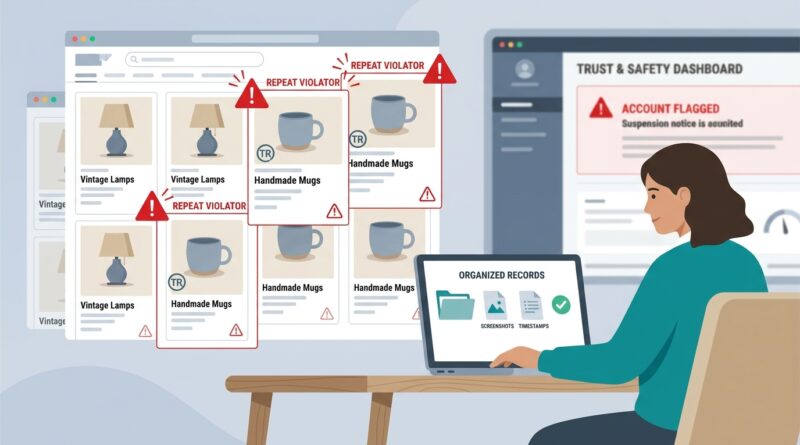
You finally get a counterfeit or copycat listing removed, take a breath, and then see the same seller back the next day under a slightly different store name. Same product. Same stolen photos. Same trademark abuse. That kind of repeat mess wears people down fast, especially small brands that do not have a full legal team sitting around waiting to file takedowns. The good news is that many platforms now have some version of an online marketplace trademark repeat offender policy, even if they do not advertise it very loudly. That changes the game. Instead of treating each bad listing like a separate fire, you can start showing the platform a pattern. Once you package repeat violations the right way, you are no longer asking for one listing to come down. You are asking the platform to act against the account network behind it. That is often the point where trust and safety teams actually pay attention.
⚡ In a Hurry? Key Takeaways
- Winning one takedown at a time is not enough. Use the platform’s repeat offender rules to push for seller-level action, not just listing removal.
- Start keeping a simple evidence file that links store names, product photos, domains, social accounts, keywords, and relisted items in one timeline.
- Do not overclaim. Clean, accurate proof gets better results than angry messages or giant folders full of unrelated screenshots.
The quiet shift most brands are missing
Most founders still file trademark complaints one listing at a time. That used to be the only realistic option. You spot an infringing listing, fill out a form, attach your registration, and hope for the best.
But platforms got tired of repeat abuse too. Not because they suddenly became heroes, but because repeat offenders create chargebacks, user complaints, ad trust issues, and legal risk. So a lot of marketplaces now track patterns across accounts, listings, IP addresses, payment methods, images, and seller behavior.
That is why the online marketplace trademark repeat offender policy matters. It gives you a better angle. You are not just saying, “Please remove this.” You are saying, “This seller or cluster of sellers keeps violating the same trademark, and here is the pattern.”
That is a much stronger ask.
Why one-off takedowns keep failing
Bad actors have gotten better at staying slippery. They rotate seller names. They swap a logo color. They crop images. They move from one storefront to another. Some even use AI-generated brand marks that look close enough to confuse automated filters but different enough to dodge exact matches.
If your report only covers one listing, the platform may remove that one URL and close the ticket. From their point of view, the issue is solved.
From your point of view, nothing is solved.
What platforms usually need to see
To trigger stronger action, marketplaces often need signs of repeated, connected abuse such as:
- Multiple infringing listings tied to the same seller account
- New seller accounts using the same images, text, or packaging
- Repeated misuse of your trademark in titles, tags, or product descriptions
- Matching contact details, websites, or social media pages
- A clear timeline showing listings removed, then relisted again
This is where brand owners usually leave money on the table. They have the proof, but it is scattered across email, screenshots, browser tabs, and late-night frustration.
How to build a repeat offender file that gets attention
You do not need fancy software to do this well. A spreadsheet, a cloud folder, and some discipline are enough for most small brands.
1. Start with a simple master sheet
Create columns for:
- Date found
- Platform
- Listing URL
- Seller name
- Product title
- How your trademark is being used
- Evidence type, such as screenshot, image match, domain link, or social profile
- Date reported
- Platform response
- Date relisted, if it comes back
This gives you a timeline. Timelines matter because they show repetition, not just infringement.
2. Save screenshots like a grown-up, not like a panicked shopper
Each screenshot should include the full page when possible, the URL, the seller name, the date, and the product title. If the platform shows seller IDs, grab those too.
Name files clearly. Something like: amazon-sellerABC-listing123-2026-07-23.jpg.
That sounds boring. It also saves hours later.
3. Link related identities
This is the part that flips the script. If Seller A disappears and Seller B appears with the same photos, same product bundle, same typo, and same Instagram handle, document the connection.
Useful links include:
- Same product photos across accounts
- Same WhatsApp number or email
- Same shipping origin
- Same website listed in seller bio
- Same model numbers or SKU patterns
- Same misspellings or odd phrasing in descriptions
You are building a pattern case, not just a listing case.
What to say in the escalation request
Once you have at least a few linked incidents, stop filing them only as isolated reports. Send an escalation that is short, organized, and specific.
Use this structure
Subject: Repeat trademark infringement by linked seller accounts
Opening: State that you are the trademark owner or authorized representative and that previous takedowns have not stopped recurring infringement.
Middle: List the accounts, URLs, and dates of prior removals. Explain the links between the sellers in plain English.
Ask: Request review under the platform’s repeat offender or seller abuse policy, including account-level action and monitoring of relisted items using your mark.
Attachments: Include a summary PDF or spreadsheet plus the strongest screenshots. Do not dump 200 random files into the ticket.
A sample plain-English ask
“We have reported and removed 11 listings using our registered trademark over the past 45 days. The same products have reappeared through three seller accounts that share identical product images, overlapping contact details, and repeated use of our mark in listing titles. We request review under your repeat offender policy and account-level enforcement, not only removal of the current URLs.”
That is calm. Specific. Harder to ignore.
Where founders often mess this up
A lot of valid complaints get weaker because the presentation is messy.
Common mistakes
- Reporting every annoyance as trademark infringement, even when it may be a copyright or unfair competition issue instead
- Sending emotional messages without a clean evidence summary
- Failing to connect old takedowns to new relistings
- Ignoring off-platform clues like linked websites or social pages
- Waiting too long to organize the evidence
If you can make the reviewer’s job easier, you raise your odds. Trust and safety teams are busy. A neat package stands out.
Go beyond the listing if money is still flowing
Sometimes the marketplace acts slowly because the seller can still collect money somewhere else. That is why it helps to think wider than one storefront. If the same operator is using a domain, payment links, or outside checkout pages, you may have another pressure point.
A useful next read here is New WIPO ‘Alert Pay’ System Could Quietly Cut Off Counterfeiters’ Cash: What Small Brands Need To Do Now. Cutting off payment channels can matter just as much as getting a listing removed. Sometimes more.
How fast should you escalate?
Do not wait for twenty repeats if the pattern is already obvious.
A practical rule of thumb
- 1 incident: file a standard takedown
- 2 to 3 linked incidents: start a repeat offender file
- 3 or more linked relistings, or multiple linked seller accounts: escalate for account-level review
If the abuse is happening on a high-volume keyword that affects your main sales, escalate earlier. Speed matters when the listings are siphoning traffic every day.
What “success” actually looks like
Success is not always a dramatic email saying the seller has been banished forever. Platforms are often vague.
But these are good signs:
- Multiple listings disappear at once
- A seller storefront goes dark
- New listings using your exact mark get blocked faster
- Your reports start getting approved with less back-and-forth
- Keyword hijacking around your brand name drops
In other words, the platform starts treating you like a known, credible reporter instead of a random person filling out forms.
At a Glance: Comparison
| Feature/Aspect | Details | Verdict |
|---|---|---|
| One-off takedown | Targets a single listing or URL, usually fast but narrow in scope | Useful first step, weak long term if the seller keeps relisting |
| Repeat offender escalation | Shows a pattern across listings, stores, images, domains, or social accounts | Best route for pushing account-level action |
| Off-platform pressure | Targets related websites or payment channels when marketplace action is slow | Smart backup plan that can cut off the seller’s ability to keep profiting |
Conclusion
If you feel stuck playing whack-a-mole, you are not imagining it. Small brands really are spending too many hours filing individual reports while bad actors rotate store names, images, and AI-generated logos to stay one step ahead of basic filters. The fix is not filing more frantic takedowns. It is documenting repeat behavior in a way platforms can act on. Once you connect the listings, domains, social profiles, and relisting pattern into one clear escalation request, you stop looking like a series of isolated complaints and start looking like a credible brand reporting organized abuse. That shift can get a seller banned, improve how your future reports are handled, and help keep copycats off your keyword for good.