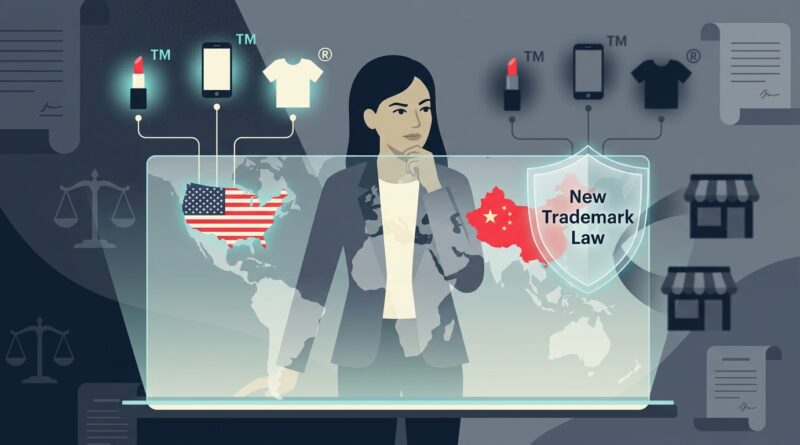
China’s New Trademark Crackdown On ‘Bad Faith’ Filings: What Small US Brands Must Do Before Going Digital In China
You do all the hard work. You name the business, build the site, grow a following, maybe even line up a factory or a marketplace launch. Then you find out someone in China already registered your brand name. Not because they built anything with it, but because they got there first. It is a brutal surprise, and for small US brands it can turn a smart expansion plan into a legal mess overnight.
The good news is that China’s trademark system is moving in a stricter direction. A new Trademark Law expected to be adopted and implemented in 2026 is aimed at bad faith filings, serial squatters, and misuse of trademark rights on ecommerce platforms. That does not mean foreign brands can relax. It means the window to act early is open right now. If you plan to sell into China, manufacture there, work with distributors, or offer digital services that touch the market, you should treat trademark filing as a first step, not a cleanup job.
⚡ In a Hurry? Key Takeaways
- China’s 2026 trademark law changes should help against bad faith filings, but small foreign brands still need to file early because China largely remains a first-to-file system.
- Before you sell, manufacture, or market in China, register your English mark, a Chinese brand name, and the right product and service classes.
- Waiting is risky. A factory, reseller, distributor, or serial squatter can grab your mark first and make listings, enforcement, and expansion far more expensive.
Why this matters more than ever
For years, one ugly pattern kept repeating. A small foreign brand would get traction online, start sourcing from China, or plan a cross-border ecommerce push. Then a third party would file the trademark in China first. Sometimes it was a reseller. Sometimes a former partner. Sometimes a full-time squatter filing hundreds of marks they never planned to use.
Once that happened, the real brand owner had bad options. Pay the squatter. Fight a long legal battle. Rebrand for China. Or give up on the market.
That is why the search term matters here. China 2026 trademark law bad faith filings for foreign brands is not just a legal story. It is a business survival story.
What is changing in China’s trademark system
China is pushing toward a more use-driven system with tougher treatment of bad faith applications. In plain English, the rules are moving closer to this idea: if someone files marks in bulk, has no real plan to use them, or uses registrations to harass others or game platforms, authorities should have more tools to stop that.
Bad faith filers are getting more attention
The coming changes are designed to make life harder for serial squatters. That includes applicants who file large numbers of marks without a real business reason, especially where the pattern suggests stockpiling or hostage-taking.
That is good news. But do not confuse “harder for squatters” with “safe to wait.” A stronger law helps when you need to challenge a bad filing. It does not beat filing first yourself.
Use matters more
China has traditionally been known as a first-to-file country. That basic reality still matters. But the system is also putting more weight on genuine use and legitimate filing behavior. Over time, that should make it easier to attack filings that were clearly made in bad faith and not tied to actual business activity.
Platform abuse is also in the spotlight
One of the biggest practical headaches for brands is not just the registration certificate. It is what a bad actor does with it. They can use a China registration to file complaints on marketplaces, block listings, pressure distributors, or create confusion with copycat products. The expected reforms are meant to strengthen tools against this kind of abuse too.
Why small US brands are especially exposed
Big companies usually have international filing plans. Small brands often do not. They grow in steps. First a Shopify store. Then Amazon. Then a sourcing relationship. Then maybe TikTok Shop, a local partner, or a cross-border push.
That step-by-step growth is exactly why they get caught.
You may already be “in China” before you think you are
If your products are made there, samples are moving through factories there, your brand appears on packaging there, or a sourcing agent knows your plans, your trademark risk has already started.
You do not need a China office or Chinese customers to become a target.
Digital brands are not immune
Software, online education, beauty brands, health products, lifestyle accessories, and creator-led product lines often think trademark trouble is mainly for big consumer goods companies. It is not. If your brand lives online, it can be copied online too.
A squatter does not need your whole business. They just need enough paperwork to cause trouble.
What “bad faith” usually looks like in real life
Bad faith filings sound abstract until you see the pattern. Here are the common versions small brands run into:
The factory filing
A manufacturer learns your product name early and files it before you do. Later, you are told that changing factories or selling under that name in China will be “difficult.”
The distributor filing
A local partner claims they filed “for convenience” or “to help market entry.” Then the relationship sours and they keep control.
The reseller or marketplace operator filing
Someone selling your product, or a lookalike product, grabs the mark and then uses it to interfere with your listings.
The serial squatter filing
This is the classic trademark hoarder. They file lots of foreign-sounding marks, wait for brand owners to notice, and then ask for money.
What small US brands should do before going digital in China
This is the part that saves money and stress. If China is even a medium-term possibility, build a filing plan before the public launch, not after.
1. File early, ideally before public exposure
If you are discussing Chinese manufacturing, preparing marketplace entry, attending trade shows, or announcing expansion, file first. Public visibility invites copycats.
Early filing usually costs less than one dispute. Much less.
2. Register both your English name and a Chinese name
This is where many small brands trip up. Consumers, partners, and sellers in China often create a Chinese version of a foreign brand name if the company does not provide one. That means the market may choose your identity for you.
You want to control that process.
Your Chinese mark might be:
- A sound-based version that resembles your English name
- A meaning-based version that captures your brand idea
- A mix of both
If you do not pick one, someone else may.
3. File in the right classes and subclasses
This is a big one. China’s classification practice can be more granular than many US brand owners expect. Filing in one broad class may not protect you where you actually do business.
For example, a skincare brand might need to think beyond the obvious goods class and consider related services, ecommerce uses, or adjacent product types if expansion is likely.
This is not the moment to save a few hundred dollars and guess.
4. Check for conflicts before you commit
Do a clearance search before you invest in packaging, domains, seller onboarding, or local promotion. You want to know if:
- Your exact mark is already registered
- A confusingly similar mark exists
- Your Chinese version is already taken
- A partner or supplier has filed something suspiciously close
5. Put IP language into factory and distributor contracts
Do not rely on trust and a handshake. Your agreements should clearly say that the factory, sourcing company, distributor, and any local marketing partner have no ownership rights in your trademarks, Chinese brand names, domains, or marketplace accounts.
Also state that they cannot file them in their own name.
6. Watch marketplaces and filing databases
Protection is not a one-time chore. Once your brand gains traction, set up monitoring for new filings and major ecommerce listings. The earlier you spot a problem, the more options you usually have.
7. Keep proof of real use and business plans
As China shifts toward a more use-focused approach, records matter. Keep launch plans, product photos, contracts, invoices, packaging files, marketing materials, and screenshots of real brand activity. If you ever need to show legitimacy, that paper trail helps.
What if someone already registered your mark in China?
First, do not panic. But do not ignore it either.
Look at who filed it and how they behave
If the applicant has a history of filing many unrelated brands, that may support a bad faith argument. If they are your former factory, distributor, or reseller, the facts may also help you challenge the registration or negotiate from a stronger position.
Check the filing date, class, and use
Not every registration blocks everything. The scope matters. A mark in the wrong class may be annoying but manageable. A mark covering your exact goods or key online channels is more serious.
Talk to China trademark counsel before contacting the filer
This is one of those cases where a quick angry email can make things worse. A lawyer who works in China trademark practice can assess whether opposition, invalidation, non-use cancellation, or a targeted negotiation makes the most sense.
The cheapest-looking path is not always the cheapest in the end.
What the 2026 changes do and do not fix
The expected law changes are promising. They should give better tools to go after abusive filers and strengthen the case against people who weaponize trademarks without real use. That is real progress.
But here is the plain-English truth. The new rules do not turn China into a place where foreign brands can safely wait until after launch.
Think of it like better locks on the door. Helpful, yes. But you still need to lock the door.
A simple pre-expansion checklist
If you want the short version, use this before you go digital in China:
- Choose your English mark carefully and check if it is clear in China
- Create a Chinese brand name you actually want to use
- File both names in the right classes and subclasses
- Sign factory and distributor agreements with clear IP ownership terms
- Keep records showing genuine use and launch plans
- Monitor trademark filings and marketplace listings
- Have a response plan if a copycat or squatter appears
At a Glance: Comparison
| Feature/Aspect | Details | Verdict |
|---|---|---|
| Waiting to file | Cheaper in the short term, but exposes your brand to squatters, partners, and marketplace abuse before launch. | High risk. Avoid if China is even a realistic future market. |
| Early strategic filing | Registering English and Chinese marks in the right classes before public expansion or manufacturing activity ramps up. | Best move for most small brands. |
| Relying on the 2026 law changes alone | New rules should help against bad faith filings, but challenges still take time and evidence. | Helpful backup, not a substitute for filing first. |
Conclusion
China is moving toward a stricter, more use-driven trademark system, and that is good news for legitimate brands. The expected 2026 Trademark Law should make life harder for serial squatters and give better tools against bad faith filings and platform abuse. Still, the smart move for small US brands is not to sit back and hope the law saves them later. It is to get protection in place before the factory relationship deepens, before the distributor starts selling, and before your first big marketplace push. If your business depends on Chinese manufacturing, cross-border ecommerce, or digital services, now is the time to lock in your core brand and your Chinese brand identity. Do that early, and you cut down the two biggest risks by a mile. Losing your name in a key market, and watching copycats damage your online reputation while you fight to catch up.