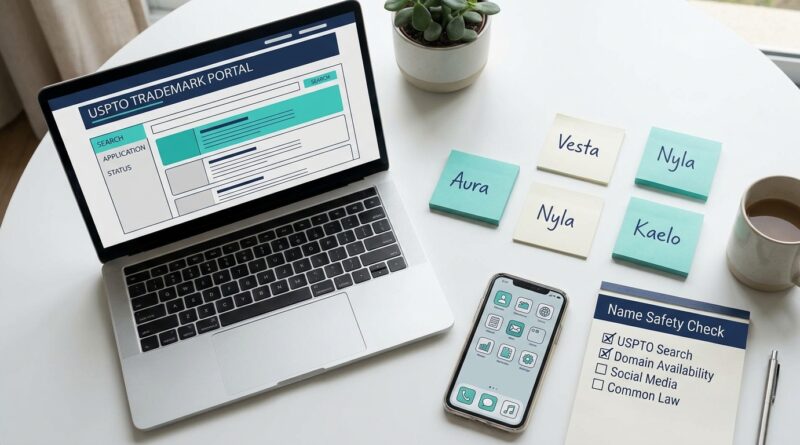
New USPTO TMEP Update: The Quiet Rule Change That Could Kill Your Next Digital Brand Name
You pick a name. You buy the domain. You set up the landing page, the socials, maybe even the app listing. Then months later the USPTO sends back a refusal that reads like it was written for a different internet than the one you are building on. That is the maddening part here. Nothing felt risky when you started. But the USPTO TMEP 2026 update trademark rules for digital brands quietly changed how examiners look at online goods, software services, screenshots, and names that sit too close to apps, platforms, and marketplaces already on file.
This is not the kind of change that trends on founder Twitter. It is the kind that causes a painful office action after you already printed stickers, pitched investors, or built an audience around a name. The good news is you do not need to become a trademark lawyer to avoid the most common mistakes. You do need to tighten your wording, rethink what counts as proof of use, and stop assuming a domain name or app store page means your filing is safe.
⚡ In a Hurry? Key Takeaways
- The late May 2026 USPTO TMEP update makes digital trademark filings easier to mess up, especially for app names, SaaS brands, marketplaces, and online services.
- Before filing, rewrite your goods and services description in plain, specific language and make sure your screenshot specimen shows the mark tied to a real product or service, not just a logo on a web page.
- This is a hidden-cost problem. Fixing it early can save you from refusals, delays, and a rebrand after launch.
Why this quiet update matters so much
The TMEP is the USPTO’s instruction manual for examiners. Most small business owners never read it, and honestly, most should not have to. But when that manual gets updated to reflect newer decisions, the people reviewing your application may start applying stricter logic than the template you copied six months ago.
That is what happened here. The end of May 2026 update pulled in newer guidance that hits digital brands hardest. If your business lives on a screen, this matters.
Think about how many modern brands blur categories. Is your product downloadable software, a non-downloadable software service, an online marketplace, a content platform, a subscription community, or all five by the second quarter? That blurry reality is exactly where applications get into trouble.
The three places digital founders are most likely to get burned
1. Your goods and services description is too vague
Older DIY playbooks often used broad wording like “downloadable software,” “online platform,” or “providing technology services.” That used to feel normal. Now it is more likely to trigger questions.
Examiners want to know what the software does, who uses it, and whether it is downloadable or delivered as a service. “Software for business” is weak. “Downloadable mobile application for scheduling home cleaning services” is much better. “Providing temporary use of non-downloadable software for scheduling home cleaning services” is different again, and that difference matters.
If you mix them up, you can end up in the wrong class, with the wrong specimen, or with a refusal that costs time and filing fees.
2. Your screenshot does not actually show trademark use
This is one of the sneakiest problems in the USPTO TMEP 2026 update trademark rules for digital brands. Founders often submit a homepage, splash screen, or pretty app mockup and assume it proves use in commerce.
Sometimes it does not.
For software and online services, the specimen usually needs to show the mark used in a way that creates a direct connection to the product or service. A logo floating on a landing page is not always enough. A page that shows the mark, explains the service, and gives users a way to download, sign up, access, or use it is stronger. App store listings can help, but only if they clearly tie the brand name to the software being offered.
If your screenshot looks like an ad for a future product instead of evidence of a current one, you are asking for trouble.
3. Your name is “different” only in ways the USPTO may not care about
This one hurts because it catches people who did at least some homework. You searched the domain. You checked social handles. Maybe you even looked in the trademark database. But confusion analysis is not limited to exact matches.
The newer guidance folds in more real-world decisions on when app names, software tools, marketplaces, and related online services are close enough to confuse buyers. If your name shares the main sound, the main idea, or a dominant word with an existing mark in a related digital category, the fact that yours is “for creators” and theirs is “for sellers” may not save you.
And adding “app,” “HQ,” “cloud,” “studio,” or “AI” usually does not fix it.
What changed in plain English
The short version is this. Examiners are looking more carefully at three things.
- Whether your description really matches what you sell.
- Whether your specimen proves current trademark use for that exact category.
- Whether your digital brand name is too close to an existing mark in a nearby lane.
That sounds simple, but it changes the practical filing strategy for founders.
Before, people often filed broad and cleaned it up later. Now that can backfire. Before, people used whatever screenshot was handy. Now the “proof” part needs more planning. Before, people treated app names and SaaS names as if they lived in different worlds. Examiners may see them as closer neighbors than you do.
How to name a digital brand more safely now
Start with distinctiveness, not vibes
A name can feel perfect and still be weak. The safest names are usually the ones that are invented, unexpected, or only indirectly related to what you do. The riskiest names are descriptive ones that say exactly what the product is.
“TaskBoard” for project software sounds clean, but it may be weak and crowded. A more distinctive name has a better chance of registration and a better chance of standing out.
Search wider than exact matches
Do not just search the exact name. Search sound-alikes, spacing changes, misspellings, singular and plural forms, and versions with common tech add-ons. Also search for similar names in related classes, not just your preferred one.
If you are launching a marketplace, check software. If you are launching software, check platform services. If you are launching a creator tool, check educational and business services too.
Be careful with taglines that explain too much
This surprises people. A tagline meant to clarify your product can also make your overlap with another mark look more obvious. If your brand name is borderline, a highly descriptive tagline may not help. It can actually hand the examiner a cleaner story for why buyers might be confused.
How to write better descriptions for digital goods and services
Here is the easiest way to think about it. Answer three questions.
- Is it downloadable, or do people access it online?
- What does it do?
- Who or what is it for?
Examples:
- Weak: Downloadable software.
- Better: Downloadable software for editing short-form marketing videos.
- Weak: Online platform for creators.
- Better: Providing temporary use of non-downloadable software for creators to schedule, publish, and track paid subscriber content.
- Weak: Marketplace services.
- Better: Providing an online marketplace for buyers and sellers of vintage clothing.
The point is not to write a novel. The point is to stop being fuzzy.
What a stronger specimen looks like
If you are filing based on use, pause and review your screenshots like a skeptical examiner would.
For downloadable software
A good specimen often shows the mark on a page where users can download or buy the software, such as an app store page or a website page with clear download access and product details.
For SaaS or non-downloadable software
A good specimen often shows the mark where users actually access the service, sign in, start a trial, subscribe, or see the service being offered in a live commercial context.
For marketplaces and online services
A good specimen should show the mark tied to the actual service. Not just branding. Not just a social profile. It should make clear what the service is and that the service is available now.
A coming soon page is usually weak. A mockup from Figma is worse. A screenshot that only shows your logo in the top corner of a generic website can also fail.
A practical pre-filing checklist for 2026
- Make sure your name is not just available as a domain, but reasonably clear in trademark terms.
- Decide whether you are selling downloadable software, non-downloadable software, services, or some mix.
- Write a specific goods and services description for each filing basis and class.
- Collect screenshots that show real use, not placeholder marketing.
- Check whether your tagline helps or hurts.
- Review close names in related digital categories, not just exact competitors.
- If a filing service gives you canned wording from last year, push back.
What small brands should do if they already filed
Do not panic. An office action is frustrating, but it is not always the end.
If you already filed and you are waiting, gather better specimens now. Rewrite your product description in plain English. Save screenshots that show current use, sign-up flow, app listings, checkout pages, and account-access screens. If a refusal comes in, you want options ready.
If you recently launched under a name that feels a little close to another digital brand, now is the moment to get an honest risk check. It is much cheaper to adjust a listing page and investor deck than to rebrand after your audience gets attached.
When it is worth paying for legal help
If your brand is central to a funded startup, a product line, or a creator business with licensing potential, this is one of those moments where paying for targeted legal advice can save real money. You do not always need a huge law firm. But a good trademark attorney can help you choose the class, tighten the wording, and pick specimens that actually fit current practice.
That is especially useful now because the danger is not obvious. The filing can look clean at submission and still run into trouble months later.
At a Glance: Comparison
| Feature/Aspect | Details | Verdict |
|---|---|---|
| Goods/services wording | Broad labels like “software” or “online platform” are more likely to draw questions. Specific function-based wording is safer. | Be precise before you file. |
| Digital specimens | Landing pages, mockups, and branding-only screenshots may not prove trademark use. The mark should connect clearly to a live product or service. | Use real-world screenshots, not marketing placeholders. |
| Name conflict analysis | Apps, SaaS tools, and marketplaces can be treated as closely related, even if your business model feels different. | Search beyond exact matches and beyond your narrow niche. |
Conclusion
The late May 2026 USPTO update is exactly the kind of low-drama rule change that catches small brands off guard. It does not look scary when you are buying a domain or designing a logo. The pain shows up later, when an examiner questions your wording, rejects your screenshot, or says your app name is too close to another digital service. That is why this matters now. If you tighten your descriptions, choose specimens that clearly show real use, and pressure-test your name before it gets baked into packaging, app store listings, and investor decks, you can avoid a lot of expensive cleanup. The upside is simple. A little extra care at the filing stage gives your brand a better shot at staying yours.