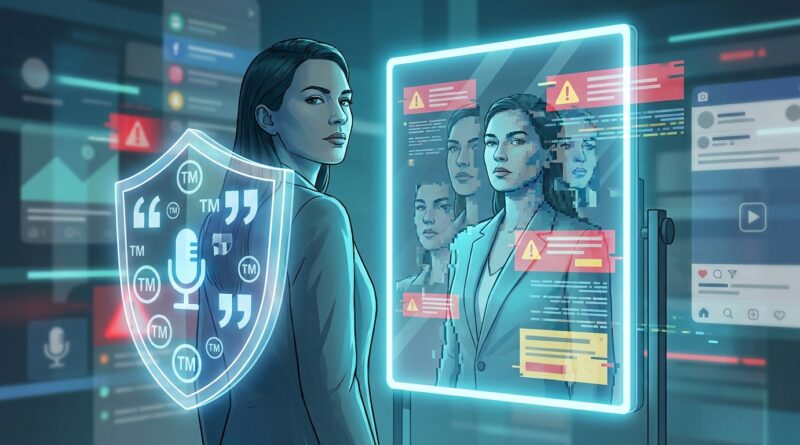
New Wave Of ‘AI Clone’ Trademarks: How To Quietly Lock Down Your Voice, Face And Persona Before A Deepfake Does
It is a horrible feeling to imagine your own face or voice selling something you never touched. Worse, it is no longer some sci-fi problem for movie stars. A creator with a decent podcast mic, a founder with a few LinkedIn videos, or a coach with a popular Instagram page can now be copied fast and cheaply. Someone can lift your clips, train a voice model, fake your on-camera style, and push out scam ads before you even know it happened. If you are wondering about trademark protection for AI deepfakes of my voice and image, the short answer is this. Yes, trademarks can help, especially when your name, slogans, signature phrases, brand style, and even certain likeness-based uses are tied to commerce. They are not a magic shield, but they can give you a cleaner path to challenge imposters. The smart move is to start before the clone shows up, not after.
⚡ In a Hurry? Key Takeaways
- Trademark protection can help fight AI deepfakes of your voice and image, especially when tied to your brand, content, products, and public identity.
- Start by filing for your name, brand name, catchphrases, show title, and any consistent commercial identity markers before bad actors copy them.
- Trademarks work best alongside publicity rights, copyright, platform takedowns, and strong evidence that your audience connects the persona to you.
Why this suddenly matters to regular people, not just celebrities
For years, brand protection meant logos, product names, maybe a slogan.
Now the brand is often you.
Your voice on a podcast. Your face on TikTok. Your teaching style on YouTube. Your little intro line that followers instantly recognize. Those things have business value, and AI tools can copy them at a speed the law was not built for.
That is why more public figures are trying to lock down voice, image, and persona rights in more formal ways. If you saw the recent buzz around Taylor Swift Just Turned Her Voice Into a Trademark: What This New ‘AI Likeness’ Trend Means For Small Brands, that is the bigger lesson. This is not just celebrity housekeeping. It is a warning shot for everyone building a public-facing business.
What trademarks can actually do in an AI clone mess
Let’s keep this simple. A trademark is about source. It tells buyers who something comes from.
That matters a lot with deepfakes.
If someone uses your cloned voice in an ad, the harm is often not just that they copied you. The harm is that viewers think you approved it, made it, or are connected to it. That is classic brand confusion territory, which is where trademark law can become useful.
Trademarks may help protect:
Your personal name, stage name, or business name.
Your podcast or channel title.
Your catchphrase or repeated sign-off.
Your logo and visual branding.
In some cases, a distinctive persona element used in commerce.
Trademarks may not fully protect:
Your raw face by itself.
Your voice in every possible context.
A one-off fake meme that does not create commercial confusion.
Political or parody uses, which can get legally messy fast.
So if you are searching for trademark protection for AI deepfakes of my voice and image, the real answer is that trademark is one important tool. Not the only tool. But often the most practical one when the fake is being used to sell, promote, endorse, or impersonate.
The three legal buckets most people confuse
A lot of people hear “my likeness was copied” and assume one law covers everything. It does not.
1. Trademark
Best when the fake creates confusion about endorsement, origin, sponsorship, or affiliation.
2. Right of publicity or name-image-likeness rights
Best when someone uses your identity, face, voice, or persona without permission, especially for commercial gain. These rules vary a lot by state and country.
3. Copyright
Best when someone copied your original recordings, videos, photos, scripts, music, or other creative works. Copyright usually does not protect your face or voice as abstract traits. It protects the fixed work.
In real life, these often overlap. A scammer might steal your video clips, clone your voice, and sell a fake course using your name. That could trigger copyright, trademark, publicity rights, platform fraud rules, and consumer protection issues all at once.
What you should lock down first
If you are a solo founder, creator, consultant, coach, musician, streamer, or small brand, you do not need a giant legal budget to start being smarter here.
Your name
If your audience knows you by your real name or stage name, that is usually the first thing to review for trademark filing. Especially if you sell services, courses, content, events, merchandise, or software under that name.
Your show or channel title
If your podcast, YouTube series, or newsletter has a distinct name, that may be an easier and stronger trademark asset than trying to claim broad rights in your general persona.
Your signature phrase
Some people are recognized by a repeated line, sign-off, or hook. If it is tied to your commercial identity, it may be worth protecting.
Your brand visuals
Profile images, logos, banners, and recurring visual elements matter because fake ads often mimic the whole package, not just your face.
Your evidence
Keep records showing that the public connects these elements to you. Save screenshots, testimonials, press mentions, product pages, and dated content archives. If trouble starts, proof matters.
What “voice and image trademarking” really looks like
This is where things get tricky.
You usually do not just file one magical application that says “my face and voice are mine forever.” The system is more specific than that. You file around the commercial markers that identify you in the market.
That can include:
A personal brand name used on services or goods.
A stylized signature.
A recurring spoken phrase used in ads or content.
A character name or branded persona.
A logo or visual mark tied to your public identity.
For some people, the better strategy is not trying to trademark the human trait itself. It is building a fence around the business identity that makes the fake useful to scammers in the first place.
Why bad actors love the grey zone
Deepfake scammers do not need perfect copies. They just need “good enough” copies.
If a fake video sounds almost like you, looks vaguely like you, and uses your logo and profile style, plenty of people will believe it. By the time you send complaints, the ad spend may already be burned and the damage to trust may already be done.
That is why a quiet legal paper trail matters. Registered rights can make takedown requests stronger. They can also help when platforms, payment processors, marketplaces, or app stores want proof that you actually own the brand identity being abused.
A practical starter checklist for creators and founders
1. Audit what people associate with you
Write down your public identity assets. Name, handle, show title, slogans, product names, logo, recurring phrases, visual look, and any branded persona.
2. Search before you file
Check whether someone else already owns similar marks in your category. A trademark lawyer can help, but even a basic screening search is better than guessing.
3. File the highest-value marks first
If budget is tight, start with the assets most likely to be used in impersonation or scams.
4. Save proof of use
Keep dated examples showing you use the mark in commerce. This can be product pages, sales pages, social bios, video intros, podcast covers, and invoices.
5. Write platform-ready takedown language now
Do not wait for panic mode. Prepare a simple rights enforcement template for Meta, YouTube, TikTok, X, marketplaces, and ad platforms.
6. Reserve your digital territory
Grab key domains, social handles, and obvious username variations if available. A lot of impersonation starts there.
7. Add clear public disclaimers
Tell your audience where you do and do not post, what products you officially sell, and that you do not approve random investment ads, miracle cures, or crypto offers.
What this will not solve
It is worth being honest here. Trademark filings will not stop every fake.
They will not stop someone from making a noncommercial joke video in every case. They will not erase every AI clone tool. They will not make platforms move at lightning speed.
But they can do three very useful things.
They give you clearer ownership claims.
They make enforcement easier when the fake is tied to selling or endorsement.
They show you took brand protection seriously before the mess started.
When to get legal help instead of guessing
If your income depends on your public identity, this is one of those times where professional advice can save money later.
Get help sooner if:
You are already seeing impersonation.
You sell under your personal name.
Your audience strongly recognizes your voice or image.
You license your likeness, content, or speaking work.
You plan to launch merch, software, courses, or branded media.
A good trademark attorney can help map out what is actually registrable, what belongs under publicity rights, and what evidence you need for enforcement.
At a Glance: Comparison
| Feature/Aspect | Details | Verdict |
|---|---|---|
| Trademark protection | Best for fighting fake endorsements, confusing ads, copied brand identity, and impersonation tied to commerce. | Strong first line of defense for creators and founders. |
| Publicity or NIL rights | Useful when someone exploits your face, voice, or persona commercially without permission. Rules vary by location. | Important backup, but less uniform and sometimes harder to use fast. |
| Copyright claims | Helps when actual recordings, videos, photos, scripts, or music were copied to build or promote the fake. | Very useful in combo with trademark, but not enough on its own. |
Conclusion
The big shift is not that celebrities are getting fancy with paperwork. It is that voice, face, and persona are now business assets that can be copied at scale. In the last few weeks, high-profile personalities have moved to trademark parts of their public identity specifically to combat AI cloning, and major IP offices are openly treating trademarks and name-image-likeness rights as frontline defenses. That should get the attention of small brands too. If your audience trusts your voice or face, you have something worth protecting. Start early. Lock down the parts of your identity that actually drive recognition and sales. It is much easier to build your paper trail now than to clean up after your likeness is shoved into scam ads or fake AI collabs later.