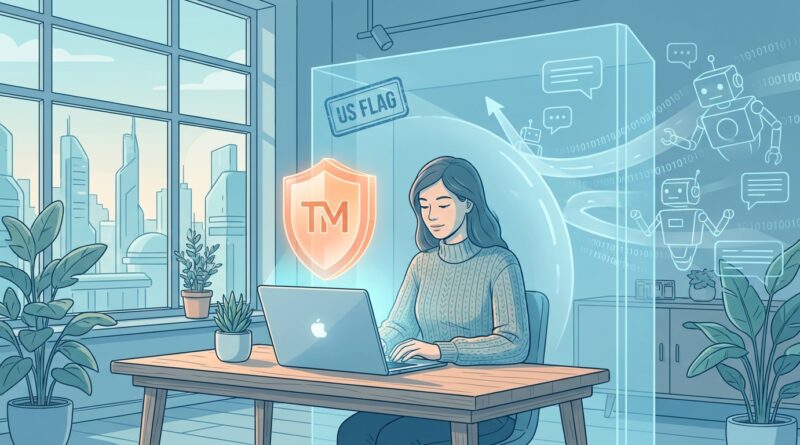
New White House AI Framework Quietly Sets The Stage For National Trademark Rules Online
If you run a small business, this is the kind of policy news that can feel annoying fast. You are trying to protect your name, logo, product images, and reputation, and meanwhile AI tools can spit out fake ads, fake customer support chats, and copycat listings in minutes. The hard part is that the rules are still a mess. Some risks fall under trademark law. Some depend on platform takedown systems. Some sit in state laws that were never written with AI impersonation in mind. That is why the new White House AI framework matters, even though it is not a trademark law on its own. It gives the clearest federal signal yet about where online rules are heading. For small businesses, that means this is a planning moment. If you act now, you can tighten your website terms, vendor contracts, and brand-use rules before national standards start taking shape around you.
⚡ In a Hurry? Key Takeaways
- The White House AI framework is not a new trademark statute, but it strongly suggests future national rules around AI impersonation, disclosure, and platform accountability.
- Small businesses should update trademark registrations, website terms, AI-use policies, and contractor agreements now so their brand protections are easier to enforce later.
- This is about reducing risk, not panic. A short brand protection checklist today can save a messy cleanup after fake AI content starts spreading.
Why this matters more than it sounds
The phrase “national policy framework” can sound abstract. For a founder or a two-person marketing team, it is not abstract at all.
If an AI chatbot uses your business name in a confusing way, if a fake voice clone appears to endorse a scam, or if your logo gets folded into synthetic ads you never approved, you are left trying to piece together a response from old trademark rules, platform complaint forms, and state-level laws that do not line up neatly.
That patchwork is the real problem.
The White House’s National Policy Framework for Artificial Intelligence, released March 20, 2026, does not suddenly create a federal trademark rulebook for AI. But it does show the direction of travel. It points toward clearer expectations around transparency, misuse, accountability, risk management, and the handling of digital identity and brand signals online.
In plain English, this framework helps answer a question many small businesses have been asking. Will the government eventually step in with more consistent rules about AI copying, impersonating, or misrepresenting brands online? The answer now looks a lot more like yes.
What the framework likely means for trademark protection
1. Brand impersonation is moving from a niche problem to a policy problem
For years, trademark disputes mostly centered on things like confusing names, counterfeit goods, and misleading ads. AI changes the scale. One person can now create dozens of fake brand pages, product descriptions, support bots, or spokesperson videos in an afternoon.
When the White House starts talking broadly about AI accountability and trust, small brands should hear this clearly. The federal government is paying attention to harms that include confusion, deception, and misuse of identity online. Those are trademark-adjacent problems, even if the framework does not use classic trademark language in every section.
2. Disclosure rules could become a big deal for brands
One likely next step in future regulation is clearer disclosure around synthetic content. That matters for trademark owners because a label saying content is AI-generated can help reduce customer confusion, especially when fake endorsements or fake customer service are involved.
Disclosure will not solve every problem. A scammer can still misuse your brand. But if national rules start pushing platforms and developers to label synthetic media more consistently, it becomes easier to show when your brand was used in a deceptive way.
3. Training data and scraping questions are not going away
Many small businesses worry less about headline-grabbing deepfakes and more about quiet scraping. Product photos. Service descriptions. FAQs. Blog content. Brand voice. Those things can get pulled into AI systems and then reappear in ways that blur ownership and attribution.
The framework does not hand businesses an automatic right to block all training uses. But it increases pressure for clearer data governance and documentation. That can eventually help trademark owners argue that AI systems should not freely absorb branded content and then produce confusing outputs that trade on someone else’s reputation.
What small businesses should do right now
Audit the parts of your brand that are easiest to fake
Start with the obvious assets. Your business name, logo, slogans, product packaging, founder image, and any recognizable voice or visual style used in ads.
Then go one step further. Look at what a scammer or lazy competitor would copy first. Is it your Amazon-style product listing text? Your before-and-after images? Your explainer videos? Your customer support wording?
If it is public and persuasive, it is a likely AI target.
Check your trademark basics
This is not glamorous, but it matters. Make sure your key marks are actually registered where it makes sense to register them. Confirm that ownership details are current. Save proof of use. Keep copies of how your marks appear in commerce.
If a future dispute involves AI-generated confusion, clean records will help you move faster.
Update your website terms
Your site terms should say, in plain language, that your business name, logos, product images, written copy, and brand elements may not be used to train, generate, simulate, or distribute misleading AI content without permission.
Will that stop a bad actor by itself? No.
But it gives you stronger language for takedown requests, vendor disputes, and future policy arguments. It also helps show that you never allowed this use in the first place.
Fix your contractor and agency agreements
This is a big one. Many brands are more exposed through their own partners than through strangers.
If you use freelancers, ad agencies, designers, chatbot vendors, or social media contractors, your contracts should answer a few simple questions:
- Can they use your brand assets in AI tools?
- Can they upload your customer data or product copy into third-party generators?
- Who owns AI-assisted outputs made with your brand materials?
- Are they allowed to create synthetic brand voices, avatars, or spokesperson content?
- Do they have to tell you which AI systems they used?
If your agreement is silent, you are relying on guesswork. That is not a great place to be.
Create a simple internal AI brand policy
You do not need a 30-page legal manual. A one-page rule set is enough for many small teams.
Cover the basics. For example:
- No employee may create fake testimonials or synthetic founder endorsements.
- No team member may upload unreleased product materials into public AI tools.
- All AI-generated customer-facing content must be reviewed by a human before publication.
- Brand names, logos, and support scripts may not be used to build unofficial bots without approval.
This helps you in two ways. It lowers your own risk, and it shows you are taking responsible brand control seriously if a platform, insurer, or regulator ever asks.
How this affects different kinds of businesses
Local service businesses
Dentists, plumbers, accountants, salons, and repair shops are especially vulnerable to fake listings, fake reviews, and bogus chat-based lead capture. If your reputation is local and personal, impersonation can do real damage fast.
E-commerce brands
You are more likely to face fake product pages, cloned images, AI-written listing spam, and copycat storefronts that borrow your look and product language.
Creators and founder-led brands
If your face, voice, or personal style is tied to the business, synthetic endorsements and cloned content become a serious issue. Trademark rights may overlap with publicity rights and unfair competition claims, depending on the state.
What not to assume
Do not assume the White House framework means a magic federal rescue is around the corner. It does not.
Do not assume old trademark law cleanly solves AI misuse. Often it will not, especially when the misuse is subtle, distributed, or hosted through layers of platforms and tools.
And do not assume this only affects large companies with famous logos. Smaller brands may actually be easier targets because scammers think they have less legal firepower and fewer monitoring tools.
A practical action list for the next 30 days
If you want a realistic response to the White House AI framework trademark protection for small businesses question, here it is. Keep it short and doable.
- List your top five brand assets that would hurt most if faked.
- Confirm your key trademarks are registered or in process where appropriate.
- Add anti-impersonation and anti-AI misuse language to your website terms.
- Update vendor and freelancer contracts to cover AI use of brand materials.
- Set a monthly search routine for fake listings, fake ads, and brand-name chatbot mentions.
- Create a takedown folder with logos, registrations, screenshots, and proof of ownership.
- Write a one-page internal AI brand policy for your team.
That is not overkill. It is basic housekeeping for the next phase of the internet.
At a Glance: Comparison
| Feature/Aspect | Details | Verdict |
|---|---|---|
| Current legal landscape | Small businesses face a mix of trademark law, state rules, and platform policies that do not line up cleanly for AI misuse cases. | Messy and reactive |
| What the White House framework signals | A stronger federal push toward AI accountability, transparency, and clearer standards that could shape future trademark-related enforcement online. | Important early warning |
| Best move for small businesses now | Tighten registrations, site terms, contracts, monitoring, and internal rules before national standards become more formal. | Act now, not later |
Conclusion
The good news is that you do not need to wait for Congress, the courts, or the platforms to sort every detail out before doing something useful. The White House’s new National Policy Framework for Artificial Intelligence, released March 20, 2026, is not a trademark law by itself, but it is the clearest signal yet that national rules are coming that will touch how brands can be imitated, misrepresented, or scraped by AI systems online. For founders and small marketing teams, this is the moment to get ahead. If you know which parts of the framework map to your trademarks, you can lock in brand-friendly language now, instead of scrambling later to retrofit your site, contracts, and content. Turn the policy noise into a short, practical IP checklist, and you stop feeling stuck. You start quietly making your brand harder to copy, fake, and exploit in the next wave of AI misuse.