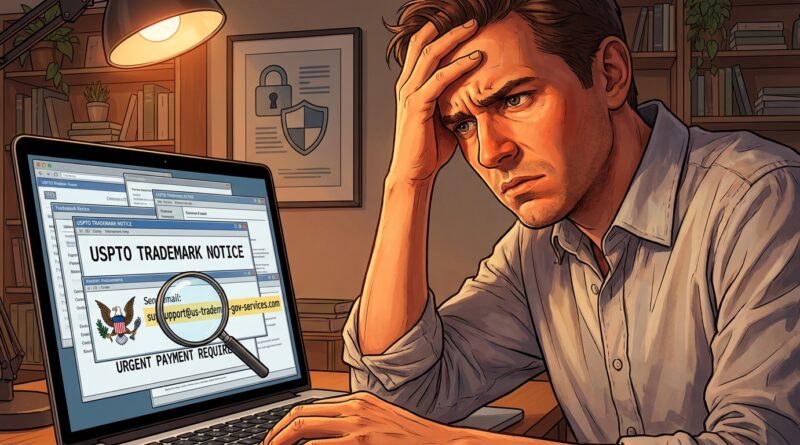
New Trademark Scams Are Hijacking Real USPTO Emails: How To Protect Your Brand Before You Click
You file a trademark, breathe for two seconds, then your inbox lights up with an “urgent” message about deadlines, fees, or a problem with your application. It looks official. The logo seems right. The wording sounds legal enough to make your stomach drop. That is exactly why this scam works. More small business owners, creators, Etsy sellers, and first-time filers are getting fake notices that copy real USPTO emails, letters, and even phone scripts. Some ask for payment right away. Others push you to click a link, log in, or “verify” details about your brand. One mistake can expose your card, your USPTO account, and private business info before your mark is even approved. If you are feeling overwhelmed, that is normal. The trademark process already has enough moving parts. Scammers are counting on you being busy, stressed, and eager to get everything done fast.
⚡ In a Hurry? Key Takeaways
- Real-looking USPTO messages can be fake. Never trust an email, letter, or caller just because it uses official language.
- Before you click or pay, go directly to the USPTO website yourself and check your case status there.
- If a message pressures you to act fast, pay through a strange link, or share login details, treat it like a scam until proven otherwise.
Why this scam is fooling so many brand owners
The ugly truth is that trademark scammers do not need to hack the USPTO to sound convincing. Trademark filings are public. Once you apply, your brand name, filing dates, and contact details may be visible enough for bad actors to build a very believable message around them.
That means a scam email can include your exact mark name, your serial number, your filing class, and language that sounds lifted from a government notice. To a new filer, it can feel real because parts of it are real.
This is why the search term USPTO trademark email scam is becoming more common. People are not imagining things. The messages really do look close enough to cause panic.
What these fake trademark emails and calls usually look like
1. Urgent payment demands
You may get a notice saying your trademark will be abandoned unless you pay a fee today. The scammer may call it a monitoring fee, publication fee, registration release fee, or international protection fee. Those names are often meant to sound official, but they may have nothing to do with your actual filing.
2. Fake problem alerts
Some messages claim there is an issue with your application that needs immediate correction. They may push you to click a link to review a document or sign in to fix the problem.
3. Look-alike sender names and domains
The email might appear to come from something that looks government-related, but the actual address is slightly off. Maybe it ends in .org, .us, .support, or a strange variation that you miss on your phone screen.
4. Phone calls from “trademark specialists”
These callers can sound polished. They may know your application exists and use that to build trust. Then they try to collect payment or push unnecessary services.
5. Letters that look official
Old-fashioned mail scams are still alive. Some companies send paper notices designed to look like government correspondence. They often ask for fees for publication, listing, or monitoring in private databases that do not actually protect your rights.
The biggest warning signs
If a message does any of the following, slow down.
- Creates panic with phrases like “final notice,” “immediate payment required,” or “your trademark will be lost today”
- Asks you to pay through a link inside the email instead of directing you to the official USPTO site
- Requests your USPTO login, password, or card details by email or phone
- Comes from a suspicious email domain that is not a verified government address
- Offers extra trademark protection services you never asked for
- Uses sloppy formatting, odd grammar, or weird attachments
- Pushes a service that sounds official but is really a private company
Not every fake message is sloppy, though. Some are clean, well-written, and scary good. That is why your best defense is not “spot the typo.” It is “verify everything independently.”
What a real USPTO message usually does not do
A real notice may absolutely tell you about deadlines or office actions. But it generally will not ask you to hand over payment details through some random email link or demand that you confirm your password. When in doubt, do not use the link in the message. Open your browser and go to the official USPTO website yourself.
If you are still learning how the filing process works, it helps to read New USPTO AI Tools Quietly Change How You Search And File Trademarks: What Small Brands Must Do Differently Today. The more familiar you are with the normal process, the easier it is to spot something that feels off.
Your practical checklist before you click anything
Go to the source yourself
Do not click from the email. Type the USPTO website into your browser manually, or use a trusted bookmark you created earlier. Then check your application status from there.
Inspect the sender carefully
Do not stop at the display name. Open the full email address. A fake can hide behind a very official-looking sender name.
Match the message to your real case activity
Ask yourself: was I actually expecting a deadline, office action, or filing update? If the message talks about a fee or step you have never heard of, that is a clue.
Never share account credentials
No surprise email or caller should get your login details. Ever.
Do not pay on the spot
Scammers want speed. You want proof. If there is truly a fee due, you should be able to confirm it on your official USPTO account or through your attorney.
Call back using a trusted number
If a caller claims to be tied to your trademark, do not continue the call blindly. Hang up and use contact details you found independently.
If you already clicked or paid, do this now
First, do not beat yourself up. These scams are built to catch smart, busy people off guard.
1. Contact your bank or card issuer
If you paid a suspicious fee, call your bank or credit card company right away. Tell them you may have paid a scammer and ask about freezing the card, disputing the charge, or watching for fraud.
2. Change your passwords
If you entered any login information, change it immediately. Start with the email account tied to your trademark filing and any USPTO-related accounts.
3. Turn on two-factor authentication where possible
This adds a second lock on the door if your password was exposed.
4. Check your trademark account and case record
Make sure nothing was changed and no unauthorized correspondence address update was made.
5. Save everything
Keep the email, screenshots, payment receipts, caller ID info, and attachments. That record can help with reports and charge disputes.
6. Report it
Report suspicious trademark notices to the right channels, including the USPTO and other fraud-reporting resources relevant to your area. Even if you did not lose money, your report can help others.
Why first-time filers and creators are prime targets
If you are launching a side hustle, a course, a podcast, a clothing brand, or a digital product line, you are already juggling too much. You are learning legal terms, classes, deadlines, and filing screens while trying to run the actual business.
Scammers know this. They know a first-time filer may not know the difference between a real office action and a fake “registration release notice.” They know a solo creator may pay a fee quickly just to avoid a delay.
That is why the smartest move is to build a simple habit. Never respond from the message itself. Always verify from the official source.
At a Glance: Comparison
| Feature/Aspect | Details | Verdict |
|---|---|---|
| Email asking for urgent payment | Claims your application is at risk unless you pay through a link in the message | High scam risk. Verify on the official USPTO site before doing anything |
| Caller offering trademark help or protection | May know your brand name and filing details, then pushes fees or extra services | Be cautious. Hang up and call back using trusted contact information |
| Checking status directly at USPTO | You type in the official site yourself and review your case from there | Best practice. This is the safest way to confirm if a notice is real |
Conclusion
Trademark scams work because they hit you when you are already stressed and trying to protect something you care about. The good news is that you do not need to become a cybersecurity pro to stay safe. A few habits make a huge difference. Pause. Do not click in a rush. Check your case from the official source. Do not pay anyone just because a message sounds urgent. These new scam waves are hitting first-time filers and digital creators especially hard, but a simple checklist can save you from expensive mistakes, protect your payment details, and keep your energy where it belongs, on securing your brand instead of cleaning up a fraud mess.