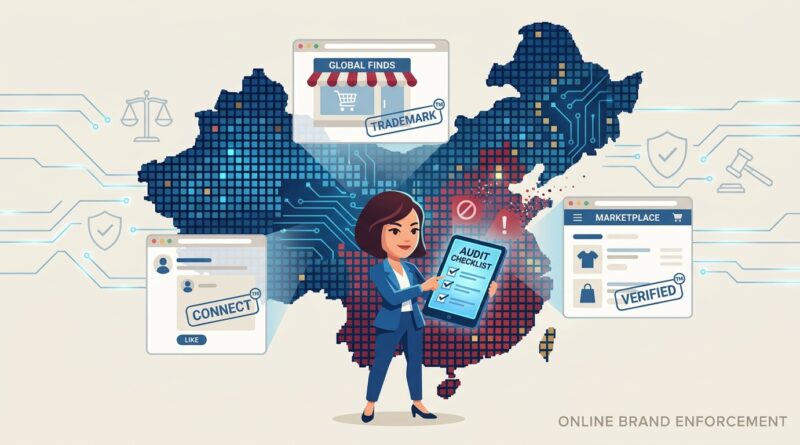
New China Trademark Law Finally Names Online Use: What Global E‑commerce Brands Need To Fix Before 2027
You can do everything right. File your China trademark, build sales on marketplaces, post on social, even ship real products to Chinese buyers. Then one ugly surprise shows up. A non-use cancellation hits your registration, or a copycat store pops up online, and suddenly your digital proof is not organized enough to help you fast. That is the headache this new law is trying to fix. China’s updated trademark law now clearly says online use and online infringement count. For global e-commerce brands, that is good news, but only if your records are clean. If your screenshots are missing dates, your invoices do not match the brand name, or your storefronts use a slightly different mark, you may still have a problem. The key issue for 2026 is simple. Start cleaning up your online brand evidence now, so you are ready long before the 2027 effective date.
⚡ In a Hurry? Key Takeaways
- The new China trademark law expressly recognizes online use and online infringement, which can help both defend registrations and fight copycats.
- If you sell into China, save dated screenshots, platform listings, invoices, shipping records, and domain evidence in one organized file now.
- This change helps honest brands, but messy digital brand use can still weaken a non-use defense or slow a takedown.
What changed, in plain English
For years, brands have had to argue about whether online activity really counted strongly enough in trademark fights in China. The new law makes that much clearer. It now directly names online use and online infringement as part of trademark use in commerce.
That matters in two big ways.
1. Keeping your trademark alive
In China, a registered mark can be attacked for non-use if it has not been genuinely used for a set period. If your brand activity is mostly digital, think platform listings, brand stores, social commerce pages, mini-programs, or your own Chinese-facing website, this legal update gives you firmer ground.
But here is the catch. The law helps if the evidence is real, consistent, and easy to follow. It does not magically fix sloppy records.
2. Going after online copycats
If someone opens a knockoff shop, copies your brand in listings, or uses a confusingly similar mark in online promotion, the new wording should make enforcement more direct. Takedowns, complaints, and infringement claims become easier to frame because the law now clearly says online infringement counts too.
That is especially useful for brands that sell through cross-border e-commerce, social platforms, or third-party marketplaces where fake stores can appear overnight.
Why this matters for e-commerce brands in 2026
The search term many founders should care about is simple: new China trademark law online use ecommerce brands 2026. Why 2026? Because this is the prep year. Waiting until 2027 is how small issues turn into expensive ones.
If you are selling into China through:
- Tmall, JD, Taobao, Pinduoduo, Douyin, Xiaohongshu, or other marketplaces
- Cross-border shops
- Your own website that targets Chinese buyers
- Social commerce accounts
- Distributors or suppliers who promote your brand online
Then your trademark use is no longer something to treat as informal marketing clutter. It is legal evidence.
And if your suppliers, resellers, or local partners are posting your brand online in ways you do not control, you need to review that too. In trademark fights, mismatched brand use can create doubts fast.
The good news, and the annoying part
The good news is obvious. Honest digital selling activity gets more recognition. That is a win for modern brands.
The annoying part is also obvious. Many small and mid-sized brands are terrible at keeping digital proof.
They have screenshots with no visible date. Listings that changed names three times. Product pages where the logo differs from the registered mark. Invoices in a distributor name, not the trademark owner’s name. Social posts with no clear tie to actual goods sold in China.
That kind of mess can weaken your position even under a better law.
What counts as useful online use evidence
Think like a skeptical examiner, judge, or platform reviewer. They need to connect the dots. The mark. The goods or services. The date. The place or target market. The commercial activity.
Helpful examples
- Dated screenshots of marketplace listings showing the mark and product
- Order records tied to those listings
- Invoices showing sales of the branded goods
- Shipping records into China or to Chinese consumers
- Storefront pages with visible URLs and timestamps
- Domain registration and site operation records
- Promotional campaigns tied to actual sales activity
- Contracts with authorized Chinese distributors or platform operators
- Customer service records from Chinese-facing stores
Evidence that is often weaker than founders think
- Undated screenshots
- Mockups or draft packaging never actually used in sales
- Social posts with likes but no sales link
- Website pages with no proof Chinese consumers could buy from them
- Use of a logo or spelling that does not match the registered mark closely enough
- Invoices that do not clearly connect the trademark owner to the transaction
Your fix-before-2027 checklist
This is the part to print, save, or hand to your operations person.
1. Match your mark everywhere
Check whether the mark on your China filing matches what appears on listings, packaging, invoices, and social pages. If you registered a word mark but mostly use a stylized logo, make sure you understand the gap.
2. Save screenshots the right way
Every screenshot should show:
- The full page if possible
- The URL
- The date
- The mark
- The product or service
- Any pricing, ordering, or store details
Do not rely on random phone photos buried in chat threads.
3. Tie marketing to real sales
Ads and posts help, but sales records make them stronger. Keep campaign screenshots together with invoices, payment records, and shipping documents.
4. Audit your marketplaces
Look at every platform listing that reaches Chinese buyers. Are you using the same brand spelling? Are resellers changing titles? Are old listings still live under outdated branding? Clean that up.
5. Organize by year and by product class
If a non-use challenge lands, you do not want to start hunting through five years of Dropbox chaos. Build folders now by year, platform, and product line.
6. Review your distributor and supplier agreements
Make sure contracts say who can use the mark, how it must appear, and who keeps records. If local partners create online listings, require copies of sales and promotional evidence.
7. Reserve key domains and usernames
This will not replace trademark rights, but it helps support your brand story and can prevent easy copycat moves.
8. Set a quarterly evidence routine
Do not make this a once-a-year panic project. Every quarter, save fresh screenshots, export sales data, and archive proof of use.
Bad faith filings are still part of the story
Clearer rules on online use help real brands, but they do not remove the risk of opportunists grabbing marks or gaming the system. If you have not thought much about defensive filing strategy, read China’s New Trademark Crackdown On ‘Bad Faith’ Filings: What Small US Brands Must Do Before Going Digital In China. It fits naturally with this new update. One issue is getting the mark. The other is proving you are actually using it.
Common mistakes small brands make
Assuming Amazon evidence is enough
Maybe, maybe not. If your China trademark issue involves use aimed at China, records tied to Chinese consumers, Chinese platforms, or clear China-facing activity will usually be more helpful.
Letting a factory run the storefront
This is common and risky. If the supplier controls the listing, the images, the customer records, and sometimes even the brand presentation, your evidence trail can get muddy fast.
Using different names in different places
Your company name, store name, domain name, and trademark do not all have to be identical, but the relationship must be clear. If not, enforcement gets harder.
Waiting for a dispute before collecting proof
By then, old pages may be gone. Listings may be edited. Platform records may be harder to retrieve. Start now.
What founders should ask their lawyer or brand manager this month
- Which of our China marks are most exposed to non-use cancellation?
- Do our current listings show the registered mark clearly?
- What evidence do we already have for the last three years?
- What evidence are we missing?
- Who inside the company owns trademark evidence collection?
- Do we need new filings for Chinese character marks, logos, or product expansions?
At a Glance: Comparison
| Feature/Aspect | Details | Verdict |
|---|---|---|
| Online use as trademark use | The new law now expressly recognizes online use as commercial trademark use, which can help defend against non-use attacks. | Good for real e-commerce brands, if records are solid. |
| Online infringement | Copycat listings, online stores, and digital misuse of a mark have clearer legal footing as infringement. | Faster and cleaner enforcement argument. |
| Evidence readiness | Screenshots, invoices, shipping records, store pages, and platform data must be organized and consistent. | This is where most small brands need work before 2027. |
Conclusion
The new China trademark law is one of those legal changes that sounds small until it hits your business directly. For the first time, it clearly says online use and online infringement count as use in commerce. That can help keep your registration alive and give you better footing when a copycat store starts selling under your name. But the law only helps if your digital brand use is documented well. If you ship into China, sell through platforms, use social commerce, or depend on Chinese suppliers, now is the time to clean up screenshots, invoices, storefront records, and proof of real online sales. Do it in 2026, not after the 2027 effective date. A little record-keeping now can be the difference between saving your mark and losing it when you need it most.