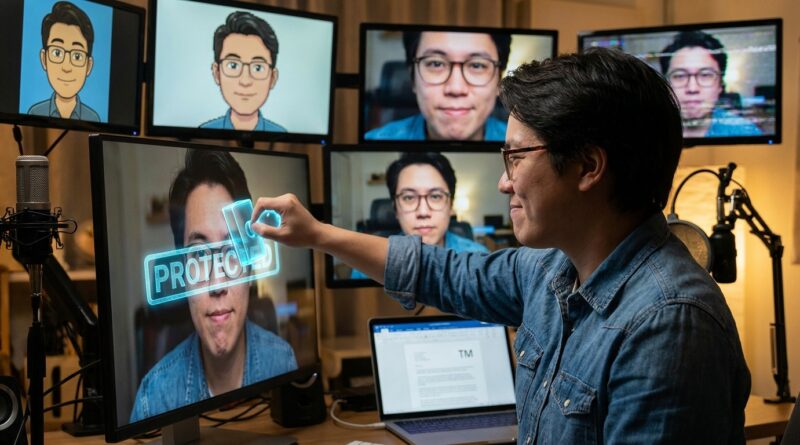
New Global Deepfake Crackdowns Quietly Turn Your Face Into a ‘Mini-Trademark’: How Small Brands Can Lock Their Likeness Before The Next Law Hits
You should not need a law degree to stop someone from turning your face, voice, or whole vibe into cheap AI bait. But that is where a lot of creators and small brands are right now. The laws around deepfakes and digital likeness are moving fast across the US and beyond, yet most coverage stops at the scary headline. It rarely tells you what to do before a fake ad, cloned voice note, or AI video shows up with your name attached. That gap matters. If you are a solo founder, coach, artist, or small business owner, your face is not just your face anymore. It is part of your brand. The good news is you can make that much clearer today. In one afternoon, you can define your protected likeness, add that definition to your contracts and site policies, and line it up with your trademark plan so your brand persona looks organized, not improvised.
⚡ In a Hurry? Key Takeaways
- Your face, voice, name, style, and signature phrases can function like a mini brand asset, but only if you define them clearly before a dispute starts.
- Start with a simple likeness list, then add it to contracts, website terms, booking agreements, and creator policies.
- When your likeness rules match your trademark filings and brand language, platforms and lawyers have a much easier time taking your complaint seriously.
Your face is becoming a business asset, whether you planned for that or not
Deepfake crackdowns are forcing a weird new reality into the open. Your face is no longer just personal. For many creators and founders, it works a lot like a mini-trademark.
Not a trademark in the strict legal sense every time, of course. But in practice, your image, voice, catchphrases, and on-camera style are part of how people spot your brand. If someone copies them with AI, they are not just making a fake. They may be creating confusion, stealing trust, and siphoning attention that you worked to build.
That is why the smart move is not to wait for one perfect new law. It is to get your own house in order now.
Why the current deepfake rules feel so confusing
Part of the frustration is that different laws cover different things. Some focus on election deepfakes. Some focus on non-consensual intimate images. Some cover commercial use of a person’s likeness. Others still lean on older ideas like right of publicity, false endorsement, copyright, unfair competition, or trademark confusion.
So people read one headline and think, “Great, I am protected.” Then a fake video appears and they learn the law that sounded helpful does not cleanly fit their case.
That is why this topic overlaps with branding. If your public identity is also part of your business, then legal protection works better when your persona is described the same way everywhere.
If you want a good companion read on that idea, see New Deepfake Rules Are Coming For Your Face And Voice: How To Turn Your Personal Brand Into A Trademark Shield. It gets at the same core problem. A convincing fake is bad enough. A messy brand record makes it worse.
The three actions small brands can take this afternoon
1. Decide what counts as your protected likeness
This is the step almost everyone skips.
Do not just say “my image” and call it done. Be specific. Ask yourself what parts of your public persona people actually recognize.
Your list might include:
- Your legal name and business name
- Your stage name or creator handle
- Your face and headshots
- Your voice and speaking style
- Your signature sign-off or catchphrase
- Your logo, color scheme, and visual look on thumbnails
- Your common camera setup, character name, or mascot identity
- Your distinctive style if customers strongly connect it to you
This does two things. First, it helps you spot what is actually worth protecting. Second, it gives you language you can reuse in agreements and takedown requests.
Think of this as your “brand persona sheet.” Keep it plain English. One page is enough to start.
2. Put that definition into contracts and site policies
Once you know what your protected likeness includes, use the same wording everywhere reasonable.
That means your:
- Client agreements
- Contractor agreements
- Podcast guest releases
- Sponsorship deals
- Video production agreements
- Website terms of use
- Community guidelines
- Talent booking forms
You are trying to answer a simple question before a fight starts. What exactly did you allow, and what did you not allow?
For example, maybe a sponsor can use your approved photo in one campaign for 30 days, but cannot create synthetic voiceovers, AI avatars, or altered videos that suggest you said new things. That should be written down.
Same with freelancers. If an editor, agency, or content rep has access to your raw footage or voice samples, your agreement should say they cannot use that material to train models, generate synthetic content, or authorize third parties to do it.
You do not need fancy wording to start. You need clear wording.
3. Align it with your trademark strategy
This is where many small brands miss an easy win.
If your website calls you one thing, your contracts use another name, and your trademark filing focuses only on a logo, your enforcement story gets muddy fast. Platforms, ad networks, and lawyers like clean records. So do judges.
Try to line up these pieces:
- The name customers know you by
- The name shown on your site and social profiles
- The trademark you have filed, or plan to file
- The visual assets tied to that brand
- The persona terms in your contracts and policies
You are building one consistent picture. This person, face, voice, and brand identity belong together. That coherence matters when you need to prove confusion, misrepresentation, or unauthorized commercial use.
What “mini-trademark” really means for a non-lawyer
Here is the plain-English version.
A trademark helps people know who a product or service comes from. If your audience sees your face in every course launch, every ad, every webinar, and every product page, then your likeness may be acting as a source signal too. It tells people, “This came from her,” or “This is his brand.”
That does not mean every selfie becomes a trademark automatically. It means your public identity may support a broader protection strategy when it is tied closely to your business.
In other words, the law may treat your face one way in a privacy claim, another way in a publicity claim, and another way in a trademark or false endorsement dispute. Your job is not to master every doctrine. Your job is to make your evidence clean and consistent.
Simple wording you can start with
You will want a lawyer to review important contracts, especially if your business depends heavily on your likeness. But you can still prepare a strong first draft.
For internal brand notes
“Protected Likeness includes founder name, professional name, image, photographs, voice, signature phrases, approved biographical details, and other identifiable elements associated with the brand persona.”
For contracts
“No party may create, edit, synthesize, simulate, clone, or distribute any artificial or altered version of the Talent’s or Brand’s voice, image, likeness, or persona without prior written consent.”
For your website terms
“Use of this website or its content does not grant permission to reproduce, imitate, manipulate, or generate synthetic versions of the brand’s name, voice, image, likeness, or related identity elements.”
Again, this is a starting point. The key is consistency.
What to gather now so you are not scrambling later
If something goes wrong, speed matters. Platforms move faster when you can show exactly what was copied and why it is misleading.
Save these now:
- Official headshots and approved profile images
- Samples of your real voice and videos
- A dated list of your handles, domains, and channels
- Trademark filing details, if any
- Public bios and media kits
- Examples of your signature phrases or recurring branded elements
- Copies of contracts that limit AI or likeness use
Think of it like a go-bag for your brand. Boring now. Very useful later.
What not to do
Do not assume platform policies are enough
They can help, but they are not a full protection plan. Policies change, and moderation can be uneven.
Do not rely on one legal label
Your issue may involve likeness rights, deceptive advertising, impersonation, or trademark-style confusion all at once.
Do not wait for a fake to appear
By then, you are reacting. It is much easier to enforce rules you already wrote down.
Who needs this most
This is especially worth doing if you are:
- A founder whose face is on the home page
- A coach, consultant, or speaker
- A YouTuber, podcaster, or course creator
- A small agency with a personality-led brand
- An artist, author, or performer
- A local business owner doing lots of video marketing
If people buy because they trust you personally, your likeness is part of the sale. That makes it part of the risk too.
At a Glance: Comparison
| Feature/Aspect | Details | Verdict |
|---|---|---|
| Define your likeness | List the exact identity elements tied to your brand, such as face, voice, name, phrases, and visual style. | Best first step. Cheap, fast, and immediately useful. |
| Add rules to contracts and policies | Spell out what others may and may not do with your content, likeness, and synthetic media rights. | Strong practical protection. Helps prevent “we thought it was allowed” excuses. |
| Match it with trademark strategy | Use the same brand identity across your filings, website, social accounts, and enforcement materials. | Most powerful long-term move. Makes your whole case look organized and credible. |
Conclusion
You do not need to predict the next deepfake law to do something smart today. The window that matters most is usually before the headline, not after it. If you are building a personal brand or a small business around your name, face, or voice, treat that identity like a real asset now. Define what counts as your protected likeness. Put that definition into your contracts and site rules. Then line it up with your existing or planned trademarks so platforms and lawyers see one clear brand persona instead of a legal mess. Deepfake and likeness laws are moving fast, but these three steps are practical, affordable, and doable in one afternoon. That is often the difference between scrambling later and being ready when someone tries to borrow your identity for clicks.